Our data tracks in real-time companies that signed up for Hubspot Marketing Hub or free CRM (both paid and free users). Below is a sample of some of these companies.
Jump to company
Financial Services & Fintech
Industrial & Manufacturing
Software · Melville, NY
Verint sells customer engagement software, the kind of platform that powers contact centers for big banks and telcos. They use Hubspot to run the lead capture and nurture engine that feeds their sales team.
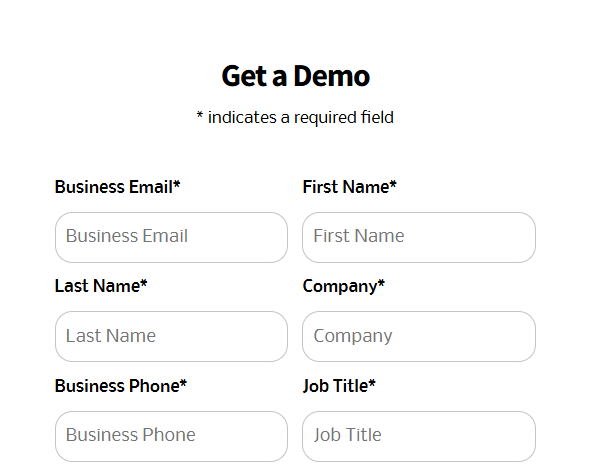
The "Get a Demo" button on their website is a Hubspot form, and it's doing a lot more than just collecting an email address.
The form looks simple, but underneath Hubspot is running real triage. It captures the visitor's industry, employee count, job function, and department from the website/domain entered, and it asks them to pick which Verint product line they want to see. That tagging means sales already knows what the conversation should be about before anyone picks up the phone.
The Hubspot form is also enforcing a buyer-only door policy. It blocks roughly 250 competitor and partner email domains from submitting at all. Anyone trying to sign up from a NICE, Genesys, or Calabrio email, for example, gets bounced before the lead ever reaches sales.
Once a real lead comes through, Hubspot passes it to Salesforce with the campaign source, ad tracking IDs, and UTM parameters attached. So when a deal eventually closes, Verint can trace it back to the specific webinar, ad, or email that started the conversation.
Hubspot also runs the nurture side, with email programs and lead scoring built on top of those same captured fields. Someone who asked about fraud and security gets a very different follow-up sequence than someone who asked about workforce management, all sorted and triggered automatically based on what they checked on the form.
Software · Holon, Israel
Sapiens makes software for insurance companies, the kind that runs policy administration and claims behind the scenes. Their whole Hubspot setup is built around one job: sorting the insurance crowd into the right buckets before sales talks to them.
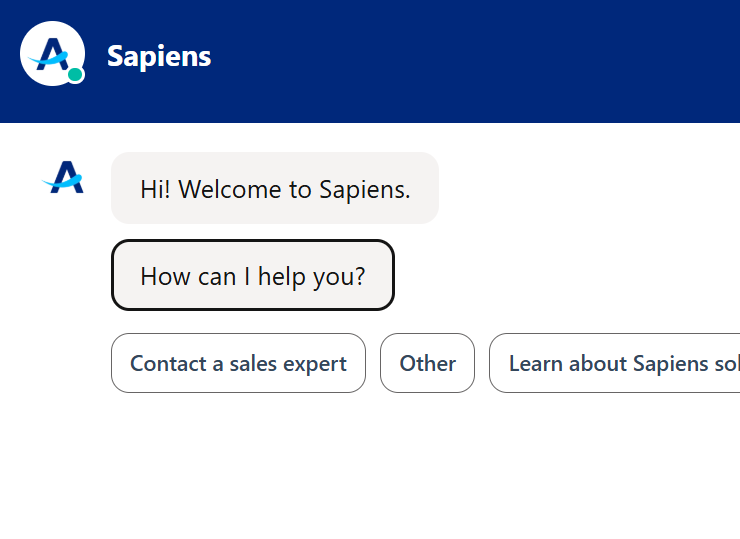
It starts with the chat widget on their website, which is a Hubspot bot that pops open after two seconds or once you scroll past a quarter of the page. Instead of asking an open question, the bot gives you three buttons to choose from: contact a sales expert, learn about Sapiens solutions, or other. That click immediately routes the conversation down a different path.
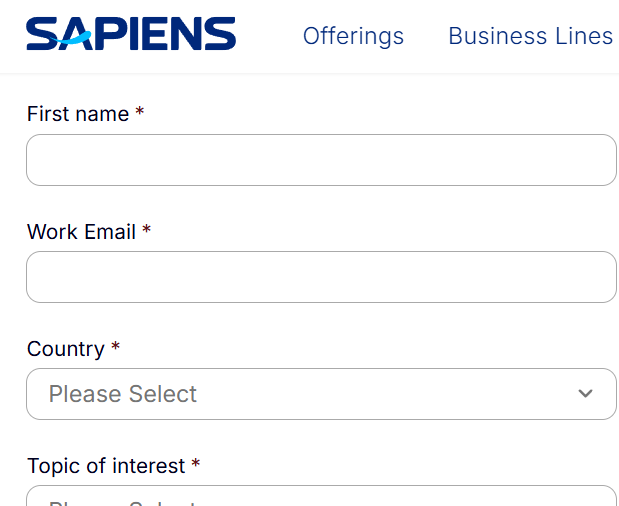
If you head toward sales, you land on a Hubspot contact form that keeps the sorting going. The form asks "what best describes you?" with options like insurance company, broker, third-party administrator, reinsurance underwriter, and system integrator. A broker shopping for software is a completely different conversation than a giant insurance carrier, and Sapiens makes sure the right rep sees the right lead.
Behind the form, Hubspot is also tagging each submission with which Sapiens product line the prospect cares about, things like workers' compensation, life and pensions, or reinsurance. That tag travels with the lead so the salesperson opens the call already knowing whether to talk about claims software or policy administration.
Every form submission also carries the ad source and campaign that brought the person in, then flows into Salesforce as a new lead. So when a deal closes months later, Sapiens can look back and see whether it started from a LinkedIn ad, a Google search, or someone clicking through from a webinar invitation.
Software · Johns Creek, GA
Ebix is a software company that sells technology to insurance carriers, brokers, and financial advisors. They use Hubspot's Content Hub to run their entire thought leadership blog at blog.ebix.com, branded as "Thought Leadership in Action."

The blog is the engine for a long-game audience play. Instead of writing about their own software, Ebix publishes articles their customers actually want to read, like tax-loss harvesting tips for financial advisors, explainers on Department of Labor fiduciary rules, and analysis of bond market outlooks. A financial advisor lands on a piece about catch-up contribution changes, gets useful information, and Ebix becomes the trusted name in their head when it's time to buy software.
Hubspot's tagging system is doing the quiet sorting work underneath. Every post is filed under topics like Risk Management, Financial Advisors, HR, and SmartOffice, with one category called "E-Bites" holding over 200 short-form pieces. A visitor who keeps clicking on retirement planning articles is showing Ebix exactly which product line they belong to.
The whole setup is also designed to turn readers into subscribers. Every article ends with a Hubspot comment form that captures name and email, and a prominent subscribe button lets people pick which topics they want delivered to their inbox. So someone who only cares about cybersecurity content can sign up for just that, and Ebix builds a clean, self-segmented email list straight from the people already reading their work.
Software · Espoo, Finland
Basware sells software that handles invoice processing and accounts payable automation, the kind of platform big companies use to manage every bill that comes in the door. They're a Hubspot Enterprise customer, and the most interesting thing about their setup is how much sorting happens before a prospect ever talks to sales.
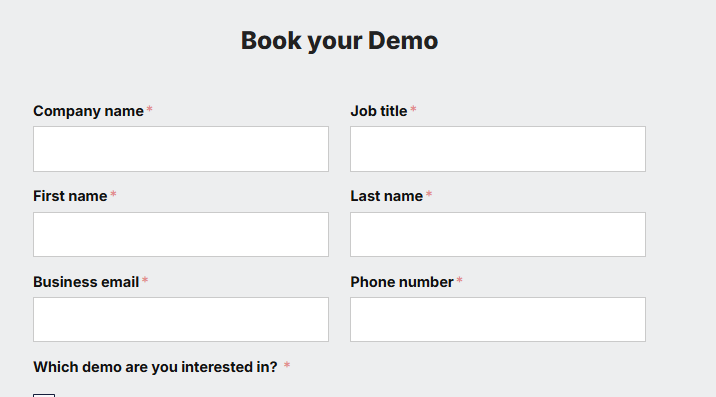
It starts with their "Book a Demo" form. Visitors pick exactly which Basware product they want to see, with checkboxes for AP automation, e-invoicing and compliance, procure-to-pay, statement matching, and a tool called InvoiceAI. So a prospect arrives at the sales call already self-sorted into a specific product conversation.
The same form also asks for company revenue with a dropdown that runs from under one million dollars all the way past five billion. That single field tells Basware whether the prospect fits their enterprise sweet spot or belongs in a different segment, before anyone spends time on a discovery call.
The form runs a strict door policy too. It blocks roughly 130 competitor and partner email domains, names like SAP, Coupa, Tipalti, Tradeshift, Medius, and Ariba. Anyone trying to book a demo from one of those companies gets bounced before the lead ever reaches sales.
What ties it all together is Basware's use of Hubspot Custom Events, a feature only on the Enterprise plan. A standard setup just tells you someone filled out a form. Custom events tell you everything they did before they filled it out, like which case studies they read, which pricing pages they lingered on, and how many times they came back to the site. That history travels into the sales call so the rep knows what the prospect was actually researching, not just their name and email.
Software for the Trades · Glendale, CA (NASDAQ: TTAN)
ServiceTitan is the operating system for the trades, building software for HVAC, plumbing, electrical, landscaping, pest control, and roofing businesses. They went public on NASDAQ in December 2024 in one of the most-watched SaaS IPOs of the year, with 3,200+ employees and thousands of trades businesses on the platform.
Aspire is the landscaping and commercial cleaning arm of ServiceTitan, picked up in 2021. Trusted by 70,000+ users across thousands of locations, Aspire's clients manage upwards of $4.5B in revenue through the platform. Aspire's entire sales motion runs on HubSpot.
The SDR team works through HubSpot for outbound prospecting, managing 80+ cold calls per day along with email sequences and inbound lead qualification. Account executives then take those qualified leads and run the full sales cycle through the same HubSpot instance, including forecasting, pipeline management, demo scheduling, contract negotiation, and deal closure. Every prospect interaction, every meeting, every pricing conversation gets recorded in HubSpot.
ServiceTitan acquired Aspire four years ago and kept HubSpot running as Aspire's CRM rather than migrating to Salesforce. That's a deliberate call for a public SaaS company that builds CRM-adjacent products itself.
Financial Services · Norwalk, CT
FactSet is a $4 billion financial data giant with 15,000 employees serving investment banks, asset managers, and hedge funds around the world. In October 2024, they acquired Irwin, a Toronto-based startup that builds investor relations software for public companies. The interesting part is what FactSet inherited along with the company: a full Hubspot operation that they've let keep running.
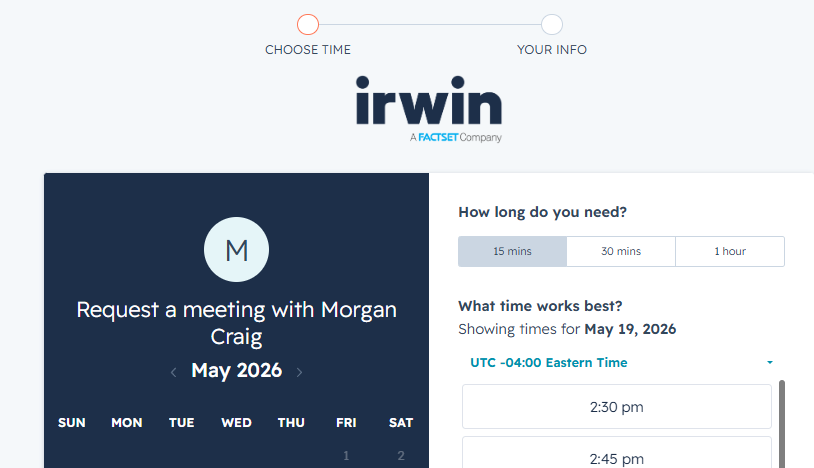
Irwin runs its entire go-to-market motion on Hubspot. FactSet Irwin account executives forecast pipeline and log every call, demo, and negotiation in Hubspot, and prospects can even book time directly on a rep's calendar through Hubspot's meeting scheduler. The marketing team builds campaigns, manages the database, and scores leads in Hubspot. The Demand Generation Manager owns the platform end to end, from email nurture sequences to landing pages to attribution reporting back to closed revenue.
Irwin's events program runs through Hubspot too. The team puts on more than 50 events a year, from webinars and client dinners to major industry conferences across North America and Europe. Registration tracking, lead routing to sales after each event, pipeline attribution, and ROI reporting all live in Hubspot. Asana handles the project management side, but Hubspot is where the leads land and where the marketing team measures whether the conference booth was worth it.
Financial Services · Monett, MO · HubSpot CRM, Marketing Hub, Sales Hub
Jack Henry is a financial technology company that builds the core software running about 7,500 community banks and credit unions in the U.S. If you bank with a community bank or credit union, there's a good chance Jack Henry's software is what you're actually using when you log in.
HubSpot powers Jack Henry's whole B2B sales motion. Marketing teams run lead nurture campaigns aimed at bank executives, segmented by product line like Account Origination, Lending, Digital Banking, and Payments. They also use HubSpot to capture leads at trade shows and credit union league events, then nurture those leads through follow-up campaigns afterward.
The more interesting angle is what happens after a bank signs. Jack Henry has a dedicated function focused on driving consumer adoption of features the bank has already paid for, things like online account opening, digital lending, and bill pay. The marketing team uses HubSpot to run email campaigns, paid search ads, social media ads, and display retargeting aimed at end consumers (the bank's customers) to push them to actually use these features.
That's a B2B2C motion, with HubSpot doing both halves. The first half sells the software to the bank. The second half drives adoption among the bank's account holders, segmenting by demographic and behavior, then running email and digital campaigns that improve usage rates.
Financial Services · Chicago, IL
Morningstar is one of the largest investment research firms in the world. 12,000+ employees, $369B in assets under management, and operations in 32 countries. Inside Morningstar sits Morningstar DBRS, one of the four largest credit rating agencies globally.
The Credit group at Morningstar, which includes Morningstar DBRS and Morningstar Credit, runs Hubspot as the primary marketing automation platform. The Credit business rates over 4,000 issuers and 60,000 securities and is one of the largest, fastest-growing units inside Morningstar.
Hubspot handles the entire martech stack for Credit: automation programs, lead scoring models, lifecycle frameworks, and the integration with Salesforce. Marketing data from ZoomInfo, paid media, and third-party sources all flows into Hubspot, and audience segmentation across the Credit business runs on it. When DBRS markets to issuers, asset managers, and banks, Hubspot is the system doing the targeting, the nurturing, and the handoff to sales.

The Credit group isn't the only part of Morningstar betting deep on Hubspot. Sustainalytics, Morningstar's ESG ratings arm, takes the segmentation game even further. Even something as simple as their blog subscribe form is a serious audience-sorting tool. It asks readers to pick from 11 organization types: asset manager, asset owner, bank, broker dealer, investment bank, wealth manager, public or private company, government agency, academic institution, advisor, and other.
The form then keeps drilling down based on what you pick. Choose "asset manager" and a second dropdown appears asking whether you serve the retail and wealth market, the institutional market, pensions and endowments, banks, insurance, consulting firms, or sovereign wealth. Choose "bank" and you get asked whether you're retail, investment, or wholesale. Choose "public or private company" and you have to pick your department, from investor relations to supply chain to corporate communications. By the time someone hits subscribe, Sustainalytics knows exactly which type of ESG content to send them.
Financial Services · Atlanta, GA
Worldpay is one of the largest payment processors in the world, handling trillions in annual payment volume across 175+ countries. Most of that runs through Salesforce, but there's one part of the business that runs on Hubspot: Worldpay for Platforms, the embedded payments arm that sells to vertical SaaS companies that want to offer payments inside their own software.
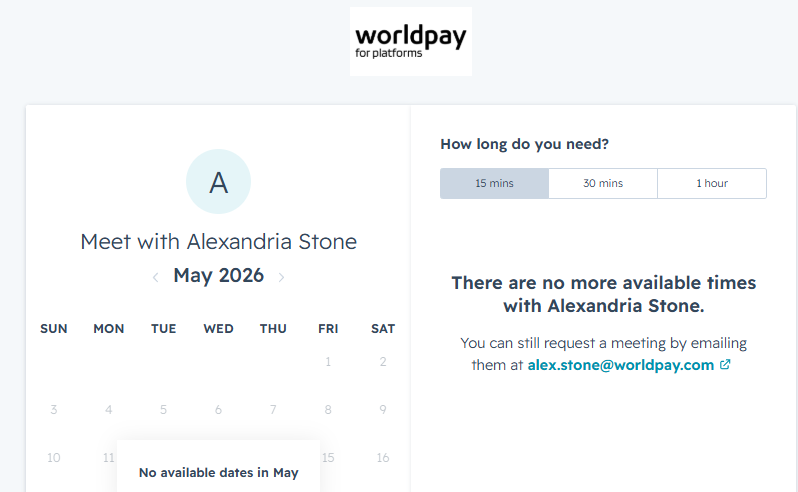
The whole partner sales motion for Worldpay for Platforms lives in Hubspot. Prospects fill out a contact form that asks for their HQ country (US, Canada, Australia, New Zealand, UK, or other), captures UTM parameters, gets enriched with ZoomInfo data on company size and revenue, and routes the lead to a sales rep based on the source (digital, BDR, event, partner referral, or internal Worldpay referral). From there, prospects can book time directly on a rep's calendar through Hubspot's meeting scheduler.
Once a lead is in, the account executive picks up the deal in Hubspot to forecast pipeline and log every call and demo. After a partner signs, a Partnership Manager takes over and runs a 90-day enablement cycle inside the same platform, tracking every step from contract signing through first merchant activation.
Marketing runs on Hubspot too. The Senior ABM Manager uses it for 1:1 and 1:few account-based campaigns aimed at specific target accounts, complete with personalized landing pages, custom microsites, and direct mail orchestration. Those landing pages and interactive product experiences are built inside Hubspot's CMS by a dedicated Digital Experience Manager, so the same platform that captures the lead also hosts the page that converted them.
The interesting wrinkle is that none of this replaced Salesforce. Worldpay runs both side by side, and they've hired a dedicated Revenue Operations Integration Specialist whose job is to be super admin for both platforms and build custom API integrations between them, plus connections to Gong, 6Sense, Gainsight, and their legal management system.
Hospitals & Health Care · Nashville, TN
HCA Healthcare is one of the largest hospital operators in the United States, running 188 hospitals and over 2,400 sites of care across 20 states and the UK with around 148,000 employees. The interesting thing about HCA isn't the hospitals though. It's that Hubspot runs the B2B side businesses HCA owns, and the biggest of those is CereCore.
CereCore is HCA's IT services arm that sells technology services to hospitals outside the HCA network. They're actively migrating off Salesforce onto Hubspot, running CRM, Marketing Hub, Sales Hub, and Operations Hub all in one place. Reps prospect hospital IT executives, run lead scoring and automated workflows, and manage the full sales pipeline through to closed deal. The whole thing has to handle HIPAA compliance because the customers are hospitals.
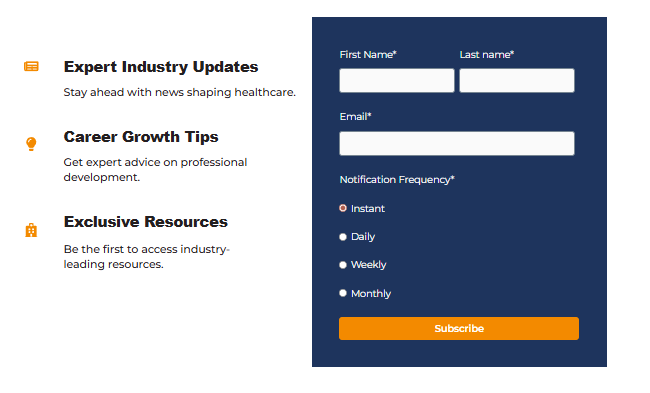
The other side is HealthTrust Workforce Solutions, HCA's healthcare staffing subsidiary, which uses Hubspot for both B2B campaigns aimed at hospital CHROs and procurement leaders, and a separate content track aimed at the nurses they're trying to recruit. The nurse-facing newsletter is a Hubspot form that captures name and email plus how often the person wants to hear from them, with options for instant, daily, weekly, or monthly. The pitch is "expert industry updates," "career growth tips," and "exclusive resources," and the frequency choice lets the candidate self-select intensity, so the most engaged nurses get hit daily and the casual ones once a month.
Hospitals and Health Care · Denver, CO
Marathon Health runs primary care clinics for big employers and unions across the country. Instead of sending workers to find a doctor on their own, companies hire Marathon to set up a health center at or near the workplace. They serve about 2.5 million eligible patients through roughly 630 client organizations, with more than 680 health centers in 41 states.
The interesting thing about Marathon is how deeply Hubspot runs their patient marketing. They aren't just using it to send the occasional newsletter. Hubspot is the engine behind the campaigns that get patients to actually walk into the clinic, book the screening, and come back for follow-up care.
That means the marketing team builds full email and text message journeys inside Hubspot, segments them by client, and translates them for patients who speak different languages. When a new employer signs on, Marathon spins up a fresh set of campaigns to introduce workers to their new clinic, and runs incentive programs and health challenges through the same system to keep people engaged over time.
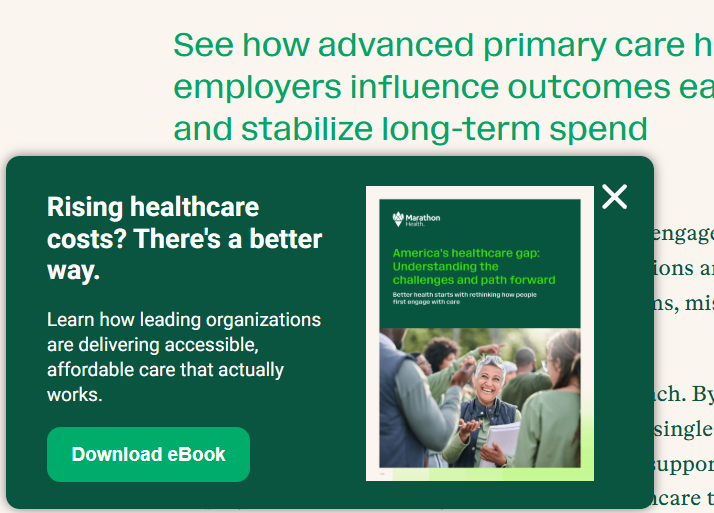
Hubspot also powers the public-facing side of the business. The Marathon website is built on Hubspot's CMS, and they use a slide-in popup in the bottom-left corner to push their ebook downloads. The popup is configured to fire after a visitor either scrolls 50% down the page, stays on the site for 5 seconds, or moves their cursor toward closing the tab. If the visitor dismisses it without converting, Hubspot waits 3 days and then shows it again on their next visit, on repeat, forever, until they either download the ebook or stop coming back.
Hospitals and Health Care · Boston, MA
Sevita Health is one of the largest providers of home and community-based care for people with disabilities, behavioral health needs, foster children, and seniors in the United States. They serve roughly 50,000 individuals across 40 states, with services ranging from foster care to autism therapy to adult day programs to in-home senior care.
The interesting thing about Sevita is the audience. Most of their content has to reach families in moments of stress and decision making, like a parent figuring out if their toddler needs feeding therapy, a foster parent deciding whether to switch agencies, or someone weighing whether to become a host home mentor for an adult with disabilities. They run all of that content through Hubspot.

The Sevita blog is built on Hubspot's CMS and organized by service line, with tags for Foster Care, Behavioral Health, Pediatric Services, Host Home, Adult Day Health, Complex Care, and Autism. Posts read like answers to real searches a family might type at 11pm: "Can you get SSI for autism?", "When do babies develop object permanence?", "How foster parents can prevent burnout." Each one is a soft on-ramp from a worried Google search to one of Sevita's actual service pages.
The newsletter signup is a Hubspot form that only asks for two things: email, and how often you want to hear from them, with options for weekly or monthly. By letting subscribers self-select cadence, Sevita avoids burning out the casual reader who only wants a monthly digest while still feeding the more engaged ones weekly content, all from the same list segmented inside Hubspot.
Hospitals and Health Care · Austin, TX
Infinx helps doctors and hospitals get paid. When a patient leaves a clinic, there is a long, messy process of checking insurance, submitting the bill, and chasing down the payment. Infinx handles that whole process for healthcare providers using a mix of software and offshore staff. They work with more than 900 provider organizations across the United States, including physician groups, hospitals, pharmacies, and dental practices.
The interesting thing about Infinx is how they use HubSpot to turn their happiest customers into a sales team they do not have to hire.
The company is building what amounts to a customer advocacy machine, and HubSpot is the database that runs it. Each customer record gets tagged with what they have agreed to do, whether that is a case study, a reference call, a testimonial, or a survey response. So when a salesperson is trying to close a hospital in Texas, they can pull up a list of Texas hospital customers who have agreed to take reference calls and connect the two. HubSpot also sends the automated emails that keep the program alive, the invitations to participate, the survey reminders, the thank-you notes after a call.
What makes the approach unusual is the AI layer wrapped around it. Instead of having a marketer manually mine customer calls for good quotes, Infinx is feeding meeting transcripts, survey responses, and customer success notes into AI tools that pull out stories, quotes, and return-on-investment numbers. Those snippets become the raw material for case studies, LinkedIn posts, short videos, and one-page sales sheets, all distributed through HubSpot campaigns.
The same system also feeds the renewal side of the business. When it is time to talk to an existing customer about expanding their contract, the account manager can pull a kit of proof points out of HubSpot to bring into the meeting. And when survey responses come back negative, the team uses AI to flag accounts that might be at risk of leaving so someone can intervene before the renewal date.
Retail & eCommerce Marketplace · Bentonville, AR
Walmart is the world's largest retailer, and its Marketplace platform, which enables third-party sellers to list products on Walmart.com, runs one of the more sophisticated HubSpot deployments at enterprise scale. Walmart has built a centralized HubSpot operation that spans the entire seller lifecycle, from first contact through onboarding, activation, and long-term retention.
HubSpot Meetings: Booking Calls with Marketplace Sellers
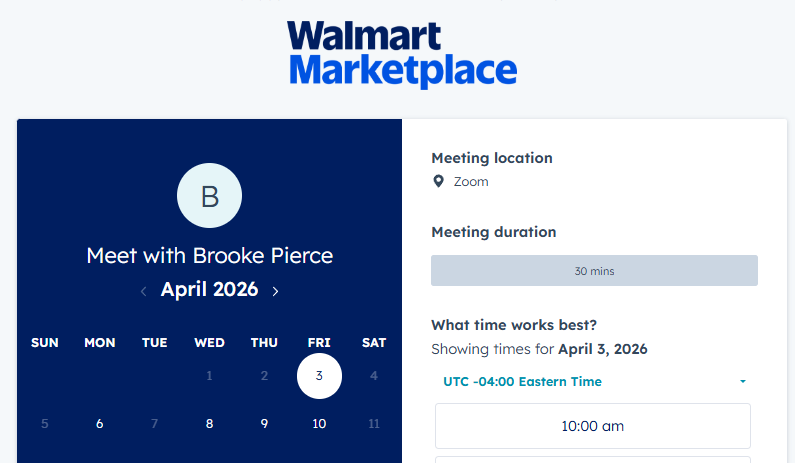
Walmart uses HubSpot Meetings as the scheduling layer for their seller-facing business development team. Prospective sellers book time directly through HubSpot's native meeting links, keeping every interaction tied to a contact and deal record in the CRM from the very first touch.
Seller Nurture and Onboarding Automation
HubSpot powers Walmart's mass email campaigns, webinar sequences, and automated nurture programs across the seller funnel. Two programs in particular rely heavily on HubSpot: their re-engagement sequences for sellers who registered but never went live, and their post-launch communication programs that guide newly active sellers toward adopting Walmart Fulfillment Services, pricing tools, and promotional opportunities.
HubSpot and Salesforce: A Deliberate Split
Walmart runs HubSpot and Salesforce in tandem with a clear division of labor. Salesforce owns pipeline management, lead routing, territory logic, and CRM data governance. HubSpot owns the outreach and marketing automation layer, including email campaigns, nurture sequences, meeting scheduling, and seller engagement programs. The two systems are kept integrated and coordinated through the centralized HubSpot team rather than managed independently.
Retail · Miami, FL
Costa Farms is one of the largest houseplant growers in the country, the kind of operation that supplies the leafy greens you see at Home Depot and Lowe's. What stands out is how they've turned their customer chat into something with a personality, not just a help desk.
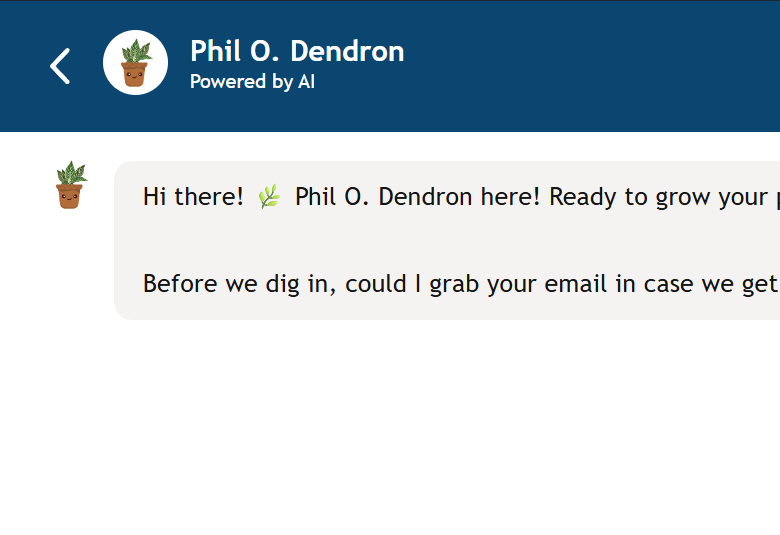
Meet Phil O. Dendron, the friendly cartoon plant who greets you the moment you land on their website. Phil is built on Hubspot's Breeze Customer Agent, an AI assistant that answers the question every new plant owner panics about: why is my plant dying? He'll walk you through watering schedules, light requirements, and which plants are safe for your cat.
Phil is wired directly into Costa Farms' own help articles and plant care guides, so the answers you get match what's already on their site. Ask about a Monstera and you're getting Costa Farms' specific advice, not generic tips pulled from somewhere else. When Phil can't handle something, the conversation hands off to a real person without the customer having to start over.
Costa Farms also uses Hubspot to turn these chats into lasting connections. Phil asks for your email at the start of the conversation, and that opt-in feeds into their marketing list with proper consent built in. A quick question about a yellowing leaf can quietly become a steady stream of seasonal planting tips and new product announcements.
Consumer Goods (Reduced-Risk Products) · London, UK · HubSpot CRM, Marketing Hub, Email Marketing, Workflows
British American Tobacco is one of the largest consumer goods companies in the world, and they're in the middle of a big strategic shift. They're moving away from cigarettes and toward what they call "reduced-risk" products, things like vapes, nicotine pouches, and heated tobacco devices sold under brand names like Vuse, Velo, and glo. They sell in over 180 countries.
The interesting thing about BAT and HubSpot is that selling these new products requires something the company has never really had to do before: talk directly to consumers. With cigarettes, the customer was the corner store. With a Vuse vape, the customer is the actual person using it, and BAT needs a way to reach them, support them, and keep them coming back.
That's the job HubSpot does at BAT. It runs the full consumer relationship: audience segmentation, email campaigns, SMS, marketing automation, A/B testing, and even the call centers that handle inbound and outbound calls for Vuse and Velo customers. Customer service agents work directly inside HubSpot to log conversations, route complaints, and follow up on surveys.
What makes the setup unusual is how technical it gets. HubSpot is wired into more than a dozen Shopify storefronts and the Adobe Experience Manager website platform, with Salesforce and other tools sitting alongside it. The integration is deep enough that BAT hires dedicated business analysts whose entire job is keeping these consumer platforms talking to each other. One recent role was specifically built around a global app for one-to-one consumer engagement that runs on HubSpot.
Retail · Chicago, IL
Camping World is the country's biggest RV retailer. They sell new and used campers, run service centers that fix them, and stock parts and gear for people who actually use their RVs. They have dealerships across the country and around 7,600 employees.
Camping World also owns a separate business called Good Sam, which started as a roadside assistance club for RV owners and has grown into a network of campgrounds and travel services. The interesting thing about Good Sam is that they use HubSpot as a sales engine to recruit campground owners into their network, the same way a software company would use it to chase enterprise customers.
In practice, Good Sam runs a small inside-sales team out of Chicago that prospects mom-and-pop campground operators across the US and Canada. Junior reps work the top of the funnel, sending cold emails, making calls, and qualifying inbound interest, then book meetings for senior reps who actually close the deal. Every call, email, and follow-up gets logged in HubSpot, and the senior reps are expected to manage a regional territory and hit a 30 percent close rate on the marketing and advertising packages they sell to campgrounds.
The newer twist is a program called Overnight Stays, which recruits people to host RV travelers on their property, somewhat like a campground version of a home-sharing app. Good Sam uses HubSpot to manage that recruitment too, with a coordinator who handles inbound interest, runs outbound campaigns to potential hosts, qualifies them against a checklist, and hands the promising ones to a senior manager to onboard.
Retail · Lincoln, NE
Spreetail buys products from brands and sells them on Amazon, Walmart, Target, Home Depot, and other big online stores. The brand ships its goods to one of Spreetail's seven warehouses, and Spreetail handles the listings, the ads, the shipping, and the customer service. They have around 870 employees and ship next-day to roughly 80 percent of the US population.
The interesting thing about Spreetail is that for them, "leads" are not buyers. They are brands. The whole job of their HubSpot setup is to find consumer product brands, convince them to let Spreetail sell their stuff online, and then track that relationship over time.
In practice, the team starts by mining tools like Helium10, Keepa, and SmartScout to find brands that are doing well on Amazon but could be doing better. Researchers based in Manila and Bogotá pull those brands into HubSpot, enrich the records with contact information, and build pitch decks tailored to each one. Sales reps in the US then work that pipeline, with junior reps booking meetings through cold calls and LinkedIn outreach, and senior reps showing up in person at industry trade shows to close.
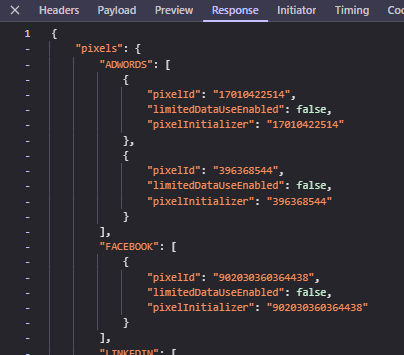
The ad side of the business is wired into the same system. Spreetail runs tracking pixels from Google, Facebook, and LinkedIn on its website, and when a brand fills out a HubSpot form to express interest, that submission gets reported back to Google and Facebook as a conversion. So the marketing team can see exactly which Google search ad or LinkedIn campaign produced the brand that eventually signed a deal, and shift their budget toward whatever is actually working.
Industrial Equipment · Stockholm, Sweden · HubSpot Marketing Hub, Sales Hub, Meetings, Email Marketing
Atlas Copco is a Swedish industrial company with around 35,000 employees that makes the kind of equipment most people never see but that keeps factories running. Things like air compressors, vacuum pumps, industrial drills, and assembly tools. They sell to manufacturers in pretty much every industry: electronics, food and beverage, medical, energy, you name it.
The most interesting thing about how Atlas Copco uses HubSpot is that it's the engine running their inside sales operation across dozens of countries. They've built what is essentially a multilingual outbound sales factory, with reps cold-calling prospects in Italian, Greek, Romanian, German, French, and other languages, and HubSpot is where every one of those conversations gets tracked.
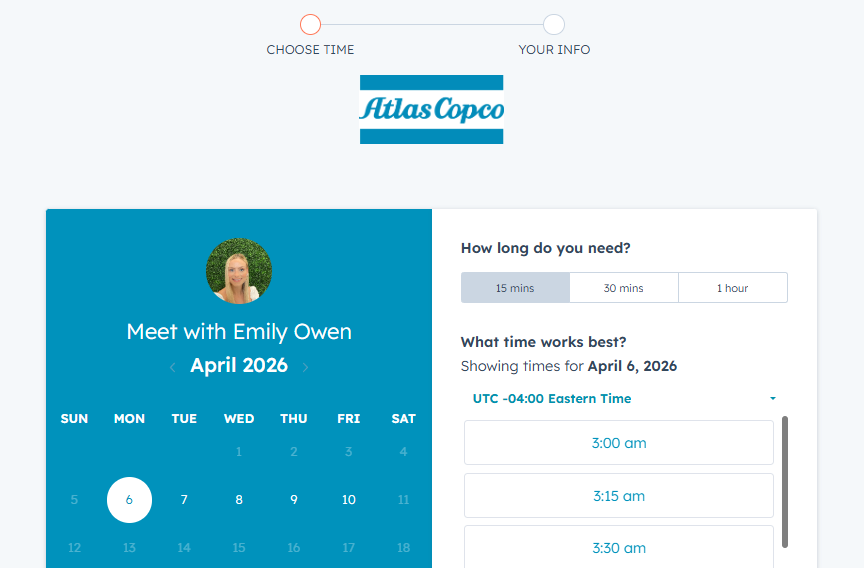
Here's how it works in practice. The reps run outbound campaigns to find new customers, qualify the ones that show interest, and pass the warm leads over to senior sales engineers who close the deals. HubSpot handles the lead generation, the email nurture sequences, and the inbound marketing campaigns that fill the top of the funnel. Then the reps work alongside SAP's Cloud for Customer system, which is where the actual deal-tracking lives once a prospect becomes a real opportunity.
That split is unusual and worth noting. Most companies pick one platform and run sales and marketing through it. Atlas Copco runs HubSpot for the marketing and early-stage selling and SAP for the rest, which means there's real engineering work involved in keeping those two systems talking to each other cleanly.
Elevator & Escalator Manufacturing · Farmington, CT · HubSpot Marketing Hub, CRM, Forms, Email Marketing, Landing Pages
Otis is the company that makes the elevators, escalators, and moving walkways in everything from local office parks to the Eiffel Tower and the Empire State Building. They have around 71,000 employees and around $14 billion in annual revenue.
HubSpot is the platform Otis uses to find new elevator business. The most specific example is elevator modernization. Otis runs digital campaigns aimed at building owners whose elevators are old enough to need an upgrade, with paid ads, SEO content, and social posts driving traffic to landing pages built in HubSpot. When a building owner fills out the form, the lead flows into the CRM, gets scored, and lands in front of a sales rep who builds the modernization proposal.
That same machine runs in 14 different country sites. Regional teams in Latin America, Europe, and elsewhere build their own local-language landing pages, email campaigns, and lead workflows in HubSpot, all feeding into one global pipeline. So a sales rep in Brazil pursuing a modernization deal in São Paulo is working the same system as a rep in Germany pursuing one in Munich.
HubSpot also handles trade show and event lead capture. Otis brings forms and landing pages to industry events, captures attendee information, and drops the leads straight into HubSpot for follow-up sequences. Every form submission, every campaign click, and every email open gets logged against the contact record.
Industrial · Stuttgart, Germany · HubSpot Marketing Hub
Bosch is one of the largest industrial companies in the world. They employ roughly 413,000 people across more than 60 countries and do around €91 billion in annual sales. Most people know them for car parts, power tools, home appliances, and industrial equipment.
What's surprising is that a company this massive runs HubSpot as its core marketing automation tool for global teams. At Bosch's scale, the default would be Salesforce Marketing Cloud or Adobe. Instead, HubSpot is the system marketers and sales teams actually live in every day.
Inside Bosch, HubSpot runs the full marketing and sales motion. Marketers use it to plan and execute LinkedIn campaigns, Google Ads, SEO content, and lead nurture emails. They build landing pages, manage social media calendars, and capture leads at trade shows and live events. Once a lead comes in, sales reps work it in HubSpot's CRM, tracking the deal through every stage of the pipeline. Customer training and adoption programs also get logged there, so the same record follows a customer from the first marketing touch all the way through onboarding.
This isn't happening in just one division. HubSpot runs across multiple independent Bosch business units, from Bosch Rexroth's industrial automation arm to Diablo Tools to ELPRO, the life sciences monitoring business. One shared platform across very different parts of the company.
IT Services and IT Consulting · Shanghai, China
Wicresoft is a global IT services and outsourcing company founded as a joint venture with Microsoft back in 2002. They've since grown into a multi-business operation with subsidiaries spanning IT services, recruitment, employer branding, and digital marketing, with around 7,000 employees serving clients across Asia, Europe, and the Americas.
The interesting thing about Wicresoft is that Hubspot doesn't just run the parent company. It runs almost every subsidiary they own. Wicresoft International, Wicresoft Agency, their recruitment arm, and the rest all share the same Hubspot Content Hub Enterprise instance, with each business publishing its own website, landing pages, and forms out of one platform.
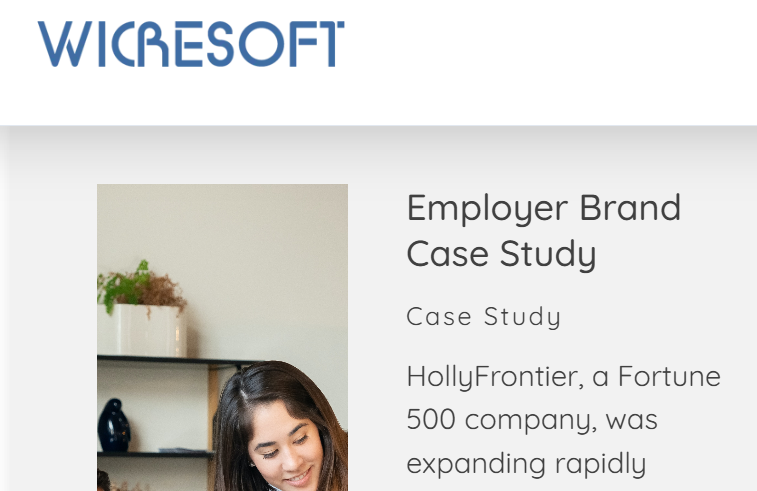
The forms themselves do real qualification. Take their recruitment subsidiary's contact form: it asks for work email (with throwaway domains like duck.com and gmail.com explicitly blocked), company name, and company size, then a "how can we help" checkbox list that lets a prospect self-select services like Candidate Experience, Candidate Nurturing, Career Websites, Direct Staffing, Employer Branding, Media Optimization, Metrics and Insights, or Social Media. That last field is doing the work of routing the lead straight to the right specialist before anyone even reads the message.
Running multiple subsidiaries on one Hubspot Content Hub Enterprise instance is the part most companies don't get to. It means one set of brand templates, one CRM, one analytics view across all the business lines, and one team of admins instead of separate stacks per subsidiary.
IT Services and IT Consulting · Munich, Germany
iC Consult is a German-founded specialist consulting firm focused entirely on identity and access management. They help large enterprises figure out who can access what across their internal systems, customer portals, and partner integrations. They've grown to several hundred consultants across Europe, North America, and Asia, and the work tends to be deeply technical, with topics like privileged access management, zero-trust architecture, and IAM modernization.
The interesting thing about iC Consult is that they've put a Hubspot Breeze Customer Agent on their website, an AI chatbot named ICora that answers questions about their services. For a consultancy in a niche this specialized, that's a smart move. Most visitors landing on the site aren't browsing casually. They're CISOs or IAM architects researching whether iC Consult can help them migrate off a legacy Okta or Ping deployment, and ICora gets them a useful answer in seconds instead of forcing them to wait for a sales call.
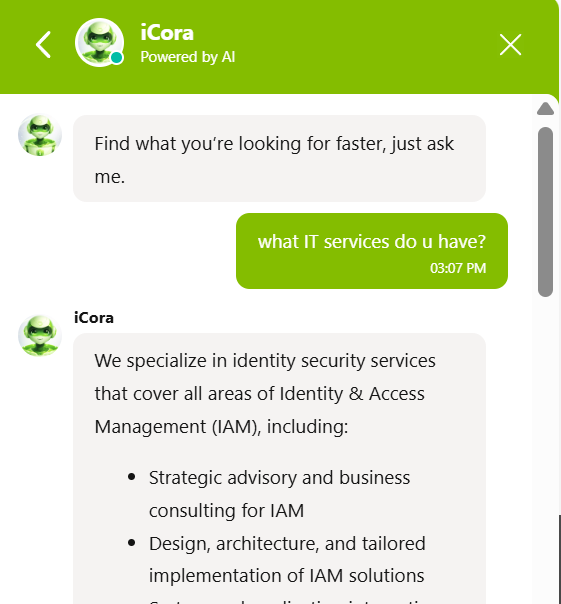
The recommended questions ICora suggests give a clean window into what iC Consult is trying to surface: their Identity Excellence Day event, how they handle legacy IAM modernization, what global regions they cover, how they're using AI in identity management, and their approach to IAM automation. Those aren't random topics. They're the five questions iC Consult most wants a prospect to ask, and Breeze lets them seed the conversation in that direction without making it feel like a sales pitch.
The chatbot is configured to pop the welcome message automatically when a visitor lands, even on mobile, and it can capture an email address if the prospect needs to leave before getting their answer. That email feeds back into Hubspot CRM and triggers the normal lead workflows from there.
IT Services and IT Consulting · London, UK
Endava is a tech consulting company with around 9,600 employees, mostly engineers spread across offices in Europe, Latin America, and Asia. Big businesses hire them to build software, modernize old systems, and figure out how to use technology to grow, with most of their work concentrated in banking, retail, travel, and government.
The interesting thing about Endava is how they've organized Hubspot around industries instead of geography. Most companies that operate in dozens of countries would split their marketing team by region. Endava splits theirs by vertical, with separate teams chasing retail clients, supply chain clients, travel clients, energy clients, and government clients, all running their own campaigns out of the same Hubspot instance.
Each industry team owns a slice of the funnel. They build the email lists, write the landing pages, and run the paid ads aimed specifically at, say, retail executives. When someone fills out a form on the Endava site, Hubspot routes that lead to the right industry team based on what they downloaded or which campaign brought them in. The same platform handles webinars, podcasts, and the logistics around physical events like trade shows, with marketers in offices across Romania, Slovenia, and Moldova all working off the same playbook.

The website itself is built on Hubspot Content Hub, which means the same platform that runs the campaigns also publishes the pages those campaigns point to. When a marketer launches a new retail-focused push, they can spin up a landing page, embed a form, and connect it to an email sequence without ever leaving Hubspot. That tight loop between web pages, forms, and follow-up emails is part of why a small marketing team can keep up with five different industry verticals at once.
IT Services and IT Consulting · Austin, TX
Data Pilot is a US-based data and analytics consulting firm that helps mid-market companies build data pipelines, set up cloud data warehouses, develop dashboards, and put AI and machine learning into production. They work across industries like healthcare, finance, retail, and SaaS, and the typical engagement is a few months of implementation work followed by ongoing managed services.
The interesting thing about Data Pilot is how aggressively their site tries to start a conversation. They run a Hubspot chatbot called Data Pilot Support that pops open automatically one second after a visitor hits the page, with an opening line of "Welcome! Let's make talking about data a breeze." It even fires on mobile, where most chat widgets stay hidden to avoid annoying small-screen users. If the conversation stalls, the bot offers to grab an email address with the fallback "Don't have time to wait for a response? Leave your email and we'll be in touch as soon as possible," so even a bouncing visitor still becomes a lead in Hubspot CRM.
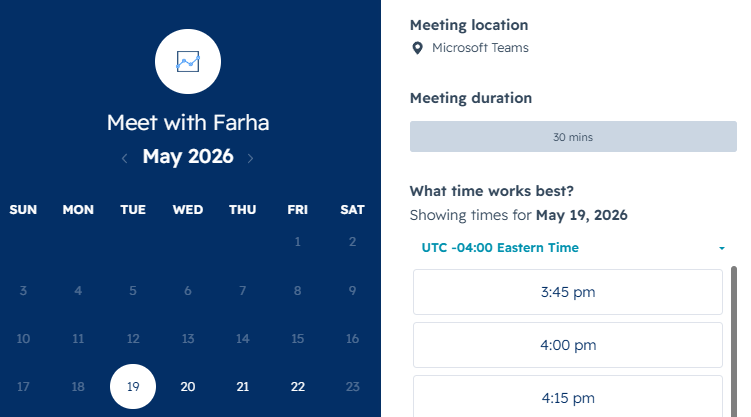
Prospects who want to skip the chatbot can go straight to the meeting scheduler, which is also built on Hubspot. It's set up as a round-robin between two reps, with 30-minute slots from 9am to 5pm Central time, Monday through Friday, on Microsoft Teams. The calendar pulls live availability from both reps' calendars (one on Office 365, one on Google) and offers the first open slot to whichever rep is free, so the prospect never sees a "no times available" screen.

 DUX Translations
source
DUX Translations
source
 Backstory
 Mivada
source
Mivada
source
 Datum Labs
source
Datum Labs
source
 Signature Cosmetic Clinic
source
Signature Cosmetic Clinic
source
 SQS | Square Settlements
source
SQS | Square Settlements
source
 Verity Homes
source
Verity Homes
source
 KGK Science Inc.
source
KGK Science Inc.
source
 Dime Clinica neurocardiovascular
source
Dime Clinica neurocardiovascular
source
 Unmade
source
Unmade
source
 Humin
source
Humin
source
 Learning Without Tears
source
Learning Without Tears
source
 Identify Yourself
source
Identify Yourself
source
 株式会社INDUSTRIAL-X
source
株式会社INDUSTRIAL-X
source
 Parakeet Health
source
Parakeet Health
source
 Kairos Group
source
Kairos Group
source
 Deeplight
source
Deeplight
source
 MVV Capital Partners
source
MVV Capital Partners
source
 Diamonds On Call
source
Diamonds On Call
source
 OODA World
source
OODA World
source
 Verint
 Sapiens
 Ebix
Ebix Basware
 ServiceTitan
 FactSet
 Jack Henry
 Morningstar
 Worldpay
 HCA Healthcare
 Marathon Health
 Sevita Health
 Infinx
 Walmart
 Costa Farms
 British American Tobacco
 Camping World
 Spreetail
 Atlas Copco
 Otis
Otis Bosch
Bosch Wicresoft
 iC Consult
 Endava
 Data Pilot