We dug into our own data to find which companies are using Jira Data Center. We also asked a few engineers from these companies to share us any interesting use cases they're using Jira for and WHY they chose Jira Data Center (over Cloud)
Retail · Memphis, Tennessee · Jira Data Center
Jira Data Center
Confluence
AutoZone is the biggest auto parts retailer in the Americas. More than 7,000 stores across the US, Mexico, Brazil and Puerto Rico, and about 47,000 employees keeping the whole thing running. If you've ever needed a new battery or a replacement headlight bulb, there's a good chance you've been inside one of their stores.
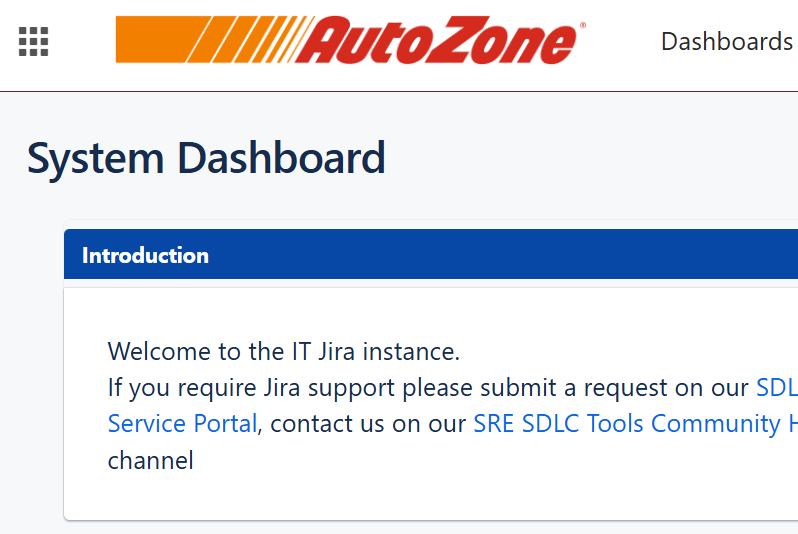
Running a retail operation that big takes way more technology than most people realize. AutoZone has a full engineering org building the systems that power the stores and the website, plus a separate software subsidiary called ALLDATA that builds repair information tools used by more than 400,000 mechanics. On top of that, they've got distributed teams working on the ecommerce site and the B2B commercial platform that serves professional mechanics. That's a lot of engineers shipping code into a lot of overlapping systems.
Jira is the thread that ties all of that work together. Pretty much every engineering team at the company lives in it day to day. Scrum masters run sprints in Jira, QA teams track bugs in it, and project managers use it to coordinate releases across the store systems, the ecommerce platform, and the commercial side of the business.
The use cases stretch beyond the core engineering teams too. The data engineering team uses Jira alongside Confluence to manage work on their Databricks platform. Infrastructure automation teams use it to track Ansible and Terraform work. Even the teams handling auto parts data standards rely on it. It really does show up everywhere.
The reason a company this size runs Jira Data Center rather than the cloud version is fairly practical. They've got sensitive operational data, complex integrations with legacy retail systems, and compliance requirements that make self-hosting easier to manage. Data Center lets them keep everything behind their own firewall while still giving thousands of engineers access to the same project tracking system.
Retail · Tokyo, Japan · Jira Data Center
Jira Data Center
Confluence
Fast Retailing is one of the biggest apparel companies in the world. If you haven't heard the name, you've almost certainly heard of their main brand, UNIQLO.

UNIQLO alone has over 2,400 stores across Japan, Asia, Europe, and North America. Selling that much clothing through that many physical stores, plus a serious ecommerce operation across multiple regions, means the engineering work behind the scenes is a lot more involved than people might assume.
Most of that engineering work goes into the ecommerce platform, which Fast Retailing builds in-house rather than buying off the shelf. Their global HQ in Tokyo owns the core platform, and each region has its own team running the local version.
Coordinating all those teams on one shared platform is where Jira comes in. It's the system product managers, business analysts, and service delivery teams use to track every enhancement, bug, and release across the platform. When the European team needs to escalate something to Tokyo, the ticket lives in Jira. When they're prepping for a big sales event and need to coordinate platform changes, that's tracked in Jira too. Confluence sits alongside it as the shared documentation repository where product specs, release notes, and progress reports all live.
The reason an apparel company Fast Retailing's size runs Jira Data Center rather than the cloud version comes down to control. They're coordinating teams across Japan, Europe, and beyond, all working on the same platform, with sensitive commercial and customer data flowing through their systems. Data Center lets them keep the whole setup self-hosted and tightly governed while still giving every regional team access to the same source of truth.
Non-profit · Washington, DC · Jira Data Center
Jira Data Center
Confluence
The American Red Cross is one of the oldest and biggest humanitarian organisations in the US. When a hurricane hits, they're the ones running shelters. When the blood supply runs low, they're the ones collecting donations. They also teach first aid and CPR, support military families, and respond to disasters around the world.
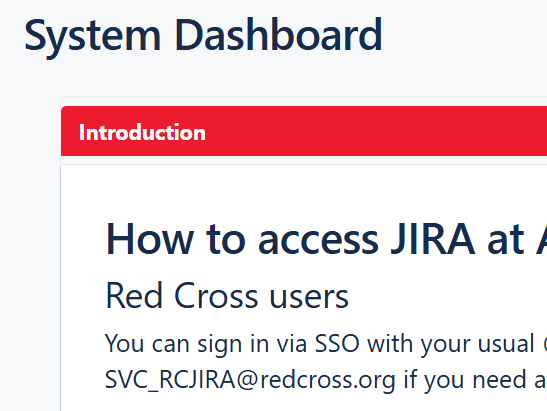
What most people don't realise is how much software sits behind all of that. The Red Cross runs a serious technology operation, and a lot of it is built on Salesforce. They have separate Salesforce environments for fundraising, for their Training Services business that sells First Aid and CPR courses, for their Biomed side that handles blood services, and for disaster client care.
Keeping all those environments moving in the same direction is where Jira comes in. Scrum masters use it to run sprints, QA teams track bugs in it, product managers manage their backlogs in it, and developers check their work in alongside it. It's used across their humanitarian services IT team, their fundraising and marketing tech group, and pretty much every Salesforce team they have.
Some of the specific use cases show how deep this goes. The Salesforce QA teams use Jira as their test management backbone, tracking test cases and defects across multiple sandboxes before every release. The Volunteer Management Solutions team uses Jira and Confluence together to coordinate design sessions and track integrations. And the team building out the public-facing Redcross.org site, which runs on Adobe Experience Manager, uses Jira to manage their development backlog and sprint planning.
The reason they run Jira Data Center rather than the cloud version is a mix of compliance and operational control. The Red Cross handles sensitive data across disaster response, blood donations, and military family services, all of which come with their own regulatory requirements. They also need their systems to keep working when hurricane season hits and everything goes into overdrive. Data Center gives them the self-hosted control to manage both.
Retail · Minneapolis, Minnesota · Jira Data Center
Jira Data Center
Confluence
Target is one of America's biggest retailers. Nearly 2,000 stores, around $100 billion in annual sales, and more than 400,000 employees worldwide. For most people it's the place you go for everyday stuff, but behind the scenes Target runs a technology operation that rivals actual software companies.
Their engineering teams build pretty much everything in-house. The point-of-sale system running in every store, the app and website guests shop on, the supply chain software, fraud detection models, even the internal tools merchandising teams use to plan what to stock.
With that much engineering happening across so many different systems, Target needs one place to coordinate it all, and Jira is that place. Product managers run roadmaps in it, scrum masters use it for sprint ceremonies, and QA teams track defects through it before anything ships.
Target runs Jira Data Center rather than the cloud version for scale and control. With thousands of engineers across the US and India, sensitive operational data, and deep integrations with internal tooling, self-hosting lets them keep everything behind their own security perimeter and tune it for their load.
Government Services · Tysons, Virginia · Jira Data Center
Jira Data Center
Maximus is a government services contractor most people have never heard of but have probably interacted with. When you call a Medicare helpline, apply for Medicaid in certain states, or hit a customer service line for a federal health programme, there's a good chance the person on the other end works for Maximus. They run contact centres, build software, and operate the back-end systems that keep a huge chunk of US public services running.
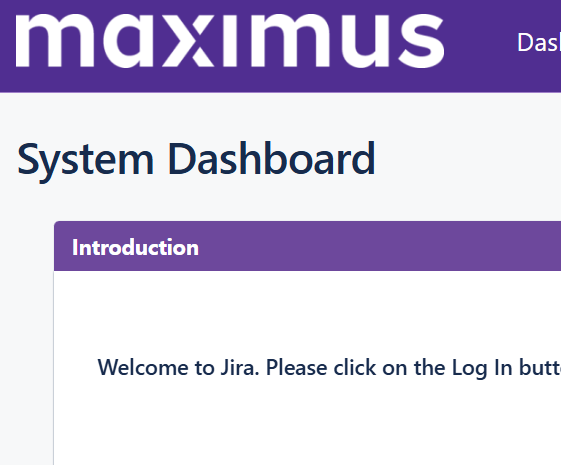
Beyond the call centres, they have a sizable technology and consulting arm that builds software for federal agencies. That includes highly classified work for the Department of Defense and US Cyber Command, Medicaid provider enrollment systems for state governments, tolling and traffic systems for places like the New York State Thruway, and plenty in between.
Across all of that work, Jira is the common thread. Developers use it to log bug fixes on classified Air Force software. Project managers use it to run Medicaid system rollouts. Scrum masters on the tolling contracts use it for sprint planning. Maximus has even been hiring dedicated Jira specialists whose whole job is helping teams use the tool better for planning, requirements, and delivery.
The reason Maximus runs Jira Data Center instead of the cloud version is pretty simple. A lot of their work involves classified or sensitive government data, and contracts come with strict rules about where that data can live and who can touch it. Self-hosting means they can put Jira inside environments that meet those rules, which cloud versions often can't. For a company serving the Department of Defense and state governments at the same time, that control isn't optional.
Publishing · Berlin, Germany · Jira Data Center
Jira Data Center
Confluence
Springer Nature is one of the biggest academic publishers in the world. They publish Nature, the science journal most people have heard of, along with Scientific American and thousands of other research journals and textbooks.
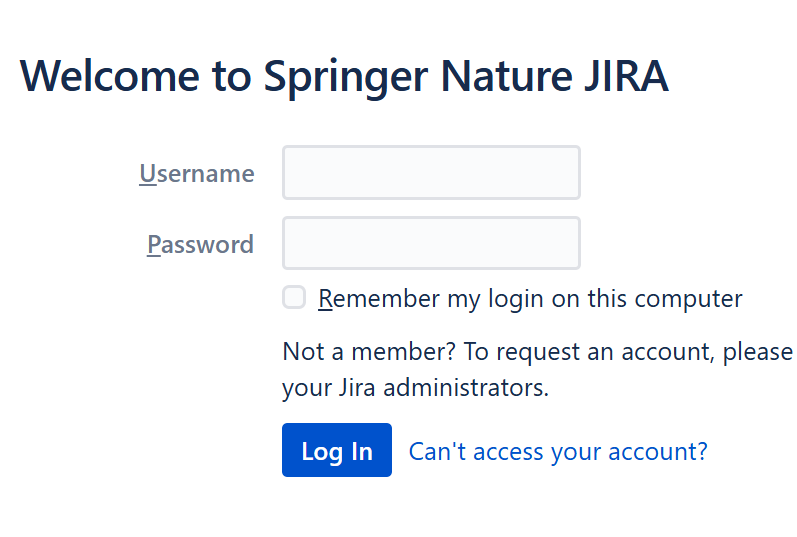
Behind all that publishing is a serious technology operation. Their digital division builds the websites and platforms where researchers actually read articles, submit papers, and find what they need. The platforms serve over four million visitors a week, and the engineering teams behind them are spread across offices in London, Berlin, Lisbon, New York, and a few other cities.
Keeping a distributed setup like that running smoothly is where Jira comes in. Engineers use it to track work on the article delivery platforms that host millions of research papers. Business analysts use it to capture requirements and keep stakeholders in the loop. Delivery leads use it to coordinate programmes involving over 100 engineers across multiple vendors at once. And lastly, their DevOps teams, support engineers, and product managers all live inside Jira and Confluence day to day.
The reason Springer Nature runs Jira Data Center rather than the cloud version comes down to control and scale. They have hundreds of engineers, strict data rules around publishing contracts and research IP, and deep integrations with their own publishing systems. Self-hosting lets them run everything on their own terms, keep sensitive material inside their own network, and handle the load of a globally distributed engineering team without compromise.
Software · New York, New York · Jira Data Center
Jira Data Center
Confluence
MongoDB is one of the most popular databases in the world. A database is basically where apps store their information, like your account, your messages, your order history. When you use a modern app or website, there's a good chance MongoDB is quietly holding onto that data in the background. More than 60,000 companies use it, including most of the biggest companies in America.
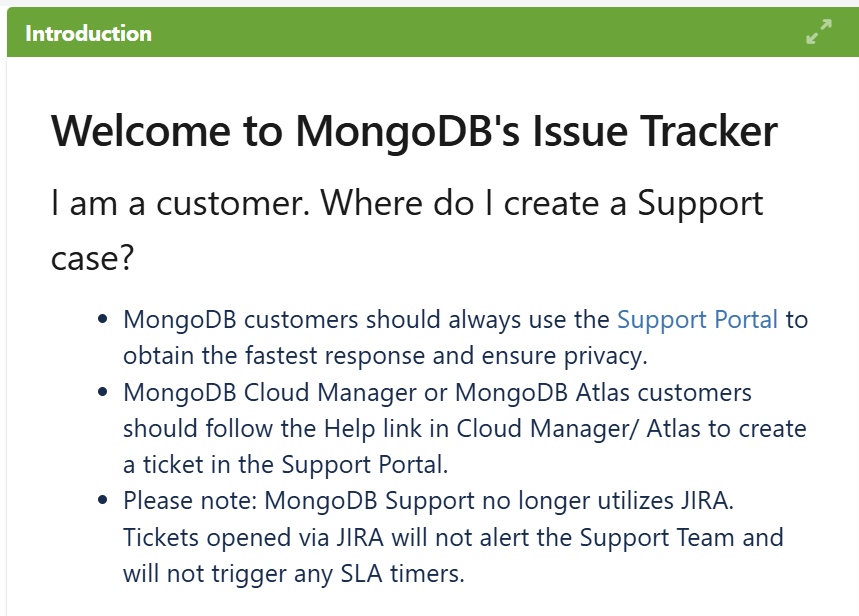
Running a database that big takes a lot of people. The company has around 7,700 employees, with engineers working out of New York, Dublin, India, and a few other places. They build the main database itself, plus a cloud version called Atlas that runs on Amazon, Google, and Microsoft's cloud services. On top of that they build tools for developers and newer products to help companies move their old apps onto MongoDB.
With that many teams building that many things, they need a way to keep everything organized, and that's where Jira comes in. Engineers live inside it all day, jotting down bugs they find and new features they're planning to build.
When those features are ready to ship, a different team takes over to push the changes out to the cloud service without breaking anything for customers, and they coordinate all of that through Jira too.
Meanwhile, there's a whole other group of people whose job is to prove to the US government and big banks that MongoDB handles their data safely, and they use Jira to keep track of every audit, every piece of evidence, and every follow-up task. Tying it all together are the project managers who use Jira to make sure teams in different countries are actually working towards the same thing.
What makes MongoDB's setup a bit different is that they don't use the regular cloud version of Jira. They run Jira Data Center, which means they host it on their own servers. The reason is simple. They deal with really sensitive data from the US military, big banks, and hospitals. That data comes with strict rules about where it can live and who can touch it. Running Jira themselves means they can keep everything locked down inside their own network and meet those rules. It also just works better for a company their size, with thousands of engineers all using it at once.
Software · Santa Barbara, California · Jira Data Center
Jira Data Center
Confluence
QAD is a software company you've probably never heard of, but chances are something you've eaten, worn, or driven was made in a factory that uses their software. They build ERP software: the big central system that runs a manufacturing company.

QAD also owns a product called Redzone, which is a bit different. Redzone is an app that runs on iPads and tablets out on the actual factory floor, helping the workers running the machines communicate with each other, log problems, and track how much they're producing in real time.
With so many different products and teams spread across the US and India, QAD needs a way to keep everything moving in the same direction, and that's where Jira comes in. Their support engineers use it to log customer issues and fix the bugs that come up. Their product managers use it to decide what new features to build next. The teams building tools that automatically add and remove employees from company systems use Jira to track every step.
And when a new version of the software is ready to ship to thousands of manufacturing customers around the world, there's a dedicated release manager whose whole job is to coordinate it all through Jira, so nothing breaks when the new code goes out.
QAD runs Jira Data Center, which means they host it on their own servers. They're actually in the middle of moving to the cloud version, but for now Data Center gives them more control over how everything is configured and how deeply it connects to their other internal systems. For a company their size, with support teams running 24/7 across different time zones, that stability matters while they plan the switch.
Software · Santa Clara, California · Jira Data Center
Jira Data Center
Confluence
Cohesity is a company that helps big businesses back up their data and get it back quickly if something goes wrong. Imagine a giant safe where a hospital, a bank, or a government agency keeps copies of everything important. If a hacker breaks in or a server crashes, Cohesity is what they use to rewind and recover.

Over 13,600 companies use them, including 85 of the 100 biggest companies in America. They got even bigger recently by merging with Veritas, another big name in the backup world.
With that much customer data to protect, Cohesity needs a way to keep their own engineering work organized, and that's where Jira comes in. Their software engineers, spread across California, Bangalore, and Pune in India, use Jira every day to track the bugs they find and the features they're building.
Their QA engineers, the people who test the software before it ships, lean on Jira heavily too. They simulate things like ransomware attacks and server crashes to make sure backups actually work when customers need them, and every test, every bug, and every fix gets logged.
Even their IT team uses it. When a new employee joins Cohesity or someone leaves, there's a whole process of giving or taking away access to different systems, and Jira is how they track each step so nothing falls through the cracks.
Financial Services · Coral Springs, Florida · Jira Data Center
Jira Data Center
Confluence
Verifone is the company behind a lot of the credit card machines you tap or swipe at checkout. When you pay for gas at the pump, buy groceries, or tap your card at a vending machine, there's a good chance that little payment terminal was made by Verifone. They've been doing this for over 40 years, and today their devices are used in 165 countries and process about $8 billion in transactions every year.

The physical machines are only half the story. Verifone also builds the software that runs on them, the systems that connect those machines to banks, and specialized setups for places like gas stations, EV chargers, transit systems, and unattended kiosks. Between the hardware and the software, there's a lot of engineering work happening at once, and a lot of teams around the world doing it.
Keeping all of that coordinated is where Jira comes in. It acts as the shared to-do list for everyone, no matter what they're working on or where they're sitting. The Android developers who write the code running on the payment terminals log their tasks in Jira, and when they find bugs along the way, those get written up there too so the right team can pick them up and fix them.
The customer-facing teams live in Jira just as much. When a shopkeeper in Stockholm calls in because their card reader won't connect, the support rep on the other end opens a ticket in Jira to track it from the first phone call all the way to the fix. On the other end of the process, business analysts sit down with customers, figure out what they actually need, and turn those conversations into Jira tickets that engineers can start building from. Project managers then use those same tickets to keep everyone on schedule and make sure nothing slips.
Holding this whole setup together is a dedicated Jira specialist whose entire job is the system itself. They keep it running smoothly, handle migrations from other tools like ServiceNow into Jira, and build automations on top that save everyone time.

 WeShine Tech
source
WeShine Tech
source
 Spot
source
Spot
source
 HeavyConnect
source
HeavyConnect
source
 Daya Group of Companies (Pvt) Ltd.
source
Daya Group of Companies (Pvt) Ltd.
source
 Flying Cloud Technology
source
Flying Cloud Technology
source
 Senior Lifestyle
source
Senior Lifestyle
source
 Ariana Gostar Spadana(Panaone)
source
Ariana Gostar Spadana(Panaone)
source
 Vista Group Co
source
Vista Group Co
source
 TRATON GROUP
source
TRATON GROUP
source
 Automoby
source
Automoby
source
 Conectas
source
Conectas
source
 Xperi Inc.
source
Xperi Inc.
source
 Donse group
source
Donse group
source
 Tigerteco
source
Tigerteco
source
 Spin Joy Games
source
Spin Joy Games
source
 AdMedia
source
AdMedia
source
 QA.GURU
source
QA.GURU
source
 CASETiFY
source
CASETiFY
source
 Security Industry Regulatory Agency- SIRA
source
Security Industry Regulatory Agency- SIRA
source
 AutoZone
 Fast Retailing
 American Red Cross
 Target
 Maximus
 Springer Nature
 MongoDB
 QAD
QAD
 Cohesity
 Verifone


