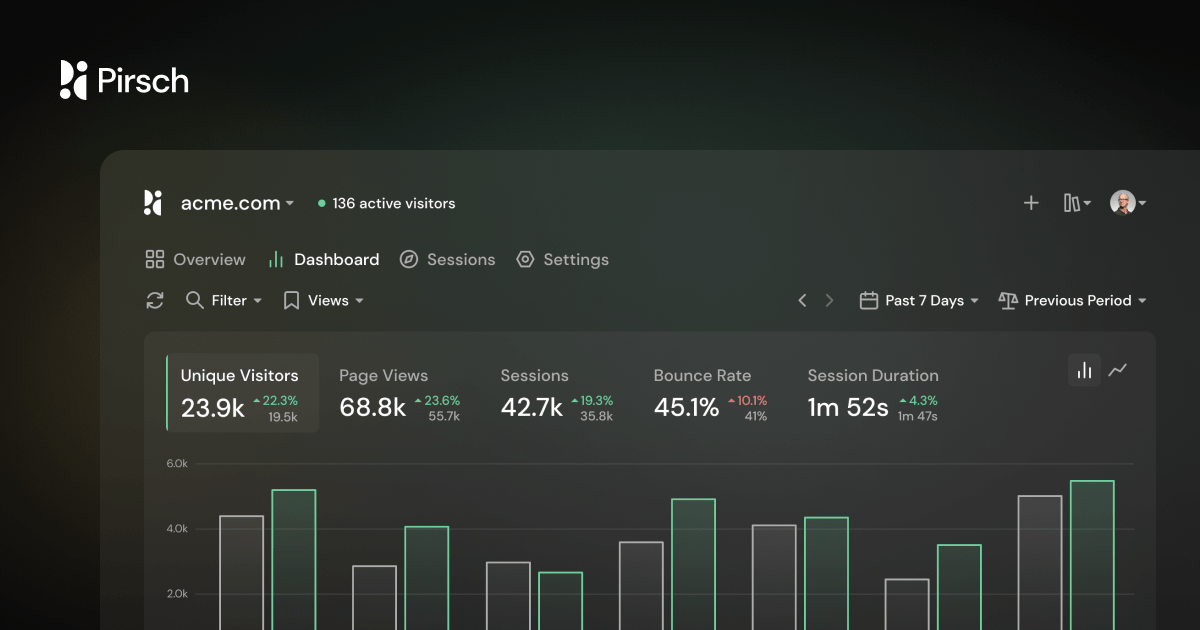
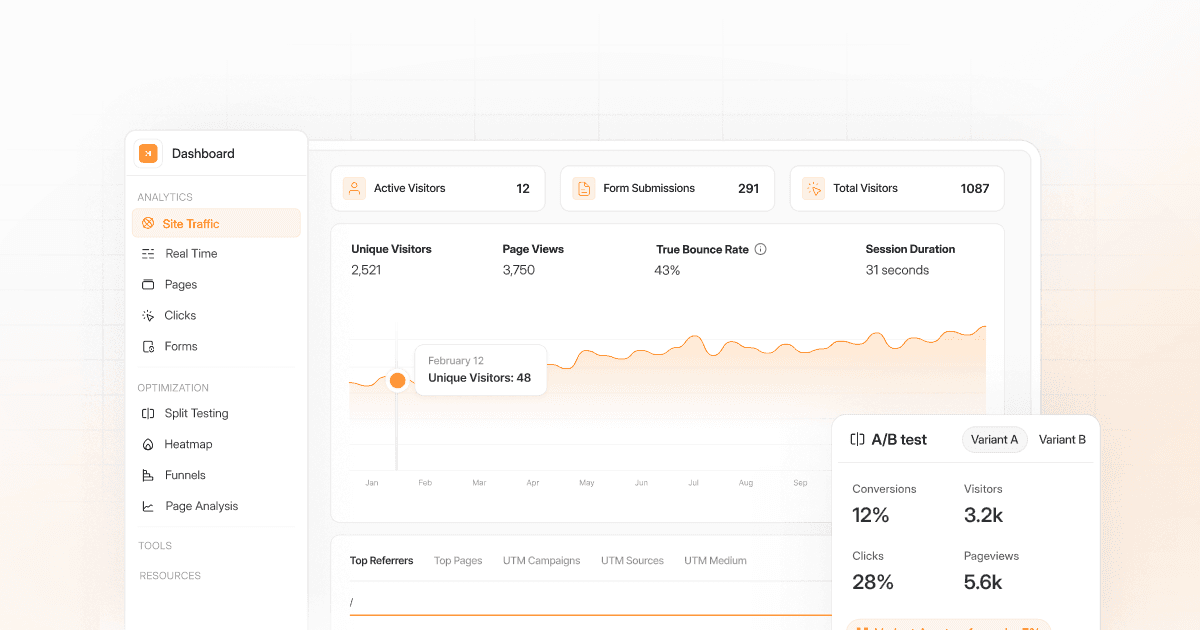
We detected 108,288 companies using Cloudflare Analytics, 7,399 companies that churned, and 2,837 customers with upcoming renewal in the next 3 months. The most common industry is Retail (6%) and the most common company size is 11-50 employees (28%). We find new customers by detecting JavaScript snippets or configurations on customer websites.
Note: We track companies that use Cloudflare for CDN, WAF and DDOS purposes here
👥 What types of companies use Cloudflare Analytics?
Source: Analysis of Linkedin bios of 108,288 companies that use Cloudflare Analytics
I noticed these companies are remarkably diverse, spanning nearly every industry imaginable. They're construction material manufacturers, healthcare providers, wine importers, fashion brands, IT consultancies, educational institutions, and everything in between. What strikes me most is how practical and operational these businesses are. They're not selling SaaS dashboards or developer tools. They're running physical retail stores, managing supply chains, delivering patient care, operating game reserves, and manufacturing steel profiles. These are real-world businesses with tangible products and services.
These appear to be established, mid-stage companies rather than startups. The employee counts typically range from 11 to 500, suggesting stable operations beyond startup chaos but not massive enterprise scale. Many mention decades of operation (founded in 1953, 1960s, 1970s), multiple locations, and expanding services. Few list recent funding rounds, and when they do, it's modest seed or grant funding. The detailed descriptions of services, physical locations, and established customer bases all signal mature operations.
🔧 What other technologies do Cloudflare Analytics customers also use?
Source: Analysis of tech stacks from 108,288 companies that use Cloudflare Analytics
Commonly Paired Technologies
i
Shows how much more likely Cloudflare Analytics customers are to use each tool compared to the general population. For example, 287x means customers are 287 times more likely to use that tool.
I noticed that companies using Cloudflare Analytics overwhelmingly favor HubSpot's ecosystem, with the entire suite of HubSpot tools appearing at dramatically higher rates than normal. This tells me these are primarily B2B companies with structured inbound marketing and sales operations. They're running sophisticated digital marketing campaigns that require both performance monitoring through Cloudflare Analytics and comprehensive CRM capabilities through HubSpot.
The pairing of Cloudflare Analytics with HubSpot Meetings is particularly revealing. These companies are driving significant web traffic that they want to convert into scheduled conversations. They need Cloudflare to handle performance and security at scale while using HubSpot Meetings to seamlessly move prospects from website visits to sales calls. The strong presence of LinkedIn Ads reinforces this, these are companies targeting professional audiences and tracking how paid campaigns perform across their web infrastructure. HubSpot Service Hub appearing 66 times more often suggests they're not just acquiring customers but managing ongoing relationships, likely selling products or services that require support and retention efforts.
The full stack reveals marketing-led growth companies that have moved beyond scrappy startup phase. They've invested in an integrated system where marketing, sales, and service work from the same platform. They care about website performance and analytics enough to use Cloudflare's dedicated tools rather than basic alternatives. This suggests they're generating meaningful traffic volumes and treating their website as a critical revenue driver.
Alternatives and Competitors to Cloudflare Analytics
Explore vendors that are alternatives in this category

 EyeQuestion Software(Logic8 BV)
 The Bath Priory
 Kyten (YC W26)
 Harvey Windows + Doors
 Biodiverse Development
 This Week in Fintech
 Las Vegas Integrative Medicine
 Black & Company Industrial and Safety
 Against The Grain Shoppe
 EMURJ
EMURJ
 ACSI Connects
 The Candle Barn Company
 Parts for Trucks, Inc.
 Titan Cloud Solutions
 DATASPOT Technologies
 Megiston srl
 Old Station Outdoor and Landscape Supply
 1Pass
1Pass
 enhanced.io
 Arcade.dev