We dug into our own data, and spoke with people from these companies to confirm their usage, to find which companies are using Azure in production. Here are real-world examples of how they use it.
Entertainment - Montreal, Quebec
Cirque du Soleil runs dozens of live shows simultaneously - permanent residencies in Las Vegas, touring productions on multiple continents. Behind all of that is a technology stack that is, almost entirely, Azure.
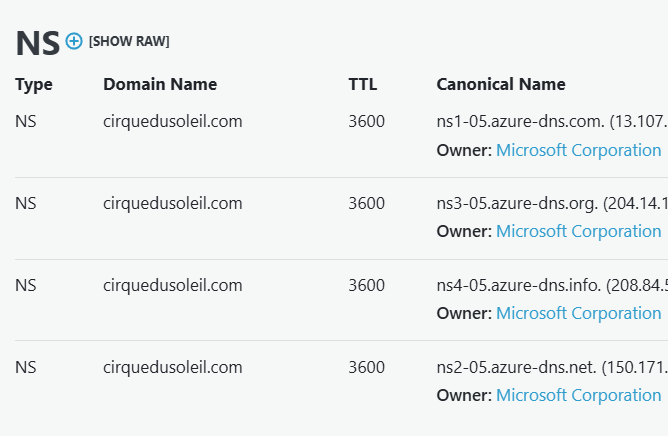
The website and API run on Azure infrastructure. Their API responses carry Azure's own request tracing headers, and Application Insights is instrumented on both the frontend and the backend - meaning they're monitoring performance and tracking errors across the full stack in one place.
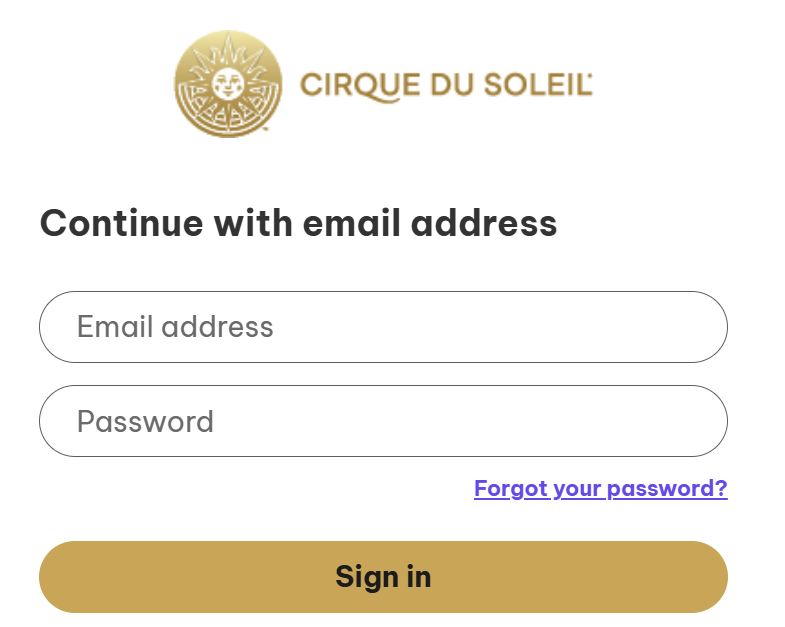
The customer side goes further. Logins and member accounts run through Azure B2C - when someone creates an account or signs into cirquedusoleil.com, that entire authentication flow is handled by Azure, including the member portal and likely their loyalty program.
The same commitment runs deeper into the business. Internal infrastructure runs on Azure VMs and virtual networks, with Entra ID managing staff access across all their global locations. The web platform uses Azure Service Bus and Logic Apps to connect backend systems. And their entire data operation - pipelines, processing, storage, reporting, governance - is built on Azure Data Factory, Databricks, Data Lake, Power BI, and Purview, maintained by a dedicated data engineering team.
Engineering teams live in Azure DevOps for planning, code, and deployments. From the moment a customer logs in to how engineers ship the next update, it's Azure throughout.
Financial Services - Paris, France
Younited is a European fintech offering instant consumer credit and buy-now-pay-later solutions across France, Italy, Spain, Portugal, and Germany - both direct to consumers and embedded into partner checkouts.
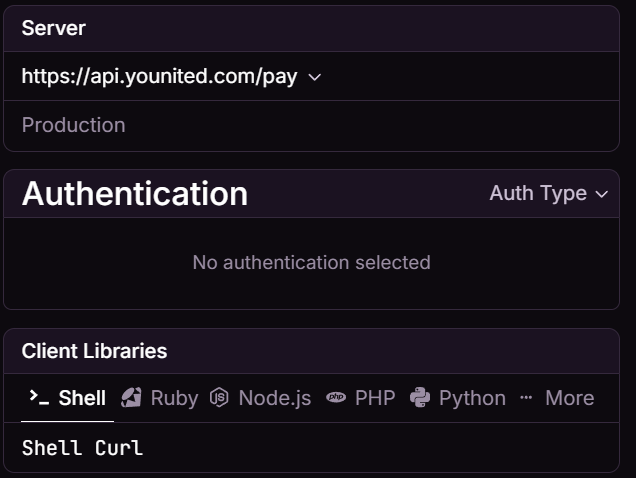
Both younited.com and their payment API sit behind Azure Front Door - Microsoft's global load balancing and CDN service - meaning Azure is handling traffic routing for their consumer-facing website and their partner API simultaneously.
Merchants who integrate Younited Pay log into their dashboard through Azure B2C, the same identity service Cirque du Soleil uses for consumers, but here applied to a B2B context - retailers and e-commerce partners managing their payment integration.
Internally, their engineering stack runs on Azure and GCP in parallel. Azure DevOps handles CI/CD across the engineering team, and Azure Event Hubs powers their real-time data streaming. On the data side, they use Azure alongside GCP's BigQuery for warehousing, with Terraform managing infrastructure across both clouds. Data scientists work with Azure as one of their primary cloud platforms for model development and deployment.
Software - Stockholm, Sweden
Younium makes subscription management and billing software for B2B companies - handling contracts, invoicing, and revenue recognition for businesses that sell on recurring revenue models.
Unlike Cirque or Younited, who use Azure to support their business, Younium built their product on Azure. Their API runs behind Azure Front Door, their DNS is on Azure DNS, and the backend runs on AKS - Azure's managed Kubernetes service - with Azure SQL Server as the application database. The whole production infrastructure is managed with Terraform and deployed through Azure DevOps.
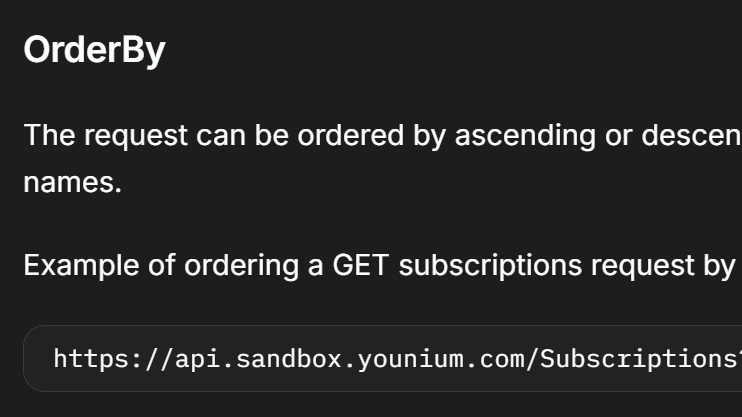
Their monitoring stack also runs on Azure. Grafana is hosted at `grafana.younium.com`, resolving to a Microsoft-owned IP, sitting alongside Azure Monitor and Prometheus for observability across their production systems.
They have a dedicated Cloud Operations team whose sole job is running and improving this Azure infrastructure - handling high availability, disaster recovery, security, and cost optimization. For a company of 75 people, that's a meaningful commitment to Azure as the foundation their product is built on.
Software - Holon, Israel
Sapiens makes insurance software - policy administration, billing, claims, underwriting - sold as SaaS to over 600 insurers across 30 countries. They're listed on NASDAQ and the Tel Aviv Stock Exchange and are part of Microsoft's Top 100 Partner program.
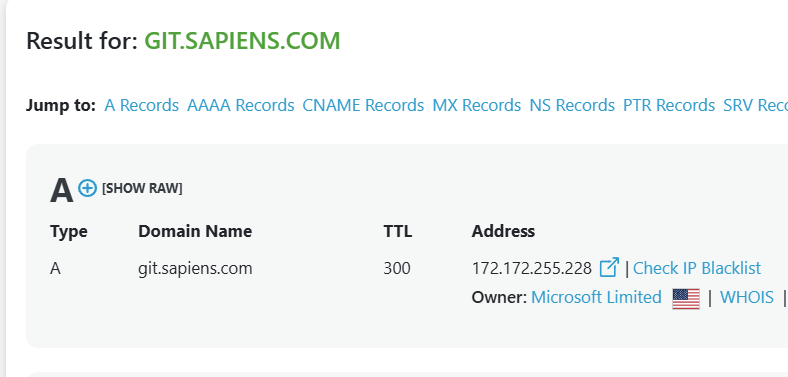
Their domain runs on Azure DNS, and their internal Git server is exposed through Azure AD Application Proxy - Microsoft's service for securely publishing internal applications to the internet without a VPN. That alone signals a meaningful Microsoft infrastructure commitment.
But the deeper story is their Bangalore Azure team. Sapiens has built a dedicated practice around Azure - consultants, architects, and team leads who deploy and manage Azure infrastructure for their insurance customers. The stack they run includes AKS, Azure Functions, API Management, Application Gateway, Azure Key Vault, and Azure DevOps. Some of this is for Sapiens' own SaaS platform; some of it is managed services work done on behalf of insurers migrating to the cloud.
For insurance companies - which tend to run old, complex systems and have strict regulatory requirements around data and uptime - having a vendor who owns their Azure deployment end to end is a meaningful part of the pitch.
Software - Tel Aviv, Israel
Glassix makes an AI-powered contact center platform - letting companies deploy AI agents across customer support channels like WhatsApp, chat, Instagram, and more. Their customers are enterprises running high-volume customer service operations.
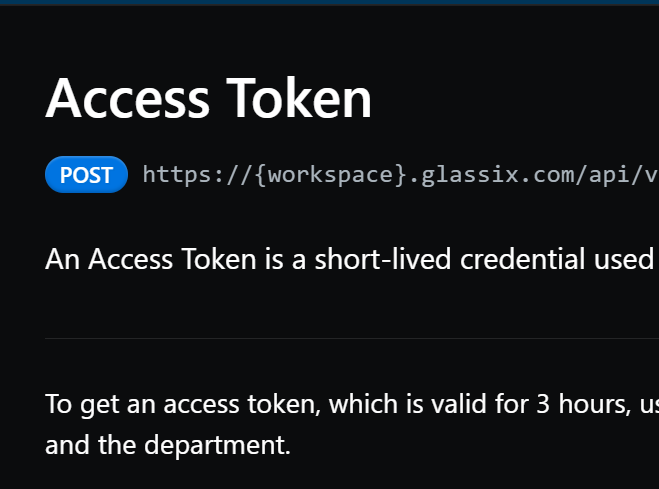
The platform runs on Azure in West Europe. Their app and API both sit behind Azure Front Door, and the response headers from their production servers reveal the internal hostnames directly: glassix-agent-prod-west-eu-1 and glassix-public-api-prod-west-eu-1. Application Insights runs on the backend for monitoring. Their tech stack is .NET Core, MS SQL, Redis, MongoDB, and Azure - with Azure listed as a core part of the stack in engineering roles.
For a 22-person company serving enterprise customers, running on Azure Front Door with regional deployment in West Europe isn't incidental - it's how they deliver the availability and latency their customers need.
Software - Berlin, Germany
Brighter.ai makes data anonymization software - letting companies redact faces and license plates from video and image data at scale to meet privacy regulations.
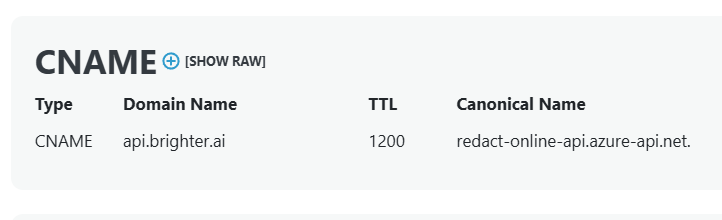
Their API sits behind Azure API Management - confirmed by the CNAME on api.brighter.ai pointing directly to redact-online-api.azure-api.net, with the API resolving to a Microsoft-owned IP in Germany. Application Insights runs on the backend.
The portal login page is served directly from Azure Blob Storage - the login HTML lives in a named Blob container and is delivered to the browser from there. Authentication itself runs through Azure B2C, with a custom domain at login.brighter.ai.
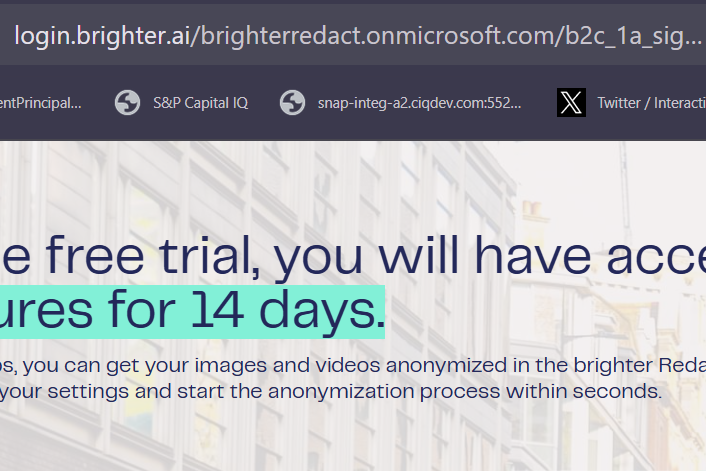
API Management, Blob Storage, B2C, Application Insights - each piece of the customer-facing stack traces back to Azure.
Machinery Manufacturing - London, United Kingdom
CNH makes agricultural and construction equipment under brands including Case IH, New Holland Agriculture, and CASE Construction. A growing part of their business is the software and connectivity platform on top of those machines, feeding telemetry back to farmers and fleet operators in real time.
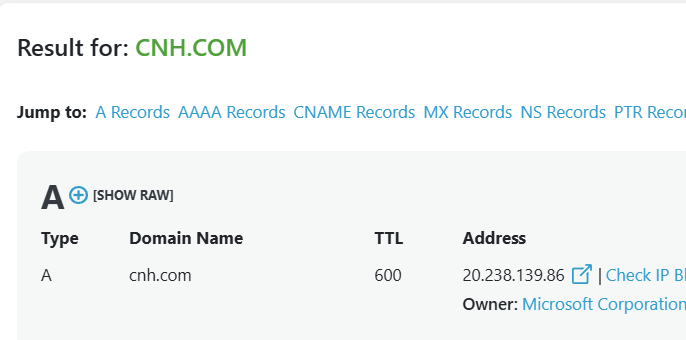
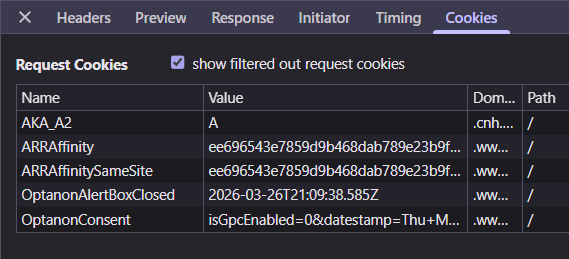
Their website runs on Azure App Service, sitting behind Akamai's CDN. The Microsoft-owned IP and the ARR Affinity session cookies in the response confirm Azure App Service as the backend, and their CMS assets are served from a hostname directly on westeurope.cloudapp.azure.com.
The deeper Azure commitment is in their precision farming platform. CNH builds and operates a global telematics system that collects data from machines in the field - IoT sensor data, GPS, equipment diagnostics - and processes it in Azure. The stack their engineering teams work with includes AKS, Azure Service Bus, Event Hub, Blob Storage, Key Vault, API Management, Durable Functions, Application Insights, Databricks, CosmosDB, and Azure SQL. Their teams are also actively migrating data pipelines from AWS to Azure, making Azure their clear target state for this platform.
Insurance - New York, United States
Assurant is a Fortune 500 insurance company operating in 21 countries. Their products - mobile device protection, extended warranties, renters insurance - are typically embedded into partner checkout flows rather than sold directly.
Their website runs on Azure. Assets are served from Azure CDN under a hostname with Assurant's own name in it - confirming it's their production CDN, not a shared third-party service.
The same commitment runs through their product engineering. Their "Digital Connected Living" platform - the infrastructure behind their mobile and device protection services - is built on Azure App Service, Azure Functions, and Azure API Management, with Service Bus and Event Grid handling messaging between services.
Underneath that, engineers use Azure DevOps for CI/CD and Terraform for infrastructure, with Application Insights and Datadog for monitoring in production.
Their data platform follows the same pattern - Azure Data Factory and Databricks for pipelines and processing, feeding into Snowflake for warehousing and Power BI for reporting.
Software - Paoli, Pennsylvania
DuckDuckGo makes a privacy-focused search engine and browser used by tens of millions of people. Their pitch is simple: no tracking, no personalized ads, no data collection. They've been profitable since 2014 on the back of privacy-respecting search advertising.
Despite being known for privacy, their product infrastructure runs on Azure. Their API at api.duckduckgo.com resolves to a Microsoft-owned IP, as does improving.duckduckgo.com - the endpoint that handles search feedback and analytics in production. Both point to the same Azure IP.
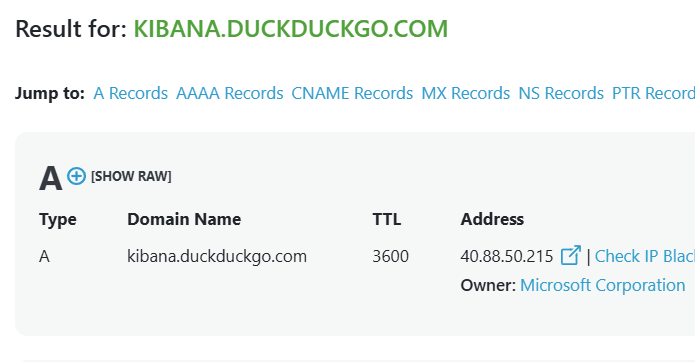
Their internal monitoring also runs on Azure. Kibana - the dashboard their engineers use to observe system performance - is hosted at kibana.duckduckgo.com, resolving to another Microsoft-owned IP.
This makes sense in context - DuckDuckGo has long used Bing's search API to power their results, giving them an existing commercial relationship with Microsoft. Running their infrastructure on Azure is a natural extension of that.
Manufacturing - Valcourt, Quebec, Canada
BRP makes Ski-Doo snowmobiles, Sea-Doo watercraft, and Can-Am off-road vehicles, sold in over 130 countries. Azure and GCP are their two primary cloud platforms, managed by a dedicated Cloud Business Office.
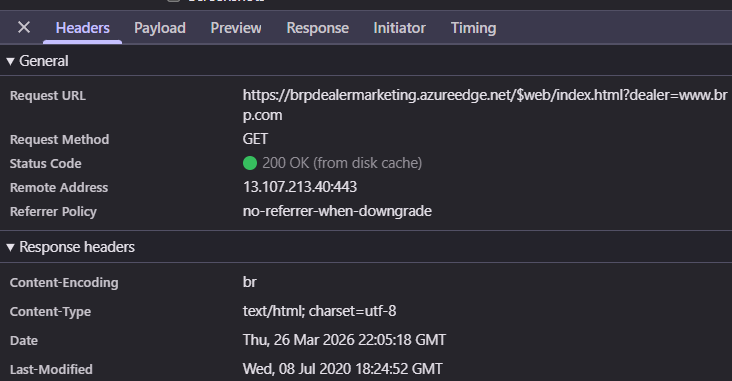
Azure is one of their two primary cloud platforms, running alongside GCP. Their domain uses Azure DNS, and their dealer marketing portal is served from Azure CDN - the hostname brpdealermarketing.azureedge.net makes the infrastructure explicit.
On the platform side, their Cloud Business Office runs AKS, Terraform, Azure Policy, Key Vault, and Entra ID across production environments. Their connected vehicle apps - which link Sea-Doo and Ski-Doo vehicles to owner smartphones - use Azure cloud services on the backend. Their data teams in both Canada and Brazil use Azure Repos and Azure DevOps as part of their data pipeline workflows, with Snowflake and Databricks sitting on top.
 Palador
 RE/MAX Tunisie
 Learning with Technologies
 Stena Metall Group
 Amaja Oilfield Limited
 Switzerland Cheese Marketing AG
 Woodport Doors LLC- Shawano, WI
 StereoLOGIC Ltd.
 FieldWorker
 Intelligen
 Home Mortgage Advisors
 Numou Food Catering Services
 Ashland Conveyor Products
 Land and Equity Movement in Uganda (LEMU)
 Richa Realtors
 BorderBuddy
 JSfirm.com
 MultiMed Billing Service
 Southern Grampians Shire Council
 Cirque du Soleil
 Younited
 Younium
 Sapiens
 Glassix
 Brighter.ai
 CNH
CNH
 Assurant
 DuckDuckGo
 BRP
BRP