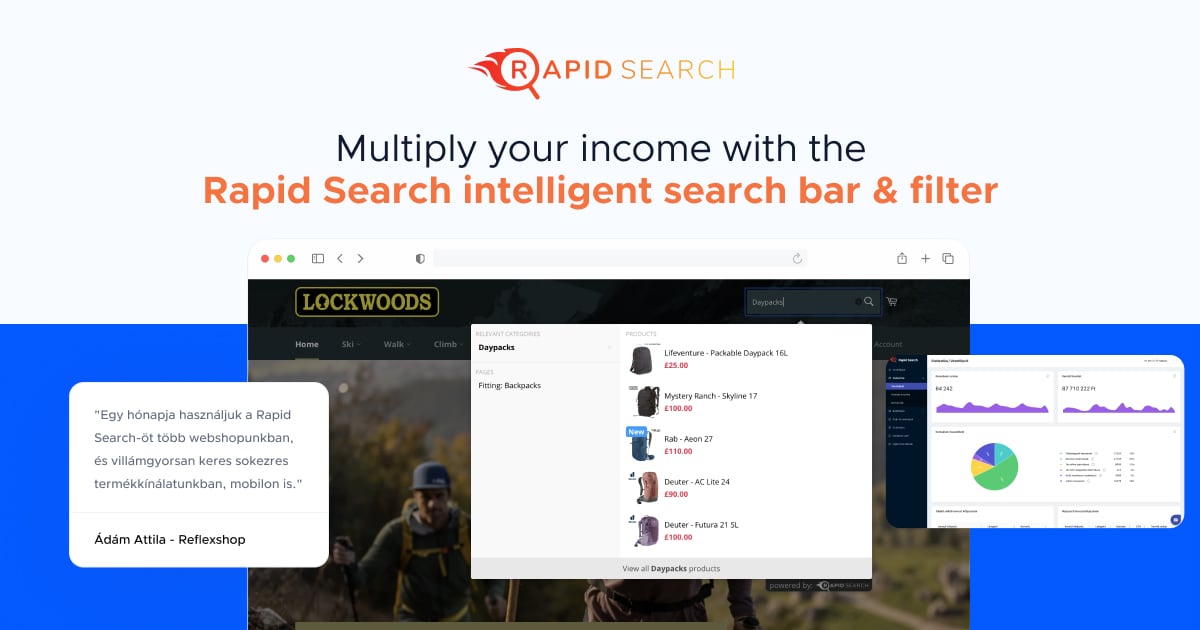
We detected 686 companies using SearchSpring, 155 companies that churned, and 31 customers with upcoming renewal in the next 3 months. The most common industry is Retail (50%) and the most common company size is 2-10 employees (34%). We find new customers by detecting JavaScript snippets or configurations on customer websites.
Note: We can't detect companies that use SearchSpring with a headless implementation or backend search
📊 Who usually uses SearchSpring and for what use cases?
Source: Analysis of job postings that mention SearchSpring (using the Bloomberry Jobs API)
Job titles that mention SearchSpring
i
Based on an analysis of job titles from postings that mention SearchSpring.
Job Title
Share
Ecommerce Merchandiser
32%
Ecommerce Specialist
28%
Product Manager
8%
Vice President of Sales
4%
My analysis shows SearchSpring purchasing decisions are driven primarily by ecommerce and digital commerce leadership, though only 4% of these postings represent leadership roles. The VP of Sales role at SearchSpring itself reveals they're targeting mid-market and enterprise retailers focused on search, merchandising, and personalization. The strategic priority is clear: companies want to optimize product discovery and drive conversion rates across their digital storefronts.
The day-to-day users are overwhelmingly ecommerce merchandisers and specialists (60% combined) who use SearchSpring to curate product displays, manage search results, and optimize the customer journey. I noticed these practitioners are responsible for merchandising product listing pages, configuring search results, managing product carousels and recommendations, and continuously testing site experiences. They work cross-functionally with creative, marketing, and analytics teams to execute merchandising strategies that balance business goals with customer needs.
The core pain point across these postings centers on conversion optimization and revenue growth. Companies repeatedly mention goals like "drive conversion and increase average order value," "optimize the online shopping experience," and ensure "product discoverability." One posting explicitly states the need to "use the SearchSpring tool to merchandise highly curated search, product listing pages, cart and recommendations carousels." Another emphasizes "delivering best in class content tailored for our digital channel." These organizations are clearly investing in SearchSpring to create seamless, data-driven shopping experiences that turn browsers into buyers.
👥 What types of companies use SearchSpring?
Source: Analysis of Linkedin bios of 686 companies that use SearchSpring
Company Characteristics
i
Shows how much more likely SearchSpring customers are to have each trait compared to all companies. For example, 2.0x means customers are twice as likely to have that characteristic.
Trait
Likelihood
Industry: Apparel & Fashion
41.4x
Industry: Retail Apparel and Fashion
16.4x
Industry: Retail
15.7x
Country: AU
6.9x
Company Size: 51-200
2.7x
Country: US
2.5x
I noticed that SearchSpring's typical customers are predominantly retail and e-commerce businesses selling physical products directly to consumers. These companies operate across apparel and fashion (Max, MESHKI, DECJUBA), home goods and furniture (GlobeWest, Beacon Lighting), sporting goods (PickleballCentral.com, Superfeet), jewelry and accessories (Jet Set Candy, Saint Valentine Jewellery), and specialty retail categories. They maintain both online stores and often physical locations, with product catalogs ranging from hundreds to thousands of SKUs that require sophisticated search and discovery capabilities.
These are established, mature businesses rather than early-stage startups. The employee counts typically range from 50 to 500, with many operating for 10-40+ years. They have physical retail footprints (Kathmandu with 1,389 employees, DECJUBA with 140+ stores), stable operations, and some private equity backing. Very few show venture funding, and when they do, it's modest Series A or B rounds rather than aggressive growth capital.
🔧 What other technologies do SearchSpring customers also use?
Source: Analysis of tech stacks from 686 companies that use SearchSpring
Commonly Paired Technologies
i
Shows how much more likely SearchSpring customers are to use each tool compared to the general population. For example, 287x means customers are 287 times more likely to use that tool.
I noticed that SearchSpring users are clearly direct-to-consumer ecommerce brands, and not just any ecommerce companies, but sophisticated ones focused on growth and customer experience. The presence of BigCommerce as the dominant platform, combined with customer service tools like Gorgias, loyalty platforms like Yotpo, and marketing automation through Klaviyo, tells me these are businesses selling physical products online with a strong emphasis on retention and repeat purchases.
The pairing of Klaviyo and Attentive is particularly revealing. These companies are investing heavily in owned marketing channels, using email and SMS to communicate directly with customers rather than relying on paid acquisition alone. When I see this combined with Yotpo for reviews and loyalty programs, it suggests a strategy built around maximizing customer lifetime value. They're not just trying to make a sale but building relationships. Elevar's presence reinforces this, as it's specifically designed to improve data accuracy for marketing attribution, meaning these teams are analytical about their spending and want to know what's actually working.
The full stack reveals marketing-led organizations that have moved beyond early stage chaos. These aren't startups figuring out product-market fit, nor are they enterprise companies with complex sales cycles. They're likely in growth stage, probably doing anywhere from $5 million to $100 million in revenue, with dedicated marketing teams that care about conversion rates, customer data, and the entire post-purchase experience. They're sophisticated enough to know that site search affects conversion but not so large that they've built everything custom.
Alternatives and Competitors to SearchSpring
Explore vendors that are alternatives in this category

 Alfred Dunner
 VetShopMax
 ABC Stores
 Wagner Spray Tech
 Anatomy Warehouse
 Staccato
 Olli Ella
 Mode Mischief
 abc carpet & home
 Snuggle Bugz - Canada's Baby Store
 ELLIATT
 Max
Max
 Le Specs AU
 Patagonia
 Patagonia NZ
 Max and Lily
 GLOBEWEST
 PickleballCentral.com
 EL Design