The follow is a sample of companies using Zoom products, pulled from our dataset. They include Zoom Video Conferencing customers, Zoom Contact Center deployments, Zoom Events, and Workvivo. The purpose is to show you our data is accurate, as well as showcase some interesting customer stories.
Community Bank - Stockton, CA - Founded 1867
Bank of Stockton is California's oldest bank still operating under its original charter, founded in 1867. They have 20 branches across 9 counties in Northern California and roughly 300 employees.
Zoom Video Conferencing
Bank of Stockton uses Zoom at bankofstockton.zoom.us.
A bank spread across 9 counties has an obvious use case. Mortgage consultations, small business loan reviews, financial planning meetings - customers who aren't near a branch can just hop on Zoom instead of driving to Stockton.
Zoom Contact Center
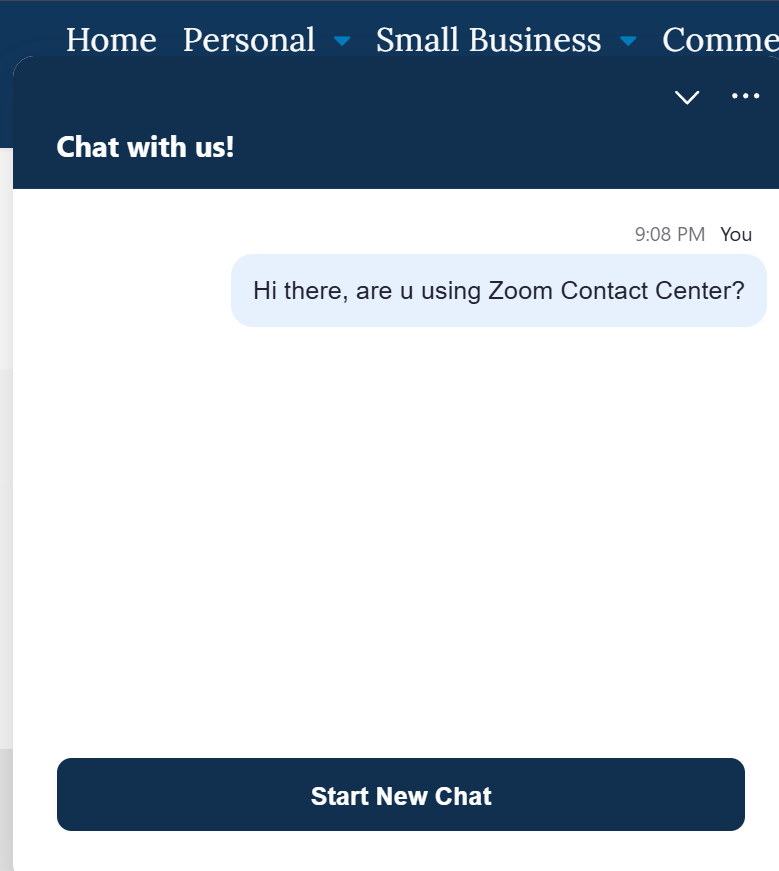
Bank of Stockton uses Zoom Contact Center to power the live chat widget on their website.
The legacy CCaaS vendors - Genesys, Five9, NICE, Avaya - have always targeted larger institutions. A 20-branch community bank is exactly the segment they never bothered with. That's where Zoom Contact Center is finding traction.
Payday & Installment Lender - Salt Lake City, UT
Check City is a payday and installment lender with physical stores in Utah and Nevada and online lending across 13 states.
Zoom Video Conferencing
Check City uses Zoom at checkcity.zoom.us.
Payday lenders deal with sensitive, time-pressured conversations - loan renewals, collections, payment arrangements. Video gives agents a more human touch than a phone call when walking someone through a repayment plan.
Zoom Contact Center
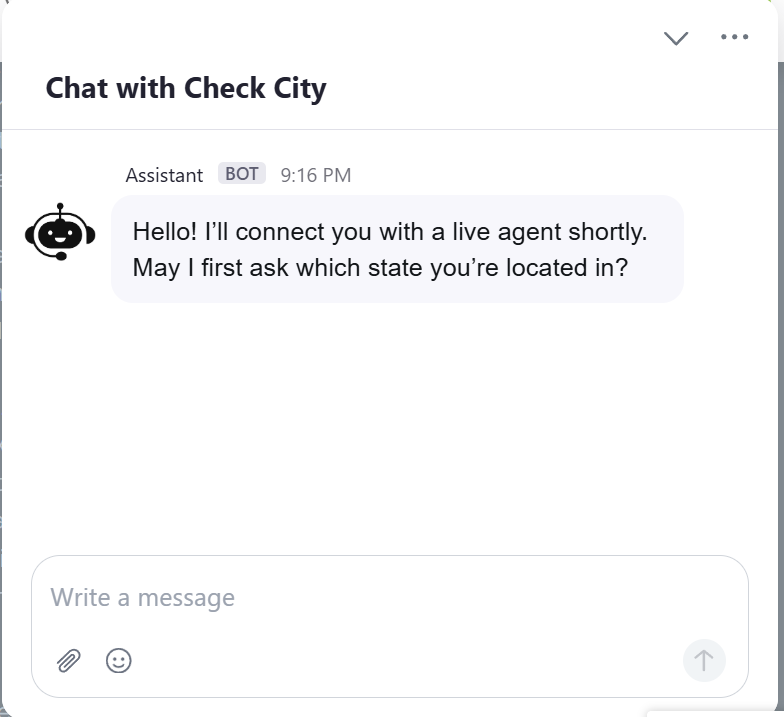
Check City uses Zoom Contact Center for the live chat widget on their website.
The first thing their bot asks is which state you're in. That's compliance routing, not generic triage. Payday lending is heavily state-regulated - loan amounts, rate caps, and required disclosures all vary by state. The bot collects that upfront before any loan conversation starts.
Cricut makes cutting machines and design software for crafters, artists, and small business owners.
Their machines cut paper, vinyl, fabric, and other materials from digital designs. Cricut Design Space is the software layer that ties it all together.
Zoom Video Conferencing
Cricut uses Zoom at cricut.zoom.us, wired directly into their customer support flow.
Their Member Care team offers Zoom video sessions so agents can see exactly what a customer is working with - the machine, the material, the cut settings. When a blade is leaving drag marks, watching a live cut beats trying to diagnose it over chat.
Cricut even published a help article walking customers through how to join a Zoom session with Member Care. This is a documented part of their support offering, not a one-off experiment.
Zoom Contact Center
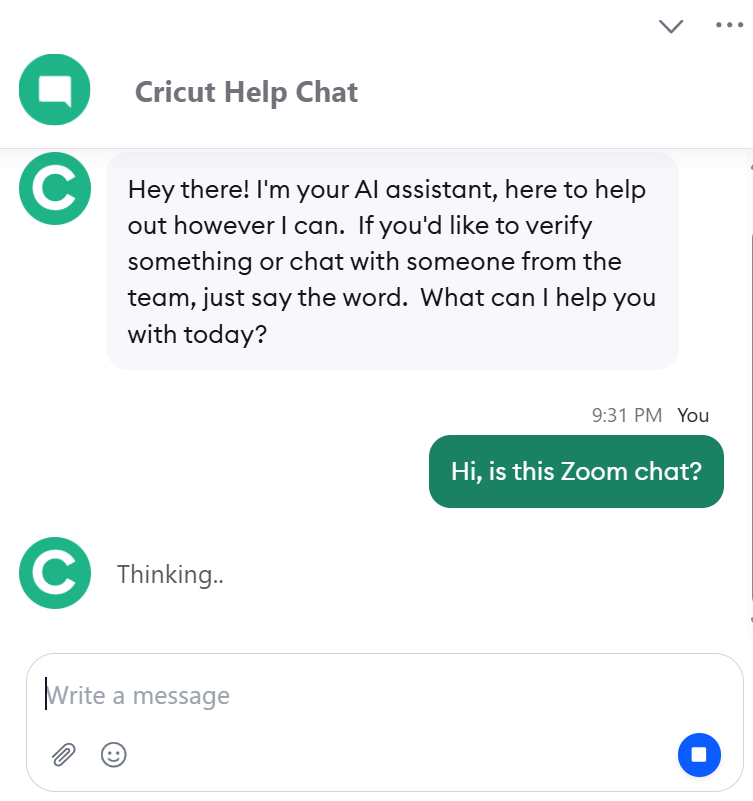
Cricut uses Zoom Contact Center for the live chat widget on their website.
Their customer base skews toward people who are mid-project and need a fast answer. Chat is the right channel - low friction, no hold music, doesn't require walking away from the craft table.
Having Zoom Contact Center handle both chat and video support means Cricut's support stack is unified on one platform, which simplifies routing across channels.
Cricut also runs outsourced contact center partners alongside their in-house team. Coordinating across those teams - coaching, quality reviews, keeping everyone on the same page - happens over Zoom. With a hybrid work model and teams across the U.S., U.K., Australia, and beyond, most internal meetings do too.
Dermatology Practice Network - Dallas, TX
Platinum Dermatology Partners is a dermatology-focused DSO that partners with and acquires dermatology practices across the US.
They operate dozens of clinic locations and have grown rapidly through acquisition, which means a constantly expanding headcount spread across many sites.
Zoom Video Conferencing

Platinum Derm uses Zoom for video conferencing at platinumderm.zoom.us.
A multi-site healthcare network runs on coordination - between clinical staff, practice managers, and corporate leadership across dozens of locations. Zoom is the connective tissue for that, replacing the need to fly people in for training, onboarding, or operational reviews.
Workvivo
Platinum Derm uses Workvivo (Zoom's employee experience platform) at platinumderm.workvivo.us.
Workvivo is built for organizations where most employees aren't sitting at a desk. Clinic staff - medical assistants, front desk, nurses - don't live in email or Slack. Workvivo gives them a mobile-friendly feed for company news, shoutouts, and updates without needing a corporate laptop.
For a company growing through acquisitions, it also helps knit newly acquired practices into the broader culture before they've had time to feel like part of the team.
Hospitality Property Management Software - London, UK
eviivo is an all-in-one property management platform for independent hotels, B&Bs, vacation rentals, and short-term rental hosts.
They serve over 28,000 hospitality businesses across Europe and North America, handling bookings, channel management, payments, and guest communications in one system.
Zoom Video Conferencing
eviivo uses Zoom for video conferencing at eviivo.zoom.us.
A software company selling to small hospitality operators across multiple countries needs to onboard and support customers who may not be particularly technical. Video calls let the eviivo team walk hosts and hoteliers through setup, troubleshoot issues, and run training sessions face-to-face - without getting on a plane.
Zoom Webinars
eviivo runs a public webinar series open to any hotelier or host, covering topics like revenue management, OTA strategy, and platform features.
It's a smart acquisition play. Independent accommodation operators aren't sitting in trade show booths. A free webinar is a low-friction way to get in front of prospective customers and demonstrate expertise without a hard sell.
Zoom Contact Center
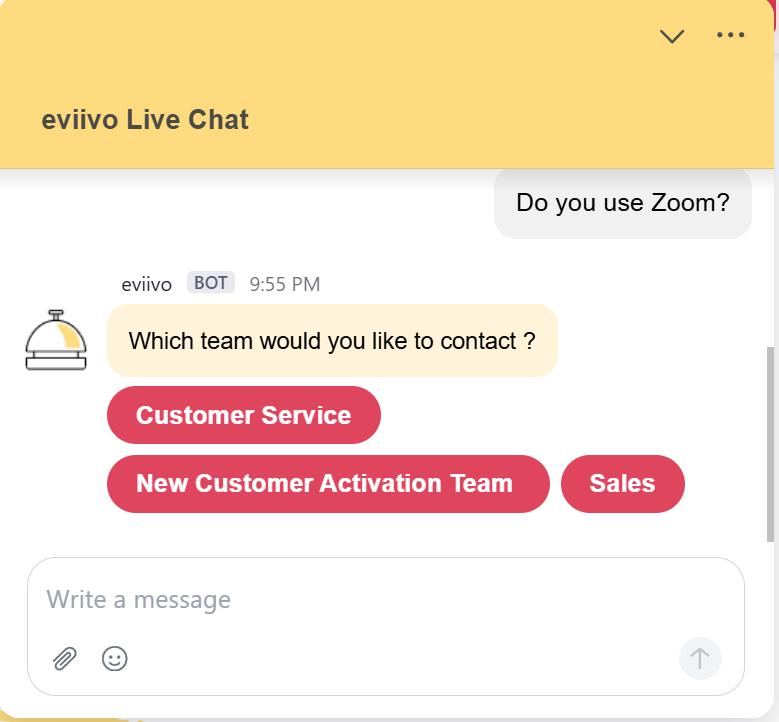
eviivo uses Zoom Contact Center to power the live chat widget on their website.
The bot immediately asks which team you want to reach - Customer Service, New Customer Activation, or Sales. That's smart routing for a company where the need varies a lot depending on whether you're an existing customer with a billing issue or a prospect still evaluating the product.
Investment Fund Manager - Montreal, QC - Founded 1974
FÉRIQUE is a Quebec-based investment fund manager serving the engineering community. Founded in 1974, they offer mutual funds and wealth management services exclusively to engineers, engineering students, and their families.
Their client base is spread across Quebec and Canada, which makes digital channels central to how they communicate and educate members.
Zoom Video Conferencing
FÉRIQUE uses Zoom for video conferencing at ferique.zoom.us.
A wealth management firm serving a dispersed member base needs a reliable way to meet clients virtually - for portfolio reviews, financial planning consultations, and advisory sessions without requiring a trip to Montreal.
Zoom Webinars
FÉRIQUE runs a free public webinar series on personal finance topics - tax optimization, retirement planning, investment strategy. Their events page lists upcoming sessions delivered on Zoom.
It's a natural fit for a financial institution serving engineers. The audience is technically comfortable with virtual formats and professionally minded about continuing education. A free lunchtime Zoom webinar on tax efficiency is an easy yes for that demographic.
Zoom Contact Center
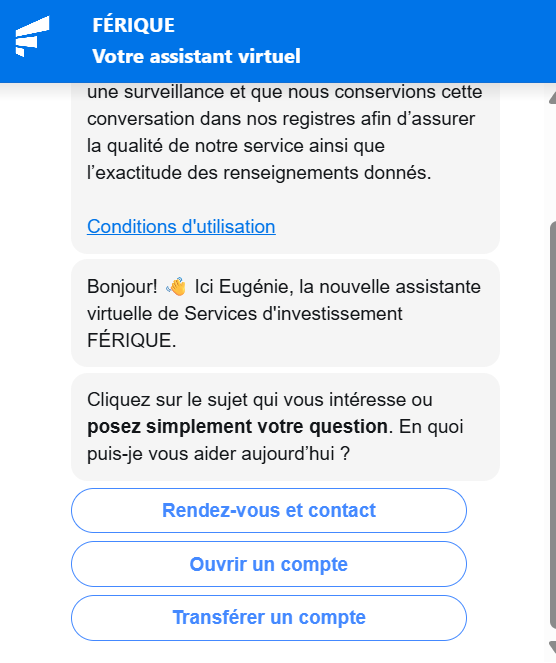
FÉRIQUE uses Zoom Contact Center to power the virtual assistant on their website.
Their bot - named Eugénie - greets members in French and routes them to the right service: scheduling an appointment, opening an account, or transferring funds. For a bilingual Canadian financial firm where most interactions happen digitally, a smart routing bot that gets callers to the right place before a human picks up is table stakes.
Early Childhood Education Supplier - Lewisville, NC - Founded 1968
Kaplan Early Learning Company supplies educational materials, furniture, and curricula to early childhood programs across the US. They serve childcare centers, Head Start programs, public pre-K, and faith-based programs.
Beyond products, they run a professional development arm that trains early childhood educators through virtual and in-person sessions.
Zoom Video Conferencing
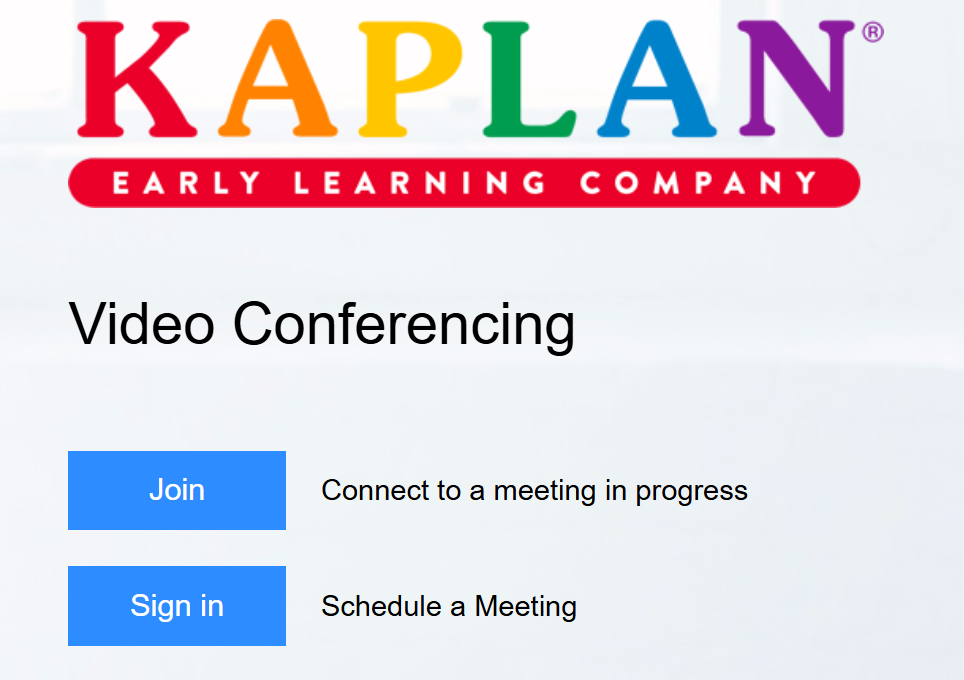
Kaplan uses Zoom for video conferencing at kaplanco.zoom.us.
A company that sells to childcare programs and schools nationwide - and trains their staff - needs a reliable way to connect with customers and run sessions without being on the road constantly. Zoom handles the internal coordination and the customer-facing training sessions alike.
Zoom Webinars
Kaplan runs a free public webinar series for early childhood educators, delivered via Zoom multiple times a month. Topics include classroom management, curriculum implementation, social-emotional development, and family engagement.
They've also partnered with EdWeb to offer free CE-certified sessions - their 2025 top EdWeb webinar alone drew enough attendance to rank #1 on the platform. It's a smart demand generation play: educators who attend free PD webinars become familiar with the Kaplan brand before they ever place an order.
Zoom Contact Center
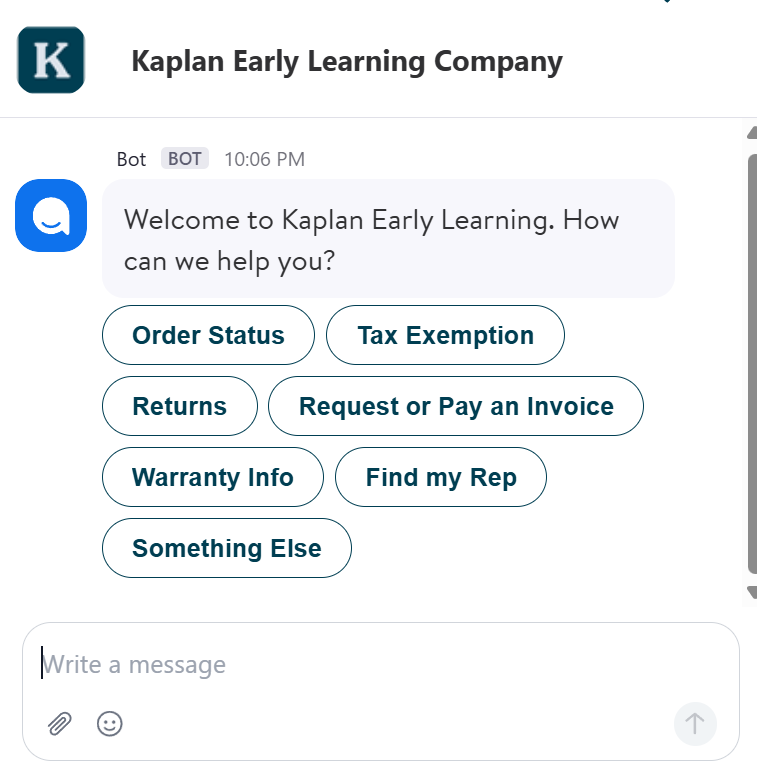
Kaplan uses Zoom Contact Center to power the live chat widget on their website.
Their bot routes incoming chats across six distinct topics - Order Status, Tax Exemption, Returns, Invoices, Warranty Info, and finding a Rep. That's a well-mapped contact flow for a company selling physical goods to institutional buyers with procurement processes. The bot filters efficiently before a human agent needs to get involved.
Literacy & Dyslexia Education Nonprofit - Princeton, NJ - Founded 1948
Learning Ally is a nonprofit that supports students with dyslexia and reading difficulties through audiobooks, assistive technology, and educator training.
They serve schools, districts, and educators across all 50 states and internationally, with a strong focus on evidence-based literacy instruction.
Zoom Video Conferencing
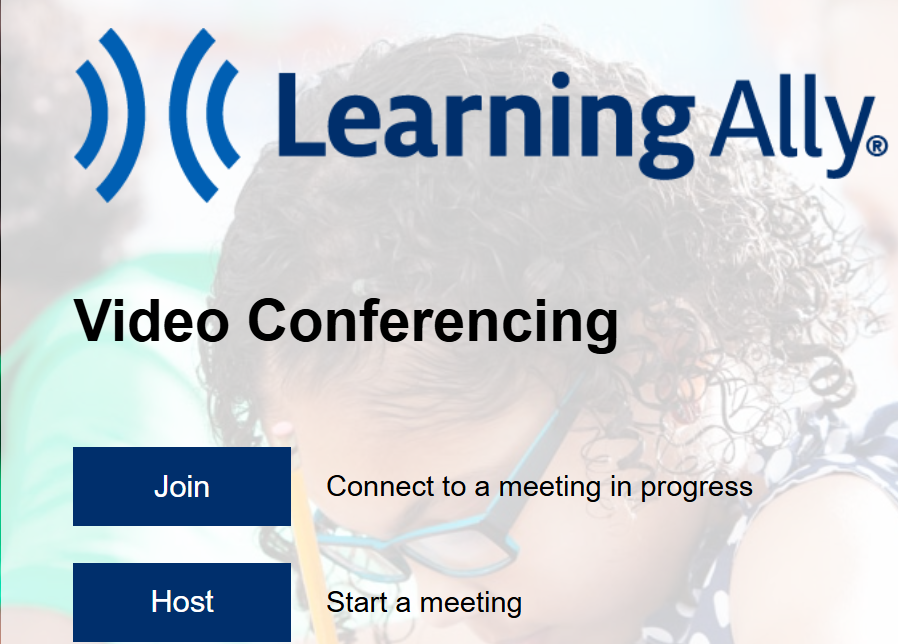
Learning Ally uses Zoom for video conferencing at learningally.zoom.us.
Their sales team uses it to demo products and meet with school district administrators across the country, and their fundraising team uses it to stay in touch with donors and foundation partners. For a small nonprofit with national reach, it's the practical alternative to putting everyone on a plane.
Zoom Webinars
Learning Ally runs one of education's largest annual virtual conferences - Spotlight on Dyslexia - hosted on Zoom Events. The 2025 edition drew over 6,800 registrants from all 50 states and 37 countries. The 2026 conference is confirmed for June 4, 2026.
They also run follow-up webinar series throughout the year via Zoom - educator workshops, dyslexia simulations, and professional learning sessions tied to the conference content.
Zoom Contact Center
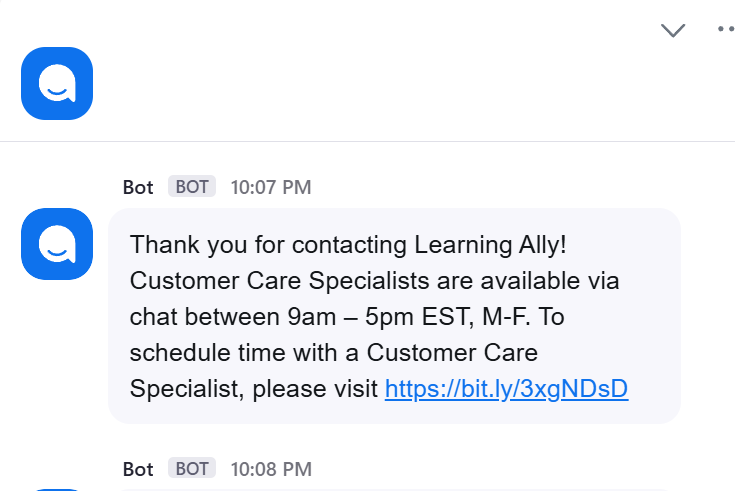
Learning Ally uses Zoom Contact Center to power the live chat on their website.
Their bot directs visitors to a Customer Care Specialist and provides scheduling links for live support - keeping availability expectations clear upfront (chat hours are 9am - 5pm EST, M-F). For a nonprofit serving educators who are often mid-lesson and need quick answers, a chat-first approach with clear escalation paths makes sense.
Public Transit Agency - Bremerton, WA - Founded 1983
Kitsap Transit is the public transit authority serving Kitsap County, Washington. They operate fixed-route buses, passenger-only ferries, and paratransit services across the county.
As a public agency, they're required to make board meetings and community input sessions accessible to residents - which shapes how they use Zoom.
Zoom Video Conferencing
Kitsap Transit uses Zoom at kitsaptransit.zoom.us.
Their Board of Commissioner meetings are conducted in a hybrid format - in person and via Zoom Webinar - so the public can attend and comment remotely. Board meeting packets include direct Zoom join links, and recordings are shared at kitsaptransit.zoom.us/rec.
They also use Zoom for quarterly community budget briefings, project planning sessions for new ferry routes and infrastructure, and public hearings - all requiring registration and open to any resident.
Zoom Contact Center
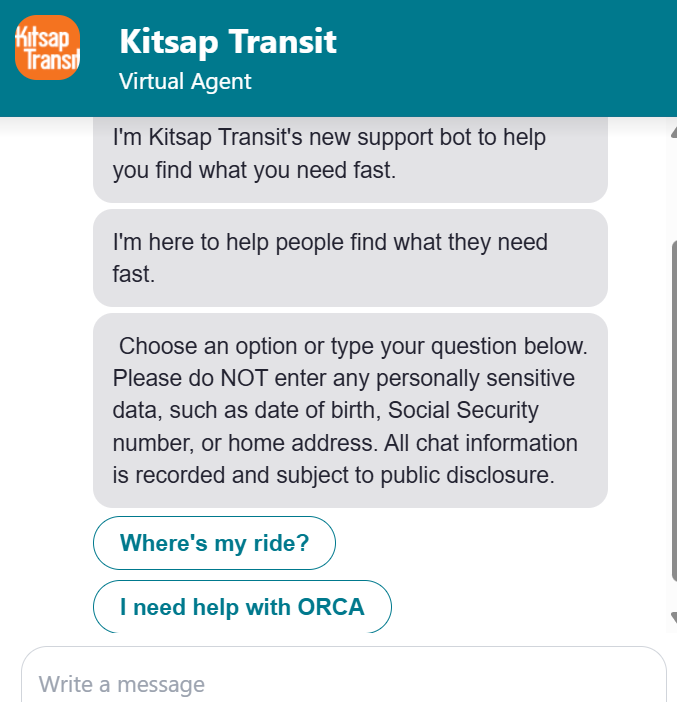
Kitsap Transit uses Zoom Contact Center to power the Virtual Agent on their website.
The bot handles the two most common rider questions right away - "Where's my ride?" for real-time tracking and "I need help with ORCA" for the regional transit card. For a transit agency, those two topics probably cover the majority of inbound contacts. Getting riders to a self-serve answer fast - without calling in - is the whole point.
The bot also surfaces an important privacy notice upfront: all chat information is recorded and subject to public disclosure. For a government agency, that's a legal requirement, and surfacing it in the bot greeting is the right place for it.
Digital Certificate & Cybersecurity - Scottsdale, AZ - Founded 1998
Sectigo is one of the world's largest commercial certificate authorities, issuing SSL/TLS certificates and providing certificate lifecycle management for enterprises globally.
Their customer base is IT and security teams at organizations of every size - a highly technical audience that needs ongoing education as certificate standards shift rapidly.
Zoom Video Conferencing
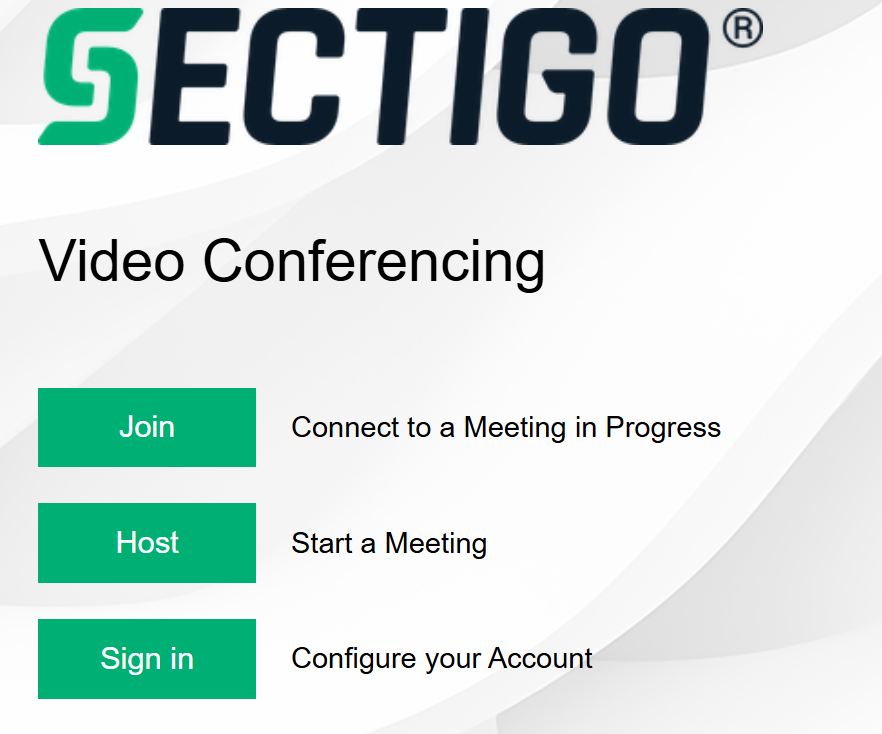
Sectigo uses Zoom for video conferencing at sectigo.zoom.us.
A global cybersecurity company with customers and teams across multiple time zones needs a reliable way to run demos, customer onboarding sessions, and partner briefings without being in the same room.
Zoom Webinars
Sectigo runs a robust public webinar program at sectigo.com/resource-library/webinars - open to any IT or security professional.
Their quarterly "Sectigo Pulse" series covers the latest in digital certificate compliance and industry changes. In 2026 alone they've already run sessions on 47-day TLS certificate lifespans, post-quantum cryptography, and Active Directory certificate management. It's a smart content play: the audience that attends these webinars is exactly the audience that buys certificate management software.
Zoom Contact Center
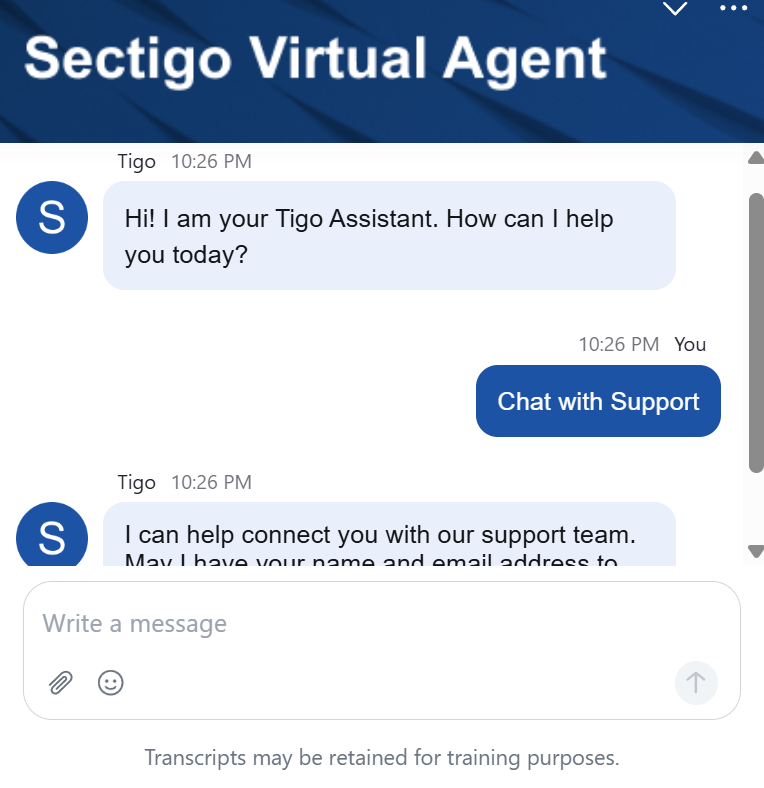
Sectigo uses Zoom Contact Center to power the "Sectigo Virtual Agent" on their website - named Tigo.
The bot handles initial triage and routes visitors to the right support team. For a company selling to enterprise security buyers who need fast answers on certificate renewals, expiry alerts, and compliance questions, having a bot that connects quickly to a live agent is table stakes.
Global Food & Agriculture - Minneapolis, MN - Founded 1865
Cargill is one of the world's largest privately held corporations, operating across food, agriculture, financial, and industrial products. Their animal nutrition division serves livestock and poultry producers globally.
Zoom Video Conferencing
Cargill uses Zoom for video conferencing at cargill.zoom.us.
At Cargill's scale, Zoom isn't just a meeting app. They have dedicated AV engineers whose job includes monitoring Zoom room systems, maintaining endpoints across global office locations, and keeping the platform running across time zones. For a company coordinating between grain traders in Geneva, processing plants in the Netherlands, and suppliers across Southeast Asia, that infrastructure has to work reliably every day.
Zoom Events - FeedMasterU
Cargill's animal nutrition division runs FeedMasterU - a public education platform hosted on Zoom Events at Zoom Events.
It's a training and education hub for farmers, nutritionists, and feed professionals - covering topics like precision animal nutrition, feed formulation, rumen health, and sustainable production. Using Zoom Events to run an education platform is a smart move for a B2B agricultural business. Farmers and nutritionists who trust Cargill's expertise are more likely to buy Cargill's products. FeedMasterU turns product knowledge into a standing competitive advantage.

 Laboratory Equipment
 Los Angeles Chamber Orchestra
 Hashavshevet - Wizsoft
 Hartman Simons & Wood LLP
 Canton Christian Home
 Premier Holidays Limited
 Sacramento Ear Nose & Throat
 Pacer ETFs
 Connell Foley LLP
 Council for Geoscience
 DTVET
DTVET
 Inflow Technologies Pvt Ltd
 K&L Wine Merchants
 Inferact
 Ryan Companies US, Inc.
 LEMNIS
 AuthorBytes
 Statewise
 Rainwater.CPA
 Hi Rasmus
 Bank of Stockton
 Check City
 Cricut
 Platinum Dermatology
 eviivo
 FÉRIQUE
 Kaplan Early Learning
 Learning Ally
 Kitsap Transit
 Sectigo
 Cargill