We dug into our own data to find which companies are using Notion in production. Here are real-world examples of how they use it.
AI-Powered Developer Tools - San Francisco, CA
Sourcegraph makes AI code search and intelligence tools for developers. Used by engineering teams at large companies to navigate and understand big codebases.
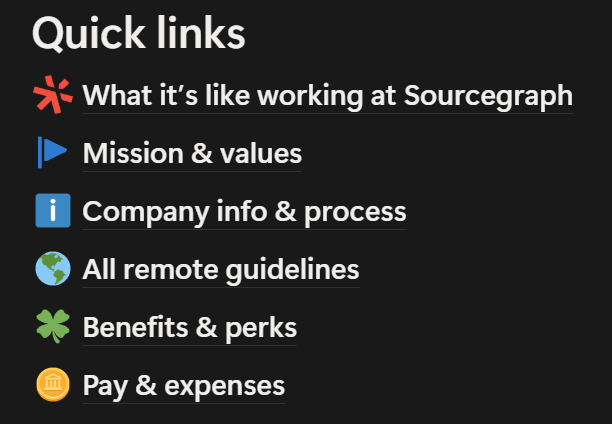
Sourcegraph uses Notion as their public company handbook - and it's extensive. The quick links alone tell you a lot: values, remote guidelines, benefits, pay and expenses, how they communicate, resources for candidates, teammates, and managers, brand hub, security. It covers pretty much everything about how the company runs.
There's a dual audience. Candidates can read the full "what it's like working here" page, the values, the benefits - all before they apply. Employees use the same Notion as their actual working reference, with internal team wikis linked from the same hub. One place, two purposes.
Employee Financial Wellbeing - London, UK
Mintago sells financial wellbeing software to "HR teams" - helping employees with pensions, savings, and money education.
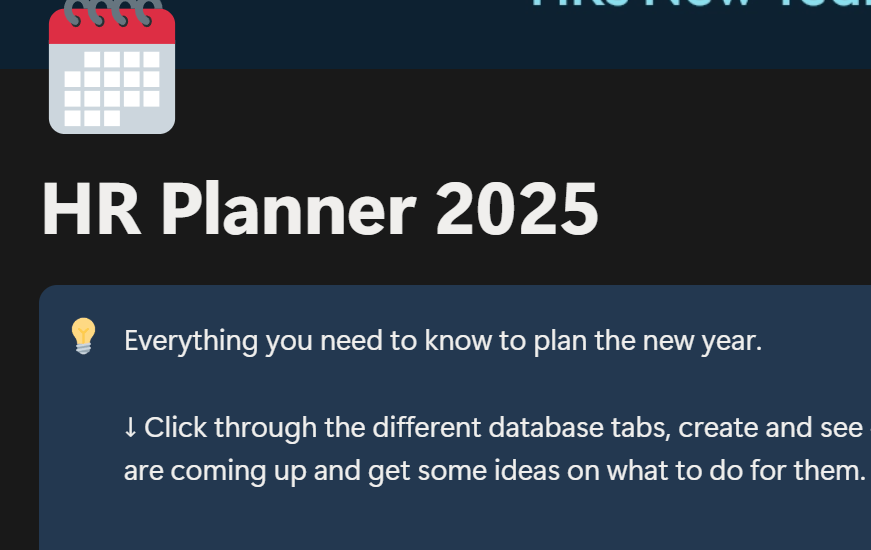
They built a free HR Planner on Notion and published it publicly for anyone to use. It's a month-by-month guide for "HR teams" - mental health focus in May, pension awareness in September, Pride events in June, that kind of thing. There's also a book club section with personal finance picks like Rich Dad Poor Dad and You Are a Badass at Making Money.
The page even tells you to duplicate it and make it your own. It's a free tool aimed exactly at the "HR managers" Mintago sells to - useful enough that people actually use it, and with Mintago's name on it the whole time.
AI Research & Intelligence - London, UK
Evident Insights publishes research on how banks and large enterprises are adopting AI. They're best known for the Evident AI Index, which ranks companies on AI maturity, and they run an annual AI Symposium that brings together speakers from places like Goldman Sachs, JPMorgan, and Microsoft.
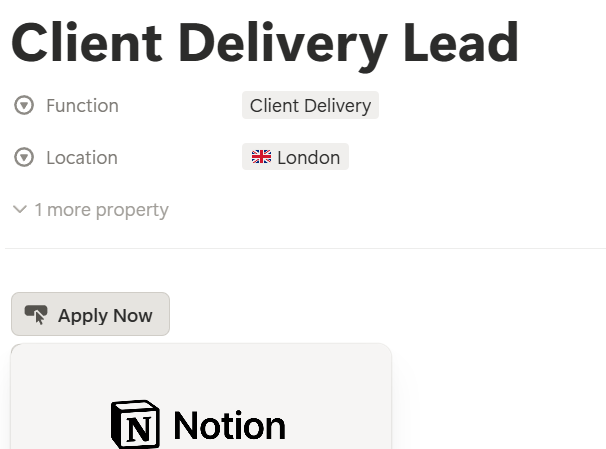
Evident uses Notion as their careers page. It covers the company pitch, perks and benefits, values, what life at the office looks like, and press coverage - all on one page. Open positions are listed directly in a Notion database, tagged by department, so candidates can browse jobs without leaving the page.
It's a small team, so having everything in one place makes sense. Someone landing on the page gets the full picture - what the company does, what working there is like, and what's currently open - without being sent around to different sites.
AI Medical Scribe - Australia
Heidi Health makes AI software that listens to doctor-patient consultations and writes the clinical notes automatically, so doctors spend less time on documentation.
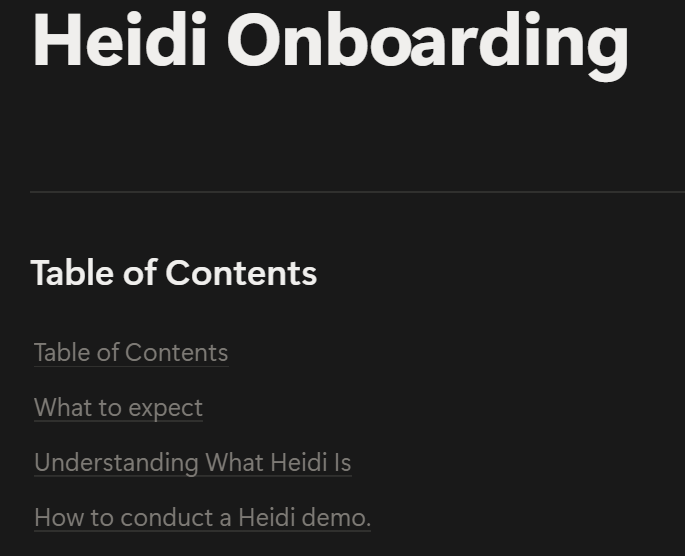
Heidi uses Notion as an internal sales training page. It's a guide for reps on how to pitch and demo the product to clinicians - covering how to build rapport, how to run the pre-demo conversation to understand what kind of doctor you're talking to, and how to tailor the demo to their specialty (showing a tonsillitis consult for a GP, plantar fasciitis for a podiatrist, and so on).
The page also includes a curated list of annotated Gong call recordings - real sales calls with notes on context for each one: the customer's name, who was on the call (CIO, CMO, etc.), where the deal was at, and what made that particular demo worth watching. New reps are expected to go through these before doing demos themselves. It's a practical internal training resource - exactly what you'd build in Notion for a small fast-moving sales team.
Flavoured Water Taps - UK
Aqua Libra makes flavoured and sparkling water taps installed in offices and workplaces across the UK.
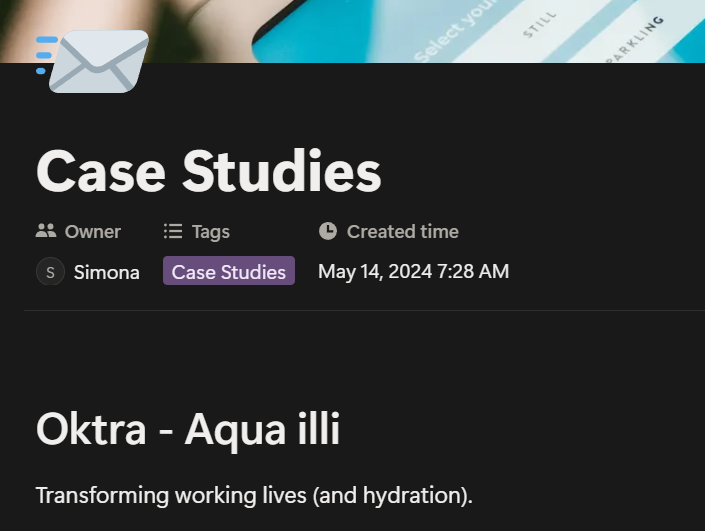
Aqua Libra uses Notion as a partner portal - a resource hub for the resellers and distributors who sell and install their taps. Everything a partner needs to close a deal is in one place: sales brochures, product specs, brand assets, product imagery, email templates, and pre-launch activation materials for when a new venue goes live.
There's also a case studies section with write-ups of existing customers like Oktra and Rhubarb, which partners can use to show prospects what the product looks like in the real world. It's a clean, practical use of Notion as an external-facing sales enablement tool - built for partners rather than internal staff.
Web3 Smart Contract Security - India
QuillAudits reviews smart contract code for Web3 projects before they launch, looking for security vulnerabilities. They've audited over 1,400 projects across DeFi, NFTs, wallets, and bridges.
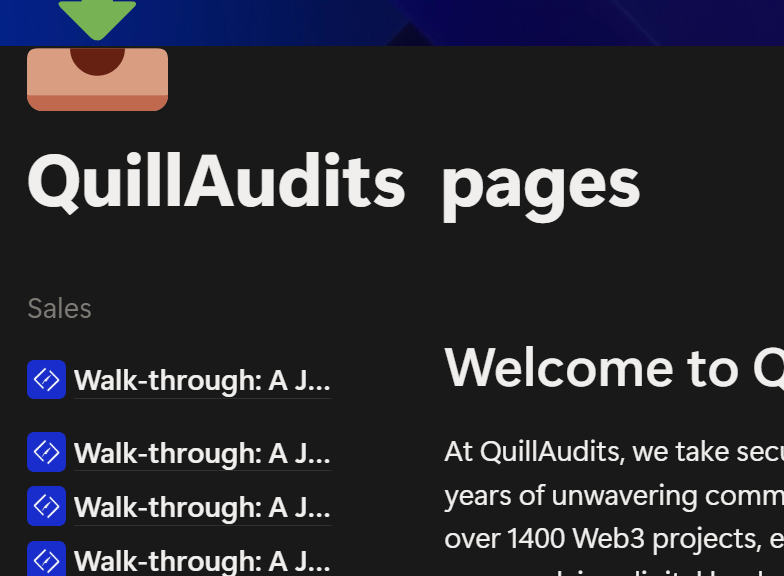
QuillAudits uses Notion as a public-facing sales and documentation hub. The sales section has walkthrough docs broken down by blockchain - Sui, Polkadot, HyperLedger, wallets - so prospects can see exactly what an audit looks like for their specific tech stack. There's also a whitelabel partnership guide for agencies, and a detailed audit readiness checklist that Web3 teams can use to prepare their codebase before engaging QuillAudits.
The checklist alone covers smart contracts, frontend, backend, infrastructure, and operational security. Publishing it publicly is a smart move - it's useful enough that developers actually read it, and it positions QuillAudits as the authority on what a thorough audit should cover.
Private Markets Software - US
Mantle makes software for managing private market investments - cap tables, equity plans, data rooms, document signing, and fundraising tools for startups and their investors.
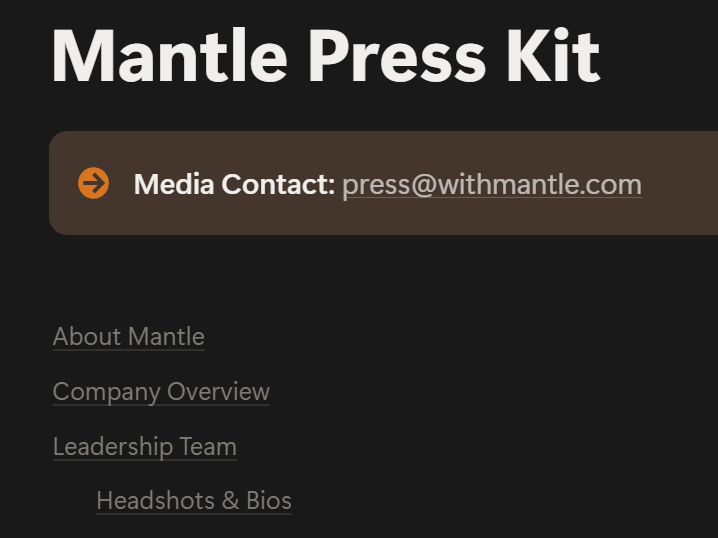
Mantle uses Notion as a press and investor kit. It's a public page with everything a journalist, investor, or partner would need: a company overview, downloadable founder headshots and bios, investor information, brand assets including logo files in multiple formats, and a gallery of product screenshots organized by feature. There's even a "Leadership Legacy" section highlighting the founders' previous exits.
It's a smart alternative to a traditional media page - everything stays current, anyone can access it with a link, and there's no need to email someone to ask for a headshot or a logo file.
AI-Powered Physical Therapy - San Francisco, CA
Sword Health makes AI-guided physical therapy that patients do at home instead of going to a clinic. They're a Portuguese-founded unicorn with a mission to free two billion people from pain.
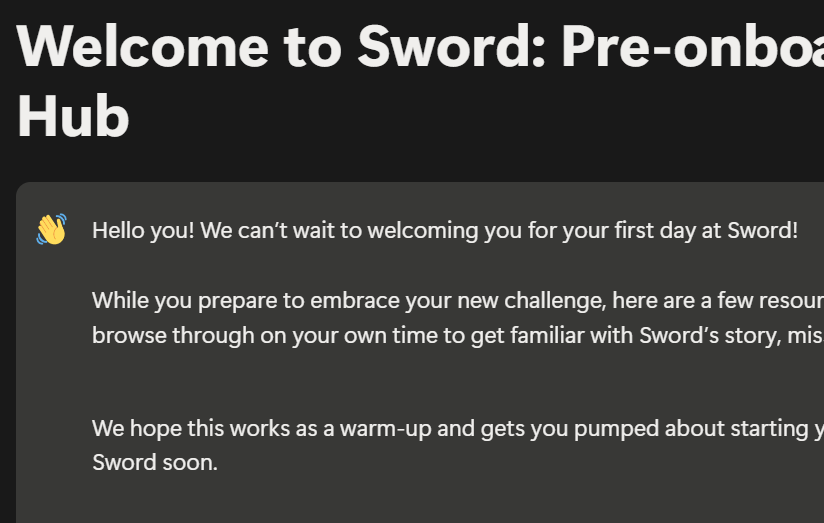
Sword uses Notion as a pre-onboarding hub - a page sent to new hires before their first day. The focus is almost entirely on mission and story rather than policies or logistics. New joiners get a CEO intro video from founder Virgílio Bento, patient testimonials showing real people whose lives were changed by the product, founder interviews from conferences like Slush, and a list of podcasts to explore.
The idea is to get someone genuinely excited about what the company does before they walk in the door. It's a different use of Notion from most onboarding resources - less "here's how things work" and more "here's why this matters."
Beauty Formulation Software - US
Potion AI makes software for cosmetics formulation teams, helping them manage raw materials, reverse-engineer existing products, and generate formula ideas using AI.
Potion uses Notion as their product academy - a public help center for customers learning how to use the platform. It's organized by feature area, with each article tagged by difficulty (Beginner or Advanced) so users can find the right level of guidance. The content covers AI-powered ingredient search, virtual formulation, deformulating existing products to see what's inside them, and managing a raw materials library.
Each section combines written guides with embedded video walkthroughs. It's a full self-serve learning hub, built entirely in Notion rather than a dedicated documentation tool.
Design & Motion Graphics Software - Berlin, Germany
Linearity makes design and animation software for marketing teams and is based in Berlin.
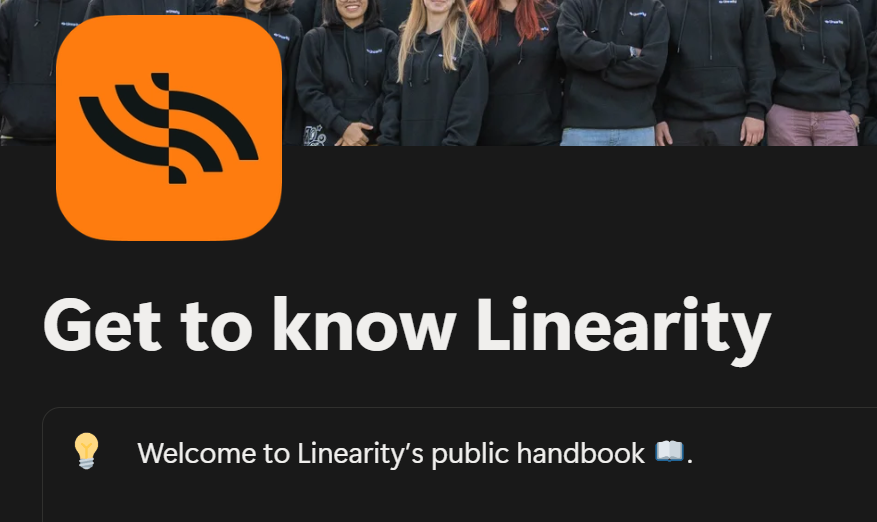
Linearity publishes their entire company handbook on Notion - publicly, at an open URL. Anyone can read it. It covers onboarding, hiring, benefits, work policy, career ladders, and company values.
They're upfront about why: they want to be transparent about how the company works, and they want people to know what they're getting into before they join. The onboarding section walks through the first week, explains who your buddy is and what they're for, and describes the monthly intro session where new joiners do "2 Truths and 1 Lie" with the rest of the company. The hiring section covers the full process separately for technical and business roles.
It's a small Berlin company - being this open is one way to stand out to candidates who've never heard of them.
Software / QA Testing - Austin, Texas
QA Wolf is a managed QA service that writes and maintains automated end-to-end tests for software teams. Customers hand off their test coverage to QA Wolf's team, who builds the tests, monitors failures, investigates bugs, and files reports.
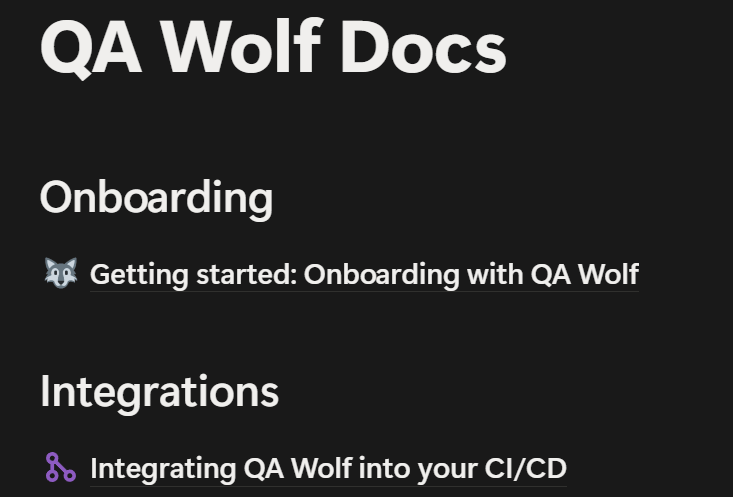
QA Wolf uses Notion as their customer-facing documentation site, publicly hosted at qawolf.notion.site. The entire customer knowledge base lives there: onboarding guides, integration docs for CI/CD pipelines, issue tracker and test management system setup, VPN and static IP configuration, SSO setup, and a FAQ covering how their service works. It is not a marketing site or a supplemental wiki; it is the primary place customers go to understand how to work with QA Wolf. Using Notion this way means the team can update docs without any engineering involvement, and customers get a consistent, searchable reference without QA Wolf having to build or maintain a dedicated docs platform.