We dug into our own data to find which companies are using Google Workspace extensively. We also asked employees working in these companies to tell us any interesting use cases/pilots involving Google products. Here are examples of how the biggest companies in the world are using Google Workspace.
Aerospace · Albacete, Spain · Google Workspace, Gemini
Google Workspace
Gemini
Airbus is one of the largest aerospace and defense companies in the world, with around 86,000 employees and operations spanning commercial aircraft, helicopters, defense systems, and space technology. If you've flown commercially in the past few decades, odds are good you've been on an Airbus plane at some point.

What makes Airbus particularly interesting is that they're in the middle of a quiet but significant platform migration: moving away from Microsoft Office and toward Google Workspace across the company. This is happening out of a Digital Workplace team inside their Information Technology Directorate.
The scope is ambitious. Airbus's Google Workspace environment covers Gmail, Docs, Sheets, Slides, and the full collaboration stack, but they're going deeper than that. They use Google Apps Script and Google AppSheet to build custom tooling on top of Workspace, manage the Google Workspace API directly, and rely on AoDocs for document management within the Google ecosystem. The explicit internal mandate is to maximize Google Workspace usage and minimize the Microsoft Office footprint inside the company.
They're also bringing Gemini into the mix. Airbus is actively fine-tuning and rolling out Gemini as a Gen AI assistant inside Workspace, which for a company dealing with aerospace engineering, defense programs, and highly sensitive IP is a meaningful commitment to Google's AI stack.
The operational discipline around all this is notable. Airbus runs the Workspace platform with ITIL-based processes in ServiceNow, manages a dedicated subcontractor for day-to-day support, and treats every new Workspace feature rollout as a formal "Entry Into Service" event with change management, user guides, and knowledge articles for their service desk. That's how a company used to certifying aircraft handles software rollouts.
For a European industrial giant historically tied to Microsoft-heavy enterprise tooling, the decision to standardize on Google Workspace and lean into Gemini is a genuinely significant bet.
Healthcare · Remote, United States · Google Workspace
Google Workspace
CVS Health is one of the biggest companies in America that most people interact with without thinking about it. They run the pharmacy chain you've walked into a thousand times, the Caremark prescription benefits plan that probably covers your medications, and the Aetna health insurance arm. All told, more than 300,000 employees and tens of millions of customers rely on them every day.
A company that size runs a lot of internal software, and Google Workspace sits at the center of how their employees actually communicate and get work done. Gmail, Drive, Calendar, Meet, and the admin tools behind them are the primary collaboration platform across the organization.
What's interesting is how CVS is treating Workspace as an engineering problem rather than just IT plumbing. They've built out dedicated software development talent specifically to manage and extend the platform, using tools like GAM, which is an open source command-line utility that lets admins control a Workspace environment programmatically instead of clicking through menus. On top of that, they use Google Apps Script to automate repetitive administrative tasks, build custom tools, and create integrations with the rest of their internal systems.
The company is also actively bringing Google Gemini for Workspace into the mix, exploring how the AI features inside Docs, Sheets, and Gmail can speed up work across a huge and diverse employee base. Given the regulated environment CVS operates in, they're pairing that with serious attention to security: data loss prevention rules, retention policies, eDiscovery configuration, and tight governance over who can access what.
For a healthcare company where email and document handling touch patient data constantly, treating Workspace as a first-class engineered platform rather than just an email system is a meaningful commitment.
Technology · San Francisco, California · Google Workspace, Gemini
Google Workspace
Gemini
Pinterest is the visual discovery platform where around 600 million people every month go to find ideas, save inspiration, and plan out everything from weddings to weeknight dinners. If you've ever searched for a haircut, a recipe, or a bathroom renovation and ended up falling down a rabbit hole of pretty pictures, you've probably used it.
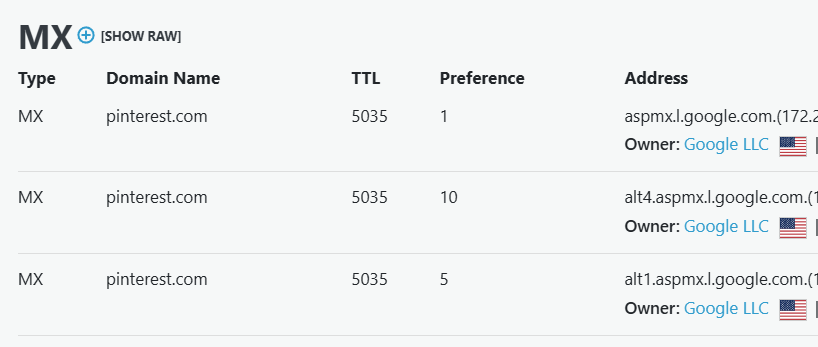
What's interesting is that Pinterest runs its entire internal collaboration on Google Workspace. All the Gmail, Calendar, Drive, Docs, Sheets, Meet, and Chat that employees use day-to-day sits on Google's platform rather than Microsoft's. For a company of over 13,000 people, that's a real commitment.
The setup itself is surprisingly complex. Pinterest runs a large, multi-domain Workspace environment with tight integrations into single sign-on, mobile device management, data loss prevention, and e-discovery systems. They've put serious engineering effort into things most people never think about, like making sure email authentication records are configured properly and that sensitive files can't leak out through careless sharing.
They also lean heavily on automation. Rather than clicking through admin menus every time someone joins or leaves, Pinterest uses scripting tools like Google Apps Script, GAM, and Python against the Workspace APIs to handle user provisioning, license management, and configuration at scale. Essentially, they treat their collaboration platform the way engineers treat cloud infrastructure, with code-driven deployments and monitoring.
On top of all that, they're actively folding AI into the mix. Gemini sits alongside Workspace as a core collaboration tool internally, and they're building out AI-assisted workflows for things like drafting scripts, generating runbooks, and summarizing documentation.
For a company whose whole product is about helping people discover ideas, it's fitting that they've built their own internal discovery and collaboration layer on a platform designed for exactly that.
Manufacturing · Valcourt, Quebec, Canada · Google Workspace
Google Workspace
BRP is a name most people don't immediately recognize, but you've almost certainly seen their products. They make Ski-Doo snowmobiles, Sea-Doo personal watercraft, and Can-Am off-road vehicles. Basically, if you've seen someone tearing through snow, water, or dirt on a recreational vehicle, there's a good chance it came out of a BRP factory.
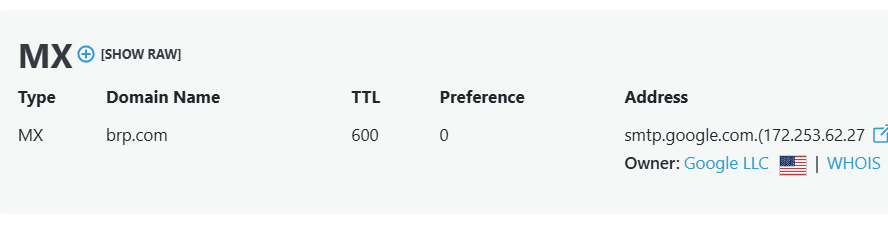
For a global manufacturer with factories and offices spread across continents, keeping everyone on the same page is a serious challenge. BRP has chosen Google Workspace as the collaboration platform that ties it all together, and they're in the middle of maturing how they run it.
The interesting angle is that BRP is specifically working to bring Workspace into a more structured and standardized operating model. Rather than letting different teams and regions configure things their own way, they're building out governance around how Drive and Shared Drives get used, how permissions are managed, and how the platform integrates with their cybersecurity and data governance functions.
The tooling is notable too. BRP uses GAM to manage Workspace programmatically, alongside Google Apps Script and Google AppSheet for building internal automations and custom workflows without needing to spin up full engineering projects. AppSheet in particular is Google's no-code platform that lets business users create simple apps directly from spreadsheets, which fits well for a manufacturer where plant floor and operations teams often need quick custom tools.
For a company whose products are about freedom and the outdoors, it's a pleasantly unglamorous reminder that a lot of what makes a global manufacturer actually work is the invisible collaboration infrastructure. Email, shared documents, and access controls might not be as exciting as a Sea-Doo hitting the water, but without them, the factories don't ship.
Healthcare · Remote, United States · Google Workspace, Gemini, NotebookLM
Google Workspace
Gemini
NotebookLM
Ascension is one of the largest nonprofit Catholic health systems in the United States, with around 99,000 employees, 95 hospitals, and a network spanning 16 states and Washington DC.
A health system of that size runs on an enormous amount of internal communication, and Google Workspace is the platform they use to coordinate it. What makes Ascension interesting is that they're pushing well beyond using Workspace as a basic email and documents suite. They're actively building AI-driven workflows on top of it.
The specifics are unusually concrete. Ascension is designing what they call agentic workflows inside Workspace, using Gemini to triage high volumes of email, auto-draft project plans in Docs, and summarize data trends in Sheets. The goal is to take the repetitive cognitive work that eats up staff time and hand much of it to AI, with humans stepping in to review and approve.
They're also building what they describe as a "Private Intelligence Hub" using NotebookLM, Google's research assistant that grounds AI responses in a curated set of source documents. Instead of asking a generic AI model and hoping the answer is accurate, Ascension is indexing their own departmental research, transcripts, and internal materials so that AI responses are verified against real Ascension knowledge rather than guessed at.
On top of that, they're using Google Vids to turn static internal documents into AI-generated video presentations for training and stakeholder updates, which is a genuinely novel use of a very new Google product.
For a healthcare organization serving vulnerable populations, pairing this level of AI ambition with strong human-in-the-loop oversight is a thoughtful approach. Ascension has someone specifically responsible for auditing AI outputs for factual accuracy, brand voice, and ethical compliance before anything goes out the door.
Software · Chennai, India · Google Workspace, Vertex AI, Google AI Studio
Google Workspace
Vertex AI
Google AI Studio
Freshworks is a software company that builds tools for customer and employee experience. They're publicly traded on NASDAQ and serve more than 72,000 companies, including Bridgestone, New Balance, Nucor, S&P Global, and Sony Music.
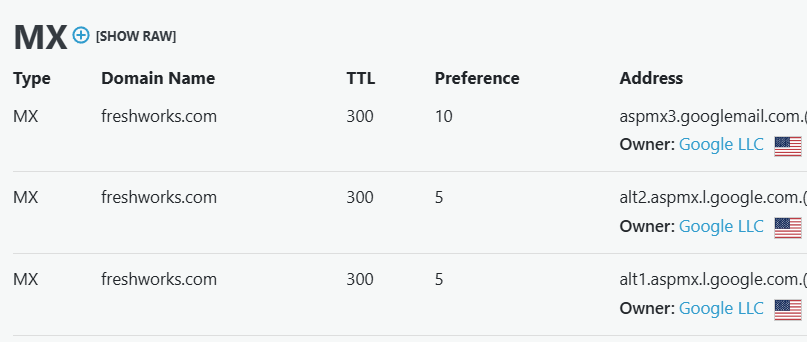
With around 7,400 employees spread across offices globally, Freshworks runs on Google Workspace as its primary collaboration platform. What makes them interesting is that they've built a serious engineering discipline around running it.
Freshworks has a dedicated IT operations function treating Google Workspace like production infrastructure. They manage enterprise security policies including data loss prevention, complex content compliance rules, and mobile device management for both company-owned and personal devices. Email authentication through SPF, DKIM, DMARC, and MX records is carefully governed to prevent spoofing. Chrome Enterprise gets the same treatment, with browser cloud management and controlled extension deployment across the company.
The automation layer is where things get especially interesting. Freshworks uses Google Apps Script to automate workflows, streamline user lifecycle operations, and eliminate repetitive administrative work. They're also leaning into AI tooling in a concrete way: using Google AI Studio and Vertex AI to enhance IT operations, and building custom Google Gems (personalized Gemini agents) to handle specific internal tasks.
There's also a Google Cloud Platform dimension. Freshworks configures GCP Service Accounts to tie Workspace into their broader cloud environment and uses BigQuery to analyze Workspace audit logs at scale, which is how a sophisticated IT team spots security anomalies and adoption patterns that a regular admin console can't surface.
For a software company whose whole business is helping other companies deliver better experiences to their own users, it's a fitting detail that they apply the same engineering rigor to the internal platform their own employees use every day.
Financial Services · Cottonwood Heights, Utah · Google Workspace, Google Cloud Platform
Google Workspace
Google Cloud Platform
SoFi is a digital-first financial services company and national bank with a few million members, offering everything from checking accounts and credit cards to student loan refinancing, mortgages, and investing.
What makes SoFi interesting is that they're running both Workspace and Google Cloud Platform as tightly integrated parts of their corporate technology stack. That's unusual for a company this size in financial services, where Microsoft 365 paired with Azure is the dominant default.
Their Corporate Applications group treats Workspace and GCP like production infrastructure. They administer a multi-domain Workspace environment covering Gmail, Drive, Calendar, shared drives, and Chrome Enterprise, then pair it with GCP for identity, automation, and cloud governance. Identity flows through Okta, with SSO and SCIM provisioning across Workspace, GCP, Slack, and the broader SaaS ecosystem so that access is consistent and auditable across every tool.
The automation work is where things get especially engineering-flavored. SoFi uses GAM and GAMADV-XTD3 along with the Google Admin SDK APIs and custom scripts in Python, Bash, and PowerShell to handle joiner, mover, and leaver workflows, license governance, and access reviews. They govern OAuth apps and third-party integrations carefully, running CASB and SSPM tooling to catch risky sharing patterns and reduce SaaS risk before it becomes a compliance problem.
What stood out the most is that SoFi is piloting agentic AI tooling for administrative workflows. They're working on letting AI agents handle things like ticket triage, access reviews, and configuration drift detection inside their Workspace and GCP environment, with human-in-the-loop validation, logging, and change controls. For a regulated bank, handing part of the IT administration workload to AI agents with proper guardrails is a notably forward-leaning move.
For a fintech company managing real customer deposits and loans, running this much of its internal operations on Google's stack, and actively experimenting with AI-driven administration, is a meaningful vote of confidence in where Google Workspace is going.
Financial Services · Seattle, Washington · Google Workspace
Google Workspace
Remitly is a digital-first international remittance company that helps people send money across borders, particularly to family and friends in lower-income countries. They have around 2,800 employees worldwide and move billions of dollars a year on behalf of immigrants sending earnings home.
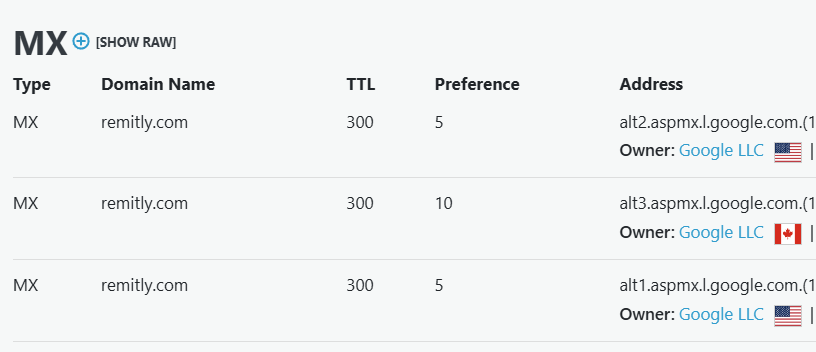
For a company that moves money internationally at scale, internal collaboration and security controls matter a great deal, and Remitly runs on Google Workspace.
What makes Remitly interesting is that they're approaching Workspace as a long-term strategic platform rather than a commodity email system. Their IT group works closely with Security and Infrastructure to set the multi-year roadmap for Workspace, evaluate new Google features, and enforce governance standards across Gmail, Drive, Vault, and Chrome.
The security posture is serious. Remitly enforces data loss prevention across Workspace, uses Vault for eDiscovery and retention, and manages Workspace devices under a unified governance hierarchy so that policies like conditional access and data protection apply consistently across the organization. For a regulated financial services business, that level of platform discipline is table stakes.
The integration work is where things get especially engineering-flavored. Remitly connects Google Workspace to other core enterprise systems including Workday for HR and Okta for identity using REST APIs, webhooks, and custom automation. That means the employee lifecycle (hires, role changes, departures) flows automatically between systems, access is provisioned and revoked in a controlled way, and the company's auditors can trace changes across the stack.
For a cross-border payments company that has to meet financial regulatory requirements in dozens of countries, standardizing on Google Workspace and building this kind of integrated identity and governance layer is a meaningful choice.
Mental Health Care · Remote, United States · Google Workspace, Google Cloud Platform, Vault
Google Workspace
Google Cloud Platform
Vault
Lyra Health is the largest provider of workforce mental health benefits in the United States, with mental health programs available to more than 20 million people through their employers. They've delivered around 13 million therapy and coaching sessions, and their clinical research is widely cited in peer-reviewed studies on workplace mental health outcomes.
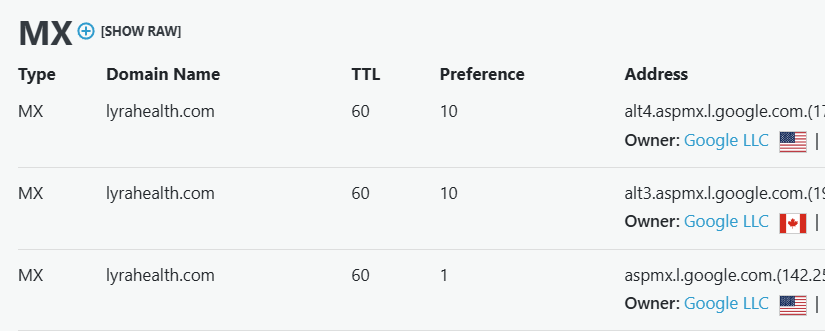
For a company handling some of the most sensitive personal data imaginable (therapy notes, mental health diagnoses, medication information), the internal platform that employees use to coordinate care matters enormously. Lyra runs that platform on Google Workspace.
What makes Lyra's usage interesting is how much security engineering they've layered on top of Workspace. They operate the platform at an expert level, managing organizational units, the Security Center, the Investigation Tool, Vault, and detailed audit log analysis. They enforce Context-Aware Access, advanced phishing and malware protection, and tightly controlled data sharing policies across the environment.
The data loss prevention work is especially notable. Lyra designs and maintains DLP rules in Drive and Gmail specifically to protect PII and PHI (personally identifiable and protected health information). For a mental health company subject to HIPAA and a long list of state privacy laws, that's not optional, and the level of sophistication goes well beyond standard Workspace admin work.
The automation side pulls in Google Cloud Platform directly. Lyra uses Google Apps Script and GCP Cloud Functions to automate user provisioning, reporting, and administrative workflows, then governs OAuth tokens and third-party marketplace apps carefully to prevent data exfiltration. Identity flows through Okta or Azure AD via SAML and OAuth, with Google Cloud Directory Sync keeping everything consistent.
On the compliance side, Lyra runs HR-mandated and security-mandated internal investigations through the Google Workspace Investigation Tool, handles eDiscovery and legal holds through Vault with proper chain-of-custody for evidence, and manages Chrome at the enterprise level including profiles, extensions, and security policies. Mobile device management goes through Google Endpoint Management.
For a mental health company whose entire business depends on earning trust with sensitive personal data, treating Google Workspace this seriously as a security and compliance platform is genuinely notable.
 Azimut Italia
 Shree Hari
 JX Truck Center
 LafargeHolcim Maroc
 Chaitanya Projects Consultancy
 Grupo Imagen Multimedia
 Roha
Roha
 Monster
 CareerBuilder
 ERA Koleji
 Chain-Sys Corporation
 Goat Funded Trader
 ORANGE COUNTY HEAD START, INC.
 Motive
 NUNYA LLC
 Shipd
Shipd
 ADF
ADF
 Swig
Swig
 G100: Mission Million
 heaven | Hopscotch Groupe
 Airbus
 CVS Health
 Pinterest
 BRP
BRP
 Ascension
 Freshworks
 SoFi
SoFi
 Remitly
 Lyra Health