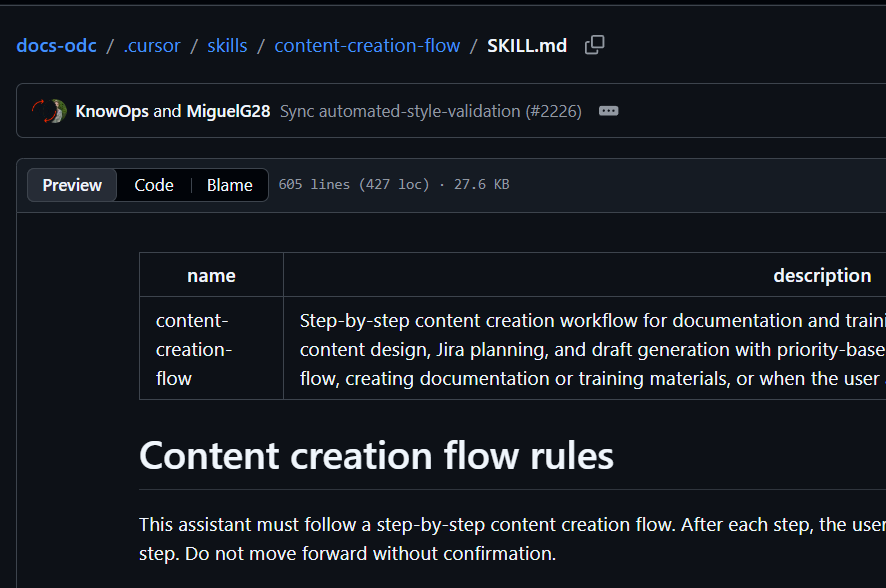
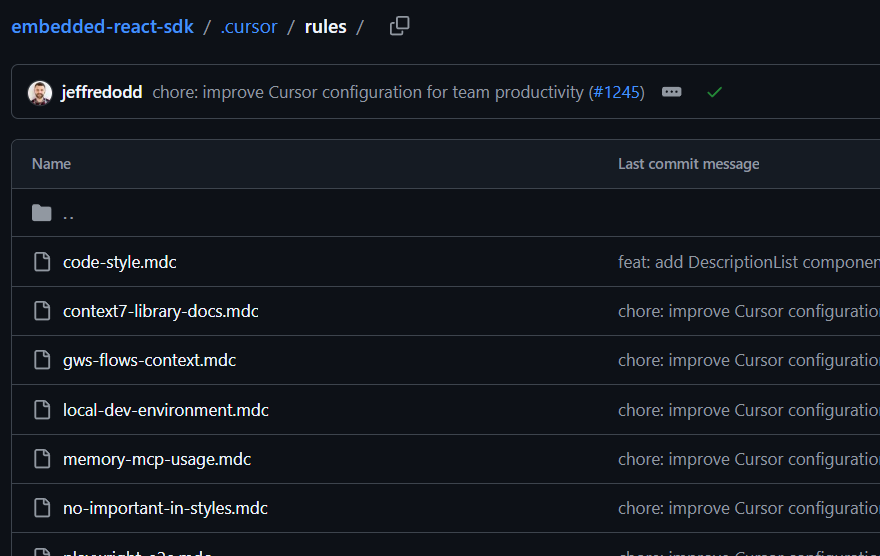
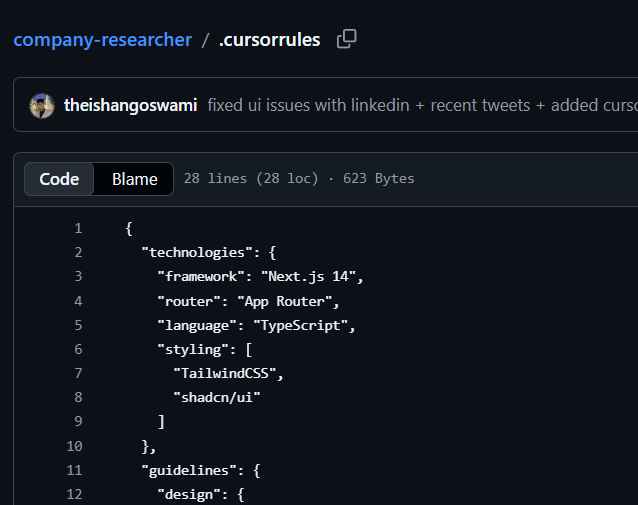
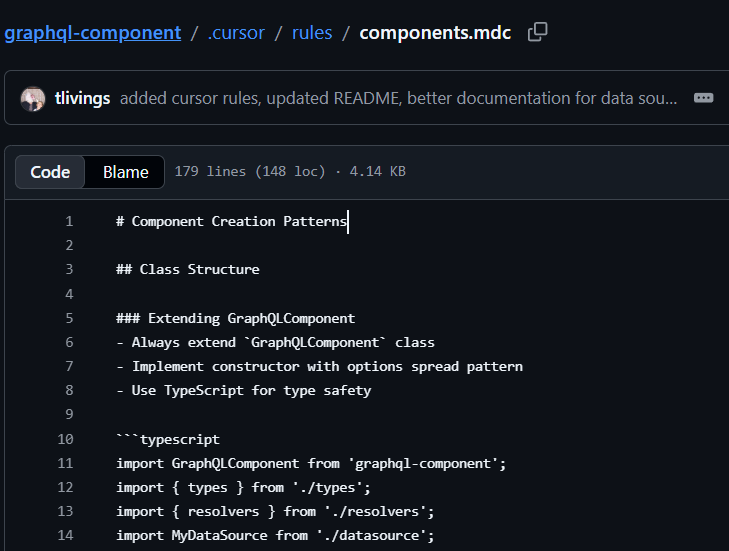
We detected 6,233 customers using Cursor, 36 companies that churned or ended their trial, and 1,582 customers with estimated renewals in the next 3 months. The most common industry is Software Development (32%) and the most common company size is 51-200 employees (31%). Our methodology involves monitoring new entries and modifications to company DNS records.
Note: We only track companies on the advanced plan of Cursor, and not free/lower priced plans
About Cursor
Cursor provides an AI-powered code editor built on Visual Studio Code that offers intelligent code completion, natural language code generation, and codebase understanding through integration with frontier models from OpenAI, Anthropic, Gemini, and xAI.
📊 Who in an organization decides to buy or use Cursor?
Source: Analysis of 100 job postings that mention Cursor
Job titles that mention Cursor
i
Based on an analysis of job titles from postings that mention Cursor.
Job Title
Share
Director of Software Engineering
20%
Backend Engineer
16%
Vice President of Engineering
13%
Head of Engineering
9%
I analyzed these postings and found that engineering leadership dominates the buyer profile. Directors of Software Engineering (20%), VPs of Engineering (13%), and Heads of Engineering (9%) make up 42% of leadership roles hiring for Cursor expertise. However, what surprised me most is that 16% are backend engineers and another 42% spans diverse IC roles like data engineers, full-stack developers, and product designers. This suggests Cursor is being evaluated both top-down by engineering executives building AI-native development cultures and bottom-up by individual contributors who've already proven its value.
The day-to-day users are practicing what multiple postings call "vibe coding" and "AI-assisted workflows." I noticed explicit requirements like "experience with AI tooling like Cursor, Windsurf or similar agentic IDEs" and "proficient with Cursor IDE" appearing in senior engineer roles. Teams are using Cursor alongside Claude, GitHub Copilot, and other LLM tools to "ship 10x faster than traditional development teams" and enable "AI-first" or "AI-native" development approaches. The tool supports rapid prototyping, code review, and what one posting describes as leveraging AI to "move faster and smarter."
The core pain point is velocity under complexity. Companies want to "increase team velocity and deliver customer value" while managing technical debt and scaling. One posting seeks someone to "turn inputs into actions" and "champion AI to amplify impact," while another emphasizes "progress over perfection" to "quickly deliver prototypes and iterate." The recurring theme is using AI assistance not to replace engineering judgment but to accelerate execution in fast-moving, high-stakes environments.
🔧 What other technologies do Cursor customers also use?
Source: Analysis of tech stacks from 6,233 companies that use Cursor
Commonly Paired Technologies
i
Shows how much more likely Cursor customers are to use each tool compared to the general population. For example, 287x means customers are 287 times more likely to use that tool.
I noticed that Cursor users are design-forward, collaborative companies that have made substantial investments in modern AI tooling. The combination of premium collaboration tools like Figma Organization Plan, Notion Enterprise, and Lucidchart alongside both Claude and ChatGPT for Teams tells me these are well-funded tech companies that prioritize team productivity and aren't afraid to pay for best-in-class tools. The presence of Golinks, a tool for creating memorable short links for internal resources, suggests they're already at a scale where knowledge management matters.
The pairing of Claude for Work with Cursor is particularly revealing since both are Anthropic-adjacent products, suggesting these teams are early adopters who actively seek out cutting-edge AI tools rather than waiting for mainstream adoption. The extremely high correlation with Figma Organization Plan alongside Cursor points to companies where designers and developers work closely together, likely building consumer-facing products where design quality matters. The Notion Enterprise presence indicates these companies have invested in documentation and knowledge sharing, which makes sense for teams using AI coding tools since they need to maintain clear project context and specifications.
My analysis shows these are product-led companies in growth stage, likely Series A through C. They're building software products with strong design components and have reached the 50 to 300 employee range where they need enterprise collaboration tools but still maintain startup agility. The tech stack reveals teams that write a lot of code, create a lot of designs, and document extensively.
👥 What types of companies is most likely to use Cursor?
Source: Analysis of Linkedin bios of 6,233 companies that use Cursor
Company Characteristics
i
Shows how much more likely Cursor customers are to have each trait compared to all companies. For example, 2.0x means customers are twice as likely to have that characteristic.
Trait
Likelihood
Funding Stage: Series C
86.6x
Funding Stage: Series B
41.0x
Funding Stage: Corporate round
26.3x
Country: JP
9.2x
Industry: Computer and Network Security
8.9x
Industry: Software Development
8.6x
I analyzed these companies and found that Cursor users span an incredibly diverse range of industries, but they share a common thread: they're building or operating technology-intensive businesses. These aren't just "tech companies" in the narrow sense. Yes, there are pure software developers and SaaS platforms, but I also see medical device manufacturers, financial services firms, gaming studios, healthcare providers, energy companies, and even retail operations. What unites them is that software development and digital infrastructure are central to their value proposition, whether they're "building the hardware for superintelligence" or running "the most successful mobile football management game."
The maturity spectrum is remarkably wide. I see early-stage seed companies with under 20 employees alongside public companies and enterprises with thousands of workers. There are YC-backed startups that raised pre-seed rounds, growth-stage companies with Series B and C funding, and established players managing billions in assets or serving millions of users. The employee counts range from 2 to over 15,000. This suggests Cursor appeals across the entire company lifecycle, not just to startups.
Alternatives and Competitors to Cursor
Explore vendors that are alternatives in this category