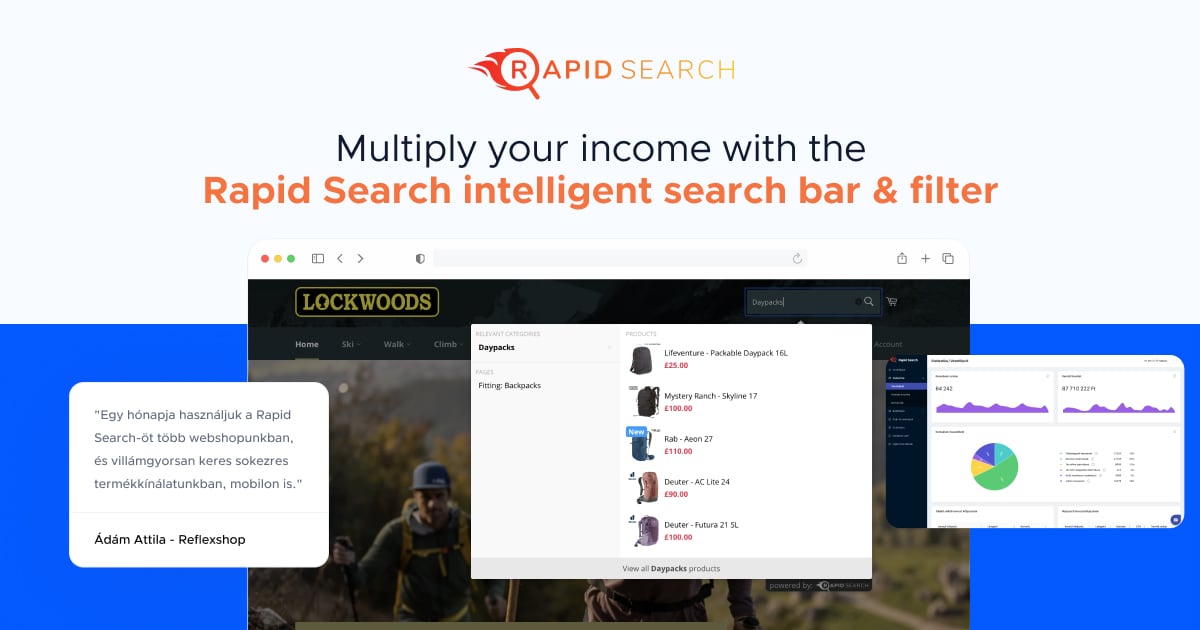
We detected 5,760 companies using Boost Commerce, 1,985 companies that churned, and 68 customers with upcoming renewal in the next 3 months. The most common industry is Retail (63%) and the most common company size is 2-10 employees (64%). We find new customers by detecting JavaScript snippets or configurations on customer websites.
Note: We can't detect companies that use Boost Commerce with a headless implementation or backend search
Source: Analysis of Linkedin bios of 5,760 companies that use Boost Commerce
Company Characteristics
i
Shows how much more likely Boost Commerce customers are to have each trait compared to all companies. For example, 2.0x means customers are twice as likely to have that characteristic.
Trait
Likelihood
Industry: Cosmetics
15.4x
Industry: Retail Luxury Goods and Jewelry
15.2x
Industry: Apparel & Fashion
15.0x
Country: SG
1.9x
Country: NZ
1.8x
Country: MX
1.7x
I noticed that Boost Commerce primarily serves product-focused retail and e-commerce businesses selling physical goods. These aren't software companies or service providers. They're businesses moving tangible products like bicycles, coffee equipment, outdoor gear, jewelry, apparel, furniture, cosmetics, and sporting goods. Whether it's Reid Cycles selling bikes direct to consumers, Bottle Barn offering fine wines, or Jamie Kay creating children's clothing, these companies need robust e-commerce infrastructure to showcase extensive product catalogs.
These are predominantly established small to medium businesses, not early-stage startups. Most have 11-50 employees, though some reach 51-200. They reference founding dates from decades ago (Truefitt & Hill since 1805, Uncle Sam's since 1969, Interwood since 1974), suggesting mature operations. Only a handful mention funding rounds, and those are typically seed stage. The majority appear to be bootstrapped, profitable businesses that have grown organically. They have physical locations alongside e-commerce operations, indicating they've reached a scale requiring sophisticated digital infrastructure.
🔧 What other technologies do Boost Commerce customers also use?
Source: Analysis of tech stacks from 5,760 companies that use Boost Commerce
Commonly Paired Technologies
i
Shows how much more likely Boost Commerce customers are to use each tool compared to the general population. For example, 287x means customers are 287 times more likely to use that tool.
I noticed that Boost Commerce users are almost exclusively e-commerce companies built on Shopify, with the platform appearing 26.3 times more often than normal. This isn't just any Shopify store though. The correlation with premium tools like Klaviyo, Gorgias, and Attentive tells me these are sophisticated, growth-stage merchants who've moved beyond basic store functionality and are investing heavily in customer retention and experience optimization.
The pairing with Klaviyo (38.8x more likely) and Attentive (65.2x more likely) is particularly revealing. These companies are running sophisticated email and SMS marketing campaigns, suggesting they have substantial customer databases and are focused on lifecycle marketing rather than just acquisition. The strong correlation with Gorgias (90.8x more likely) reinforces this, since it means they're handling enough customer service volume to need dedicated helpdesk software. Together, these tools paint a picture of merchants actively nurturing customer relationships at scale.
What really caught my attention is Rebuy Engine appearing 89.2 times more often. This is a personalization and upsell engine, which means these companies are optimizing for average order value and repeat purchases. Combined with Searchanise (92.0x more likely), they're clearly dealing with large product catalogs where search and discovery become critical bottlenecks.
Alternatives and Competitors to Boost Commerce
Explore vendors that are alternatives in this category

 iNAIL SUPPLY
 Gadcet
 Spellbound Shelf
 Fit2Run-The Runner's Superstore
 Tonic Studios Ltd
 Sipsey Wilder
 The Reverberation Appreciation Society
 GRIMM.NO
 Great Bite
 Dr. Woof Apparel
 Freemark Apparel Brands International Inc.
 Fellow
 Amblers Safety
 My Greek Boutique
 Himalaya Tree
 Game-On.no
 Fluke & Box
 Café du Cycliste
 BioTRUST Nutrition