We dug into our own data to find which companies are using Claude across their engineering and product teams. Here are some real-world examples of how they're putting it to work.
Grocery Delivery & Technology - San Francisco, CA
Instacart is the largest grocery technology platform in North America, connecting customers with delivery from 1,500+ retail banners. They're a useful example of how larger engineering organizations are settling into a multi-tool AI stack rather than consolidating on one vendor.
Instacart uses Claude Code and is an Enterprise Claude customer, but their engineers also use Cursor - and across the broader organization, they've deployed ChatGPT for general productivity use. The pattern of Claude for deep coding work alongside ChatGPT for everyday tasks is becoming common at companies that have moved past the "pick one" phase.
Claude Code
Instacart uses Claude Code across their engineering team. In a post on their engineering blog, they describe treating different Claude models like specialized team members - one version for architecture planning tasks like designing ERDs and flow diagrams, another for writing and reviewing code.
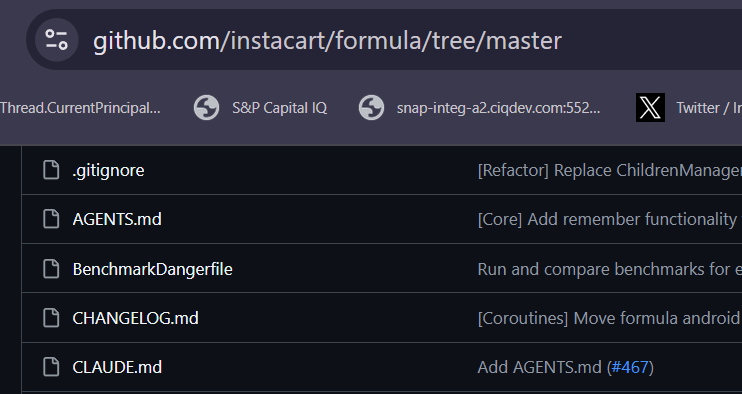
Their open source Formula repository includes an AGENTS.md file with instructions for Claude Code on how to navigate the codebase - the standard way companies configure Claude Code for a specific project.
MCP Server
Instacart runs a public MCP server exposing two tools: create-recipe and create-shopping-list. Both create pages directly on the Instacart Marketplace - a recipe page with ingredients, instructions, cook time, and servings, or a shopping list with line items and expiry.
The idea: an AI assistant given a recipe or meal plan can call the Instacart MCP server and produce a shoppable page with everything pre-loaded. It's how Instacart positions itself as a tool any AI agent can call to handle the grocery fulfillment step.
Marketing Automation & CRM - Boston, MA
Klaviyo (NYSE: KVYO) is a marketing automation platform used by over 200,000 consumer brands for email, SMS, and customer data. Like Instacart, they've landed on a layered AI toolchain rather than a single platform: Claude Code and Cursor for engineering, ChatGPT deployed org-wide for general knowledge work.
It's a sign of how the enterprise AI market is maturing - the question is no longer which model wins, but which model fits which workflow. For Klaviyo, Claude's strength in long-context reasoning and code makes it the right fit for SDK development and their MCP infrastructure, while ChatGPT handles the broader productivity layer across non-technical teams.
Claude Code
Klaviyo uses Claude Code for SDK development. Their open source Flutter SDK includes an AGENTS.md file that configures Claude Code with detailed context about the codebase - the three-layer plugin architecture, branching conventions, code style rules, platform-specific gotchas, and how to test against local native SDK builds.
They also maintain a graphiti_mcp repository with a CLAUDE.md file, pinning specific Claude model versions for different tasks within that project.
K:AI - Claude Powering Their Product
Klaviyo's K:AI suite includes a Marketing Agent and Customer Agent - AI features built into the platform for campaign creation, flow optimization, and customer service automation. These sit on top of their customer data platform and use LLMs to generate recommendations and content grounded in each brand's actual performance data.
MCP Server - Klaviyo Data in Claude
Klaviyo launched a remote MCP server in August 2025, now available to all customers, built on Cloudflare's agent infrastructure.
Klaviyo is also officially listed in Claude's Connector directory, meaning users can connect their Klaviyo account to Claude in a few clicks with no configuration needed.
Once connected, Claude has live read/write access to campaigns, flows, profiles, segments, and metrics. A marketer can ask Claude to pull campaign performance, find churned customers who are still opening emails, draft a new campaign, or compare flow performance across accounts - all in plain language, without exporting data or switching tools. Klaviyo's pitch is that the responses aren't generic because they're grounded in that brand's actual customer data, not a generic model.
Authentication & User Management - New York, NY
Clerk is the most widely used authentication and user management platform for modern web apps - drop-in sign-in, user profiles, organizations, and session management for Next.js, React, and other frameworks. They are an Enterprise Claude customer. There's no public signal of a parallel ChatGPT org deployment - the picture that emerges is a developer-tools company that has gone deep on Claude rather than hedging across multiple AI vendors.
Their relationship with Claude is interesting because they're both a Claude Code user internally and have thought carefully about how developers use AI to integrate Clerk into their own codebases.
Claude Code
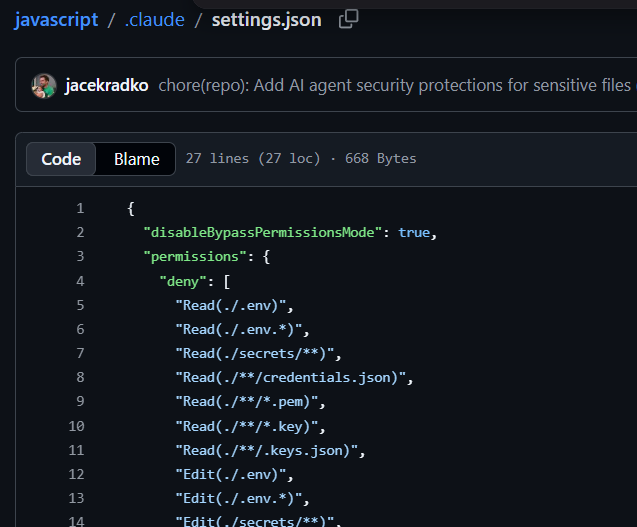
Clerk uses Claude Code on their main JavaScript monorepo, which contains all their SDKs. The .claude/settings.json file is a detailed security configuration that explicitly blocks Claude Code from reading or editing sensitive files - env files, secrets directories, credential JSONs, PEM keys, and private key files. It also blocks bash commands like cat .env from running.
It's a thoughtful production Claude Code setup that lets engineers use it freely across the codebase while preventing it from ever touching credentials.
Localization Management Platform - Kyiv, Ukraine
Crowdin is a localization platform used by thousands of software teams to manage translation workflows across mobile apps, web products, and documentation. They are an Enterprise Claude customer. Crowdin's product supports multiple AI providers including OpenAI, Google Gemini, and others for translation workflows - but on the internal and agentic side, their architecture choices are decisively Claude-first.
Their AI Agent is explicitly Claude-based, their MCP v2 was rebuilt around Claude's capabilities, and their engineering team uses Claude Code. That's a company that has placed a serious bet on Anthropic.
Claude Code
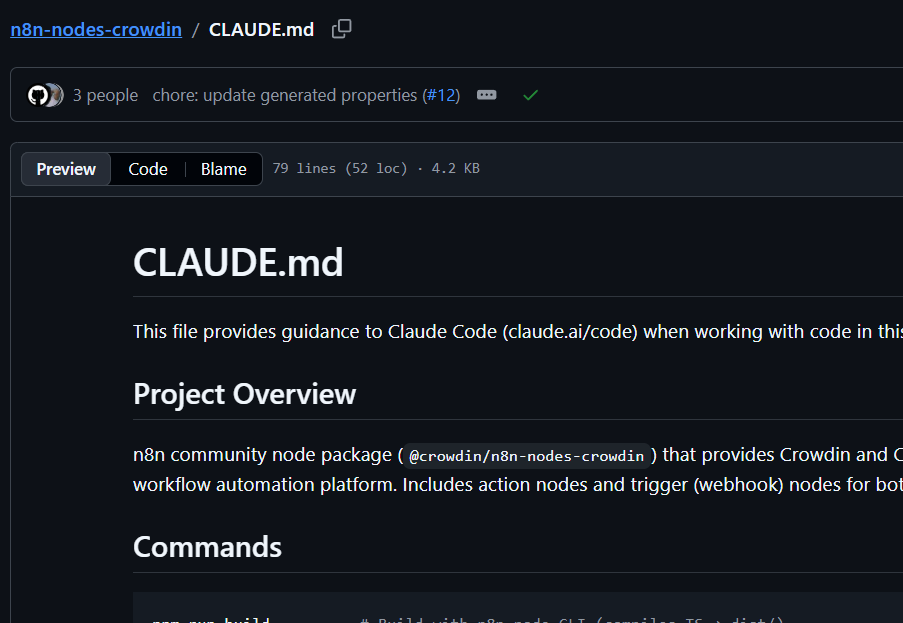
Crowdin uses Claude Code on their n8n integration repository, which provides Crowdin nodes for the n8n workflow automation platform. The CLAUDE.md gives Claude Code detailed context about the project - the 4-node architecture (file-based vs string-based × Crowdin vs Enterprise), the properties generation pipeline from OpenAPI specs, the extension system for hand-written overrides, and key modules to be aware of.
Claude-Based AI Agent
Crowdin's AI Agent - used for automating localization manager tasks - is explicitly Claude-based. Their March 2026 product update states directly: "The first implementation is a Claude-based agent, the same foundation that powers Cowork and Claude Code." They're using Claude as the engine for their Copilot feature, which analyzes translation issues at scale and synthesizes them into actionable questions for managers.
Observability Platform - San Francisco, CA
Honeycomb builds observability tooling used by engineering teams to debug production systems. They are a Claude Enterprise customer, and notably one of the few companies on this list where the Claude deployment extends well beyond engineering.
There's no public signal of an org-wide ChatGPT deployment alongside it - the decision to give all employees Claude access, rather than picking up ChatGPT Teams for general use and reserving Claude for developers, suggests they made a deliberate choice to consolidate on Anthropic.
Company-Wide Claude Deployment
In August 2025, Honeycomb gave all employees access to Claude. In their blog post announcing their Anthropic Usage & Cost API integration, they described what that looks like in practice: developers generating AI-assisted code, product managers analyzing customer usage trends, marketers testing messaging, and sales teams doing customer discovery.
They also built an internal cost monitoring system on top of Anthropic's Usage & Cost API to track Claude spend across teams and correlate it with application behavior.
Claude Code
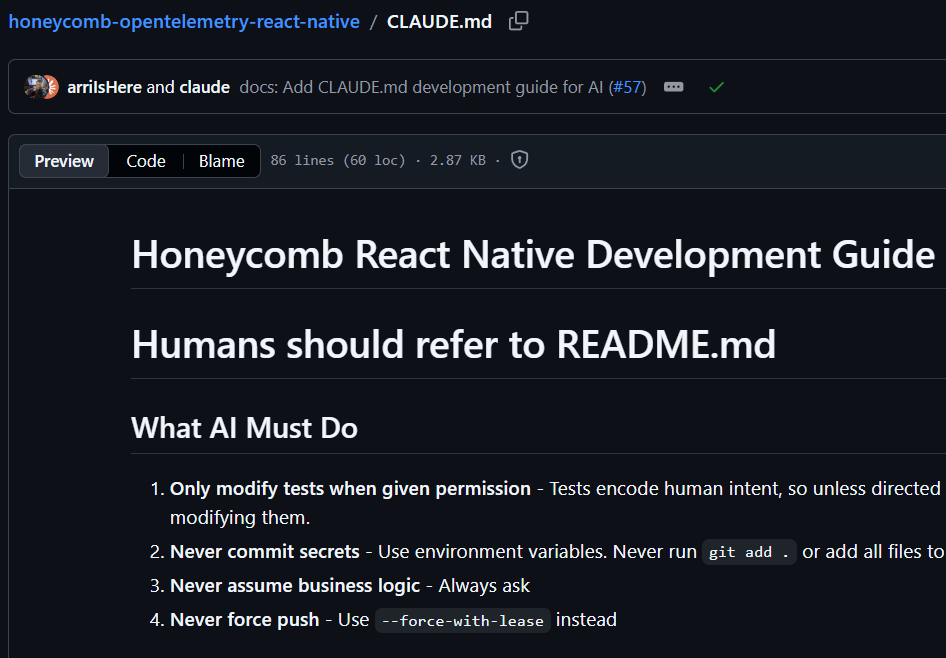
Honeycomb uses Claude Code on their React Native OpenTelemetry library. Their CLAUDE.md covers the full development workflow - build and test commands, architecture overview (iOS/Android native modules, example app, smoke tests), and PR conventions.
It also includes a set of standing rules: only modify tests when given explicit permission, never commit secrets, never use git add ., never assume business logic, and never force push.
Enterprise Automation - New York, NY
UiPath (NYSE: PATH) is the dominant platform for enterprise RPA and agentic automation, used by thousands of large organizations to automate business processes at scale. They are an Enterprise Claude customer and use ChatGPT Enterprise and Glean internally alongside it - a multi-vendor AI stack that's increasingly common at companies their size.
What makes UiPath interesting in this context is that Claude isn't just a tool their engineers use - it's built into the products their customers buy.
Claude Code
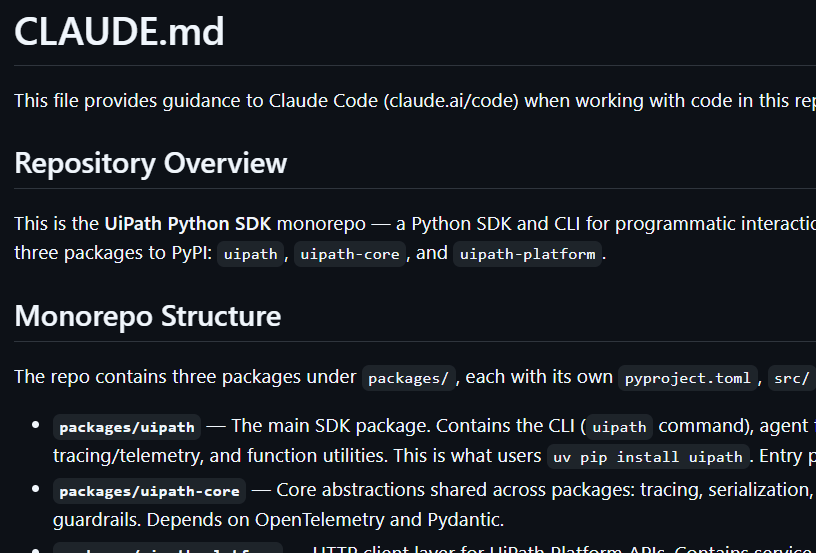
UiPath uses Claude Code on their Python SDK monorepo, which powers programmatic interaction with the UiPath Cloud Platform. The CLAUDE.md documents the full three-package architecture (uipath, uipath-core, uipath-platform), dependency chain, build and test commands, service class naming conventions, and code standards.
It's a thorough technical brief designed to let Claude Code navigate a complex monorepo without needing constant hand-holding.
Claude Powering Their Product
In October 2024, UiPath announced they'd embedded Claude 3.5 Sonnet directly into three of their products. The first is Autopilot for Everyone, an AI companion that combines Claude with UiPath Document Understanding and Context Grounding to answer business questions, trigger automations, and handle document workflows in plain language.
The second is Clipboard AI, a standalone application that uses Claude to intelligently extract data from documents and paste it into enterprise applications - replacing manual copy-paste data entry across systems. The third is a medical record summarization solution built with healthcare partners, using Claude to process clinical documents 70% faster from intake to summary, with HIPAA-compliant clinician-level output.
The thread connecting all three is the same: Claude handling the language and reasoning layer while UiPath's automation infrastructure handles the execution. It's a natural split for a company whose core product is already about connecting AI to enterprise systems.
One detail worth flagging: starting with Autopilot version 2025.4.1, Anthropic models are enabled by default. Admins have to actively turn it off if they don't want it. That means Claude is now the baseline for every UiPath customer on that version unless explicitly opted out - a much broader footprint than a typical product integration.
Video Communications - San Jose, CA
Zoom is one of the more strategically committed Claude customers on this list - they're not just a customer, they're an investor. Zoom Ventures made an undisclosed investment in Anthropic as part of their original partnership in 2023, giving them skin in the game as they built Claude into their products. Internally, they use Glean alongside Claude for knowledge work.
Claude Code
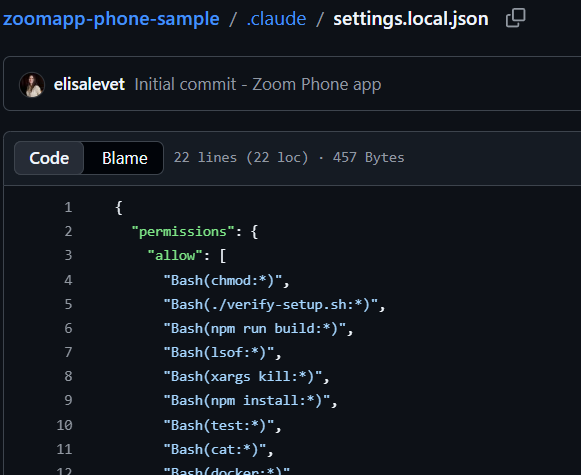
Zoom uses Claude Code on their phone sample app repository. Rather than a CLAUDE.md, they've configured a settings.local.json file that pre-authorizes specific bash commands Claude Code is allowed to run - build scripts, Docker commands, lsof, curl, git operations.
It's a security-conscious setup that grants Claude Code enough access to be useful without leaving permissions wide open.
Claude Powering AI Companion
Zoom's AI strategy is built on what they call a federated approach - rather than picking one model, they route tasks across their own proprietary Zoom LLM, Claude, and other third-party models depending on what produces the best output. Claude is one of the primary models in that stack.
The clearest example is meeting summaries. Zoom ran blind evaluations where human judges compared outputs across models without knowing which generated them. The federated combination of their own LLM and Claude beat GPT-4 alone in English, and they've published detailed benchmark data showing a 14% accuracy improvement in meeting recaps after adding Claude to the mix.
Claude also runs in AI Companion features across Zoom Meetings, Team Chat, and Contact Center - generating post-meeting recaps, answering in-meeting questions like "what were the key points just discussed?", and helping contact center agents surface relevant information during calls. Zoom deployed Claude 3.5 Sonnet within two weeks of its release, which their CTO cited as an example of how the federated model selection approach lets them ship fast when a better model becomes available.
Looking ahead, Zoom's CTO has described plans to use Claude specifically for cross-cultural communication - breaking down language barriers in global meetings and generating culturally nuanced communications. That's a use case that leans on Claude's language reasoning rather than just raw summarization.
Cloud Monitoring & Observability - New York, NY
Datadog's relationship with Claude is unusually layered. They use Claude Code internally on one of their largest open source repositories. They built a native Anthropic integration that their customers use to monitor Claude-powered applications. And they built a dedicated Claude Code monitoring product - tools for observing Claude Code itself, sold to the same engineering organizations that are adopting it. Internally, they use Glean, Perplexity, and ChatGPT alongside Claude.
Claude Code - A Sophisticated Skills Setup
Datadog uses Claude Code on their datadog-agent repository, one of the most widely deployed open source monitoring agents in the industry.
What's notable is how far they've taken the configuration. Rather than a single CLAUDE.md, they've built a full .claude/skills/ directory with six purpose-built skills that give Claude Code specialized capabilities for their specific workflows.
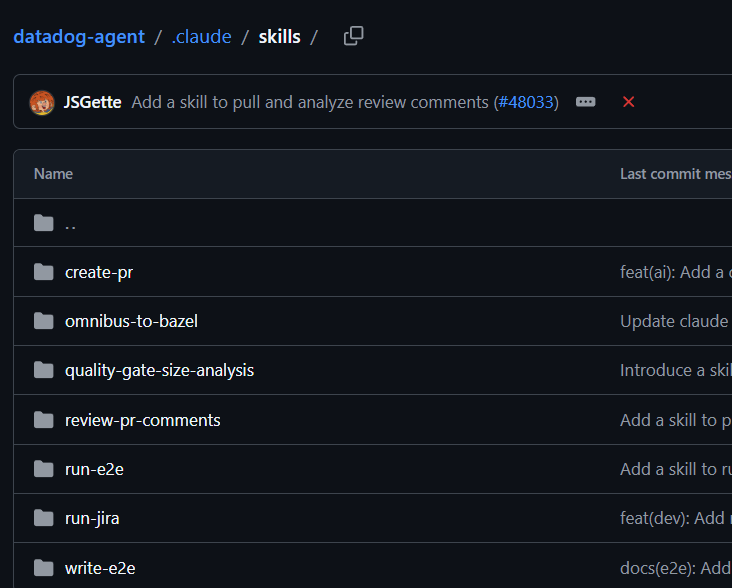
The skills cover: creating PRs, running E2E tests, writing E2E tests, running Jira-driven implementations, analyzing quality gate size impacts, and pulling and analyzing PR review comments. The Jira skill in particular is interesting - it means Claude Code can take a Jira ticket and drive the implementation from it, connecting project management directly to code execution.
Anthropic Integration - For Their Customers
Datadog built a native Anthropic integration for their LLM Observability product, which automatically instruments Anthropic Python SDK calls without requiring manual code changes.
When a customer's application makes a Claude API call, Datadog captures latency, token usage, errors, input prompts, and output responses as traces - giving engineers visibility into every step of an LLM chain without added instrumentation work.
They also built a separate Anthropic Usage and Costs integration that connects to Anthropic's Admin API to pull Claude spend data directly into Datadog's Cloud Cost Management dashboards. Teams can break down Claude costs by model, workspace, API key, and service tier, set alerts on usage spikes, and correlate cost anomalies with application performance in the same view.
Open Source Password Management - Santa Barbara, CA
Bitwarden is the leading open source password manager, used by millions of individuals and thousands of enterprises. No ChatGPT deployment signals anywhere in their job postings or public record - they appear to have gone all-in on Anthropic, which makes sense for a security-focused company that would be deliberate about which AI systems it trusts with sensitive workflows.
Claude Code
Bitwarden uses Claude Code on their main clients repository, a monorepo covering their browser extension, desktop app, CLI, and web vault. The CLAUDE.md is one of the more security-conscious configurations on this list.
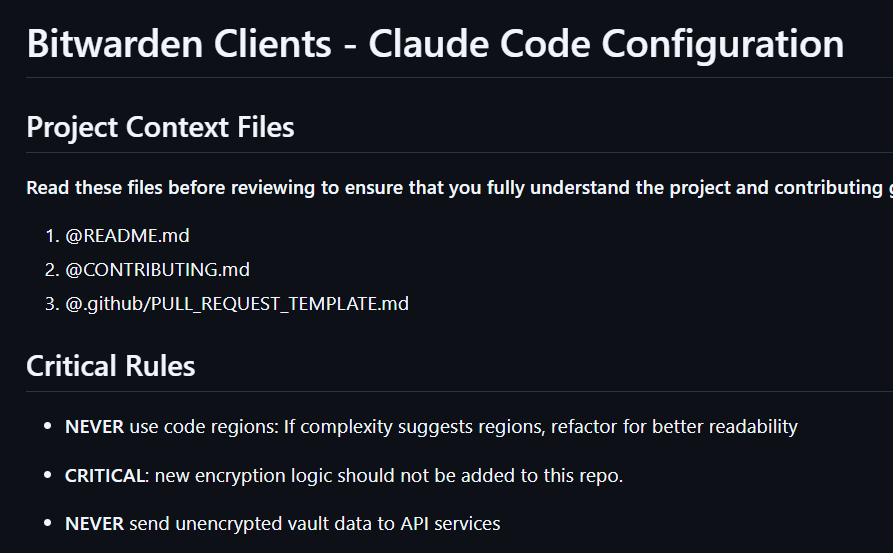
The rules are exactly what you'd expect from a company whose entire product is a vault of secrets: Claude Code is explicitly barred from adding new encryption logic, sending unencrypted vault data to API services, logging decrypted data or encryption keys, and committing credentials or PII in any form. There's even a rule preventing it from logging vault data in error messages. It's a thoughtful threat model applied to an AI coding assistant.
Payments Infrastructure - San Francisco, CA
Stripe is the payments infrastructure backbone for millions of businesses globally. They are an Enterprise Claude customer with no ChatGPT deployment - and there's an unusual cultural dimension to the relationship: Anthropic now has over 100 Stripe alums on staff, roughly 10% of its total headcount. The talent pipeline between the two companies runs deep.
Claude Code
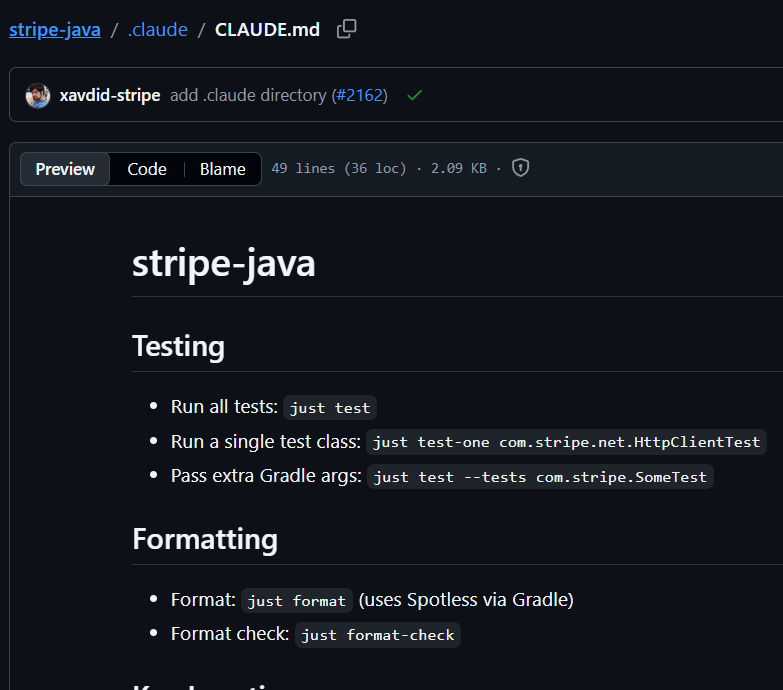
Stripe uses Claude Code on their stripe-java SDK. The CLAUDE.md is concise and precise - build and test commands, a map of key source files, a clear distinction between generated code (OpenAPI-derived, do not edit) and hand-written code, and a thoughtful comments policy: only document the why, never the what, never comment out old code.
Official Claude Connector
Stripe is listed as an official connector at claude.com/connectors/stripe. The connector exposes 23 tools covering the core Stripe workflow: customers, products, pricing, invoices, payment links, subscriptions, disputes, refunds, and documentation search. It's built and maintained by Stripe directly.
AI Inference Cloud - Redwood City, CA
Fireworks AI is an AI inference platform that powers production workloads for companies like Uber, Shopify, DoorDash, and Cursor - processing over 10 trillion tokens per day. Founded by the team that built PyTorch at Meta, they raised a $250M Series C at a $4B valuation in late 2025.
There's a certain irony in their Claude Code usage: Fireworks competes directly in the market for AI inference, yet their engineering team uses Claude Code and Cursor to build the product. They also use LiteLLM internally, which is consistent with an inference company that needs to route across multiple models. No ChatGPT org deployment signals.
Claude Code - CUDA Kernel Skills
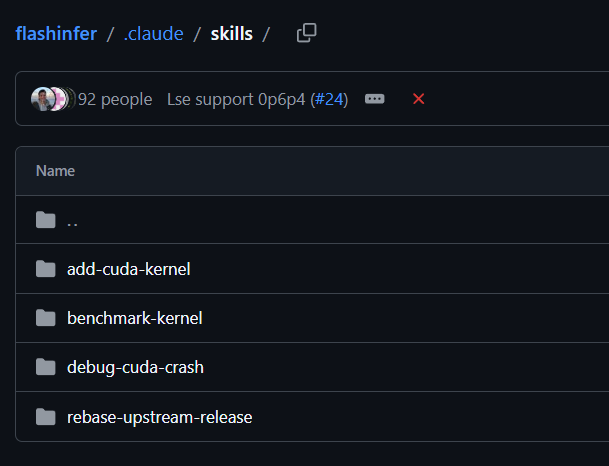
Fireworks uses Claude Code on their FlashInfer repository, an open source library for GPU kernel optimization. Their .claude/skills/ directory contains four specialized skills: add-cuda-kernel, benchmark-kernel, debug-cuda-crash, and rebase-upstream-release.
This is one of the more technically specialized Claude Code setups on this list. CUDA kernel development is low-level GPU programming that requires deep knowledge of memory layout, thread synchronization, and hardware constraints. The fact that they've built dedicated skills for adding kernels, benchmarking them, and debugging crashes suggests Claude Code is genuinely embedded in their core GPU optimization workflow - not just used for higher-level application code.
Claude Code + MCP - Eval-Driven Development
In August 2025, Fireworks published a detailed engineering post showing how their team uses Claude Code with MCP servers to build AI agents from scratch using a test-driven workflow.
The setup: two MCP servers added to Claude Code via the command line - one pointing to their Eval Protocol documentation, one to a deep wiki of the open-source implementation. This gives Claude live access to the right context without any copy-pasting.
The workflow adapts TDD to the LLM era. Write evals that define expected agent behavior first. Then build the agent to pass them. Fireworks used Claude Code to go from a completely blank project to a fully tested AI agent in a single session - Claude wrote the initial eval suite, then expanded four test cases into 32 variations covering browsing, authentication, complex search, and prompt injection.
The completed code is on GitHub at eval-protocol/claudecode_digital_store_app. Fireworks describes the developer's role in this workflow as shifting from writing every line of code to defining high-level goals and supervising the AI as it handles implementation and iteration.
Wellness and Fitness Services - New York, NY
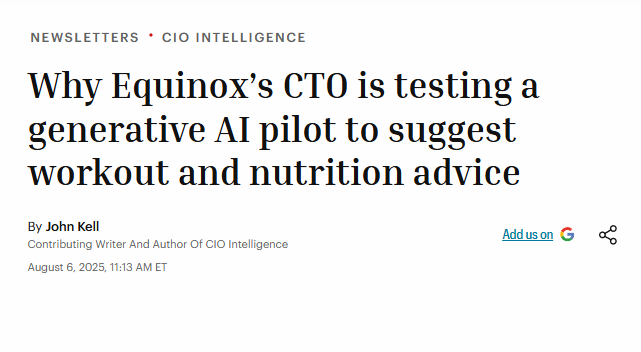
Equinox uses LLMs from multiple providers including Anthropic for two distinct things. The first is standard productivity: document summaries, emails, marketing copy, contracts. The second is more interesting.
Their CTO built a gen AI pilot in their branded mobile app that generates personalized workout recommendations and nutrition tips. The feature launched internally first - rolled out to the tech team, then corporate employees and trainers - before any member-facing release. Personal trainers were the most rigorous testers.
The key upgrade over previous recommendation systems: Claude can now digest open-ended written feedback from users and adjust future suggestions based on it. Earlier versions relied on thumbs up/thumbs down. Natural language feedback makes the loop meaningfully better.

 Rêve
Rêve
 TuringDream
 TigerConnect
 Propel Health AI
 Vannevar
 Nexthop AI
 Ermit
Ermit
 Cressco
 inmind.ai
 Ghirardo CPA
 HB Technologies Limited
 Zenegy
 Nxtech AS
 Oxford Dynamics
 Pocket Result
 Cadesign Base A/S
 Elemental Concept
 Immutable
 Brandlight
 Instacart
 Klaviyo
 Clerk
Clerk
 Crowdin
 Honeycomb
 UiPath
 Zoom
Zoom
 Datadog
 Bitwarden
 Stripe
 Fireworks AI
 Equinox